
Home
Class 12
CHEMISTRY
1,2-diols are oxidised to ketones or ald...

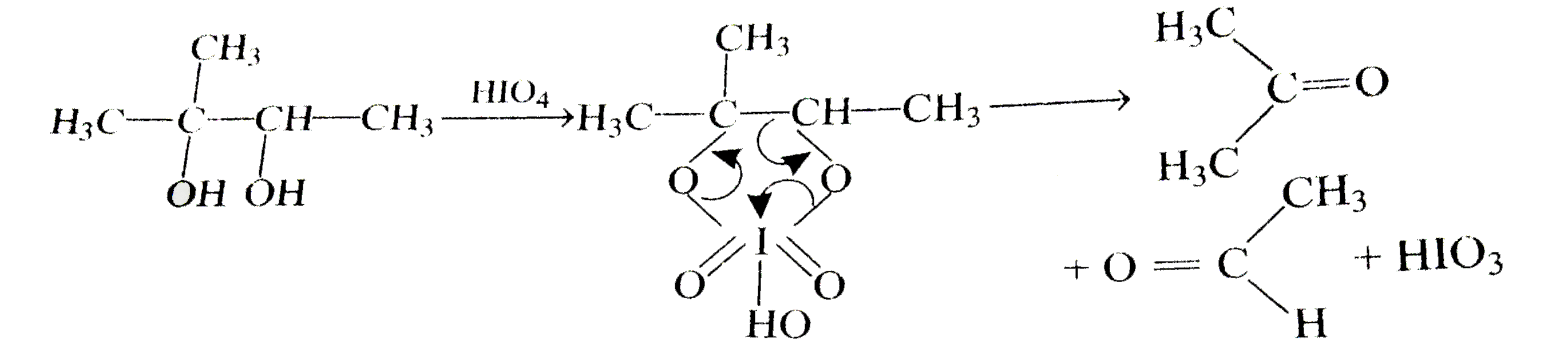
1,2-diols are oxidised to ketones or aldehydes by periodic acid `HIO_(4)`. Periodic acid reacts with dipol to form a cyclic intermeditate. The reaction takes places because iodine is in a highly positive oxidation state, so it readily accepts electrons. When the intermeidate breaks down, the bond between the two carbon bonded to the OH group break.

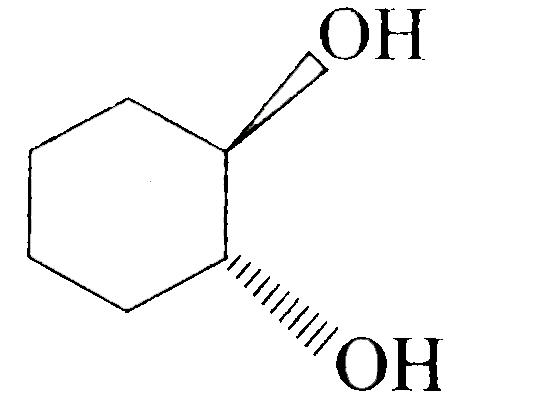
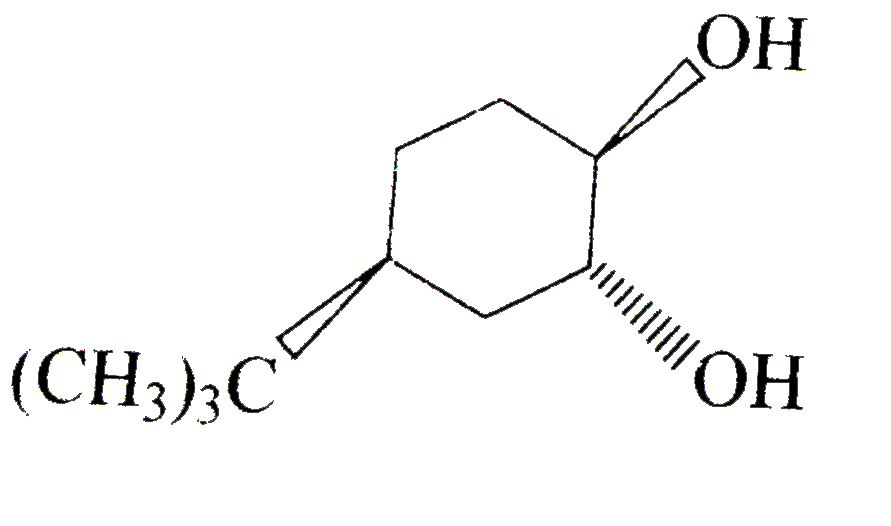
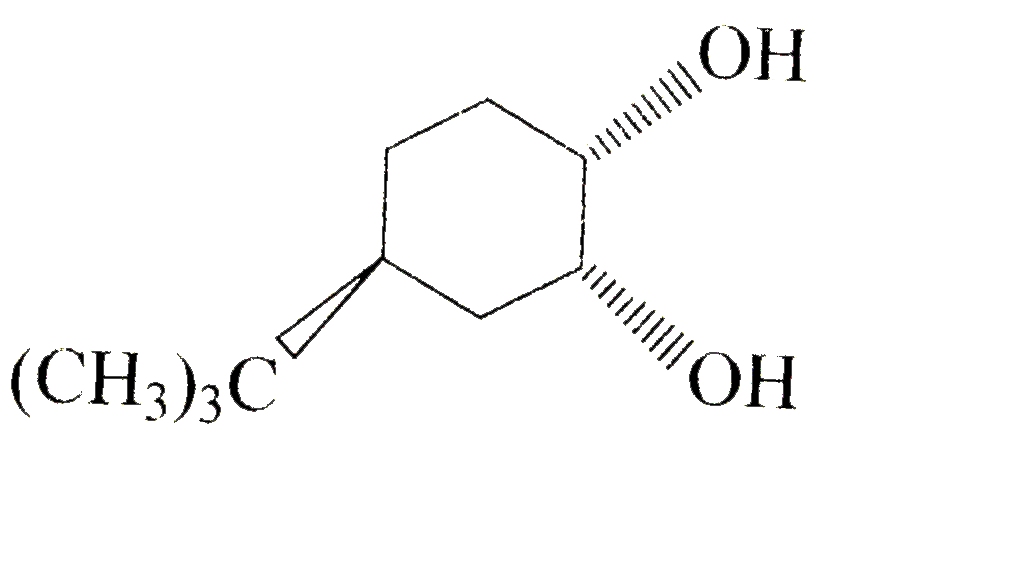
Which of the following compounds will not react with `HIO_(4)`?

A

B

C

D

Text Solution

Verified by Experts

The correct Answer is:

C
Promotional Banner

Similar Questions

Explore conceptually related problems

1,2-diols are oxidised to ketones or aldehydes by periodic acid HIO_(4) . Periodic acid reacts with dipol to form a cyclic intermeditate. The reaction takes places because iodine is in a highly positive oxidation state, so it readily accepts electrons. When the intermeidate breaks down, the bond between the two carbon bonded to the OH group break. Identify D.

1,2-diols are oxidised to ketones or aldehydes by periodic acid HIO_(4) . Periodic acid reacts with dipol to form a cyclic intermeditate. The reaction takes places because iodine is in a highly positive oxidation state, so it readily accepts electrons. When the intermeidate breaks down, the bond between the two carbon bonded to the OH group break. Which of the following will not form by above reaction?

A reaction characteristic of vicinal diols is their oxidative cleavage on treatment with periodic acid (HIO_(4)) . The carbon-carbon bond of the vicinal diol uinit is broken and two carbonyl groups result. Periodic acid is reduced to iodic acid (HIO_(3)) Cyclic diols react to give dicarbonyl compounds. The reactions are faster when the hydroxyl gorups are cid than when they are trans but both stereoisomers are oxidised by periodic acid. Periodic acid cleavage of vicinal diols is often used for analytic purposes as an aid in structure determination. By identifying the carbonyl compounds produced, The constitution of the diol may be deduced. Which of the following compounds (s) is / are obtained when the following compound is oxidixed by HIO_(4) ?

A reaction characteristic of vicinal diols is their oxidative cleavage on treatment with periodic acid (HIO_(4)) . The carbon-carbon bond of the vicinal diol uinit is broken and two carbonyl groups result. Periodic acid is reduced to iodic acid (HIO_(3)) Cyclic diols react to give dicarbonyl compounds. The reactions are faster when the hydroxyl gorups are cid than when they are trans but both stereoisomers are oxidised by periodic acid. Periodic acid cleavage of vicinal diols is often used for analytic purposes as an aid in structure determination. By identifying the carbonyl compounds produced, The constitution of the diol may be deduced. Which of the following products is/are obtained when glycerol is treated with HIO_(4) ?

A reaction characteristic of vicinal diols is their oxidative cleavage on treatment with periodic acid (HIO_(4)) . The carbon-carbon bond of the vicinal diol uinit is broken and two carbonyl groups result. Periodic acid is reduced to iodic acid (HIO_(3)) Cyclic diols react to give dicarbonyl compounds. The reactions are faster when the hydroxyl gorups are cid than when they are trans but both stereoisomers are oxidised by periodic acid. Periodic acid cleavage of vicinal diols is often used for analytic purposes as an aid in structure determination. By identifying the carbonyl compounds produced, The constitution of the diol may be deduced. Which of the following diols will be oxidised by HIO_(4) ?

A reaction characteristic of vicinal diols is their oxidative cleavage on treatment with periodic acid (HIO_(4)) . The carbon-carbon bond of the vicinal diol uinit is broken and two carbonyl groups result. Periodic acid is reduced to iodic acid (HIO_(3)) Cyclic diols react to give dicarbonyl compounds. The reactions are faster when the hydroxyl gorups are cid than when they are trans but both stereoisomers are oxidised by periodic acid. Periodic acid cleavage of vicinal diols is often used for analytic purposes as an aid in structure determination. By identifying the carbonyl compounds produced, The constitution of the diol may be deduced. When arabinose is oxidised by HIO+_(4) , then formaldehyde and formic acid are obtained. Number of molecules of formic acid and formaldehyde obtained respecitively are :
