Home
Class 12
CHEMISTRY
Consider the following sequence of react...

Consider the following sequence of reactions
`underset(C_(3)H_(6)Cl_(2))Aoverset(alc.KOH)underset(triangle)rarrBoverset(B_(2)H_(6))underset(H_(2)O_(2)//overset(Θ)OH)rarrC, Aoverset(aq.KOH)underset(triangle)rarrC.`
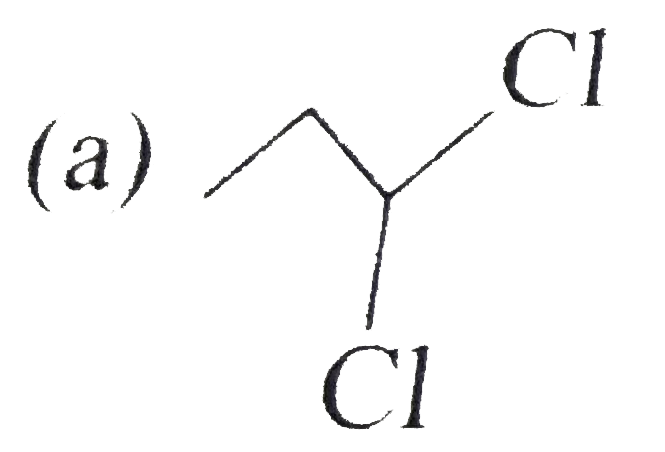
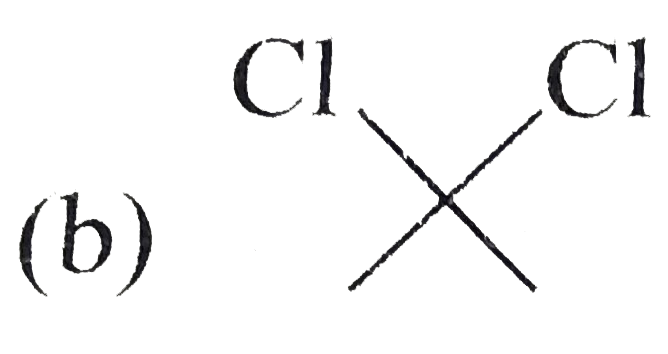
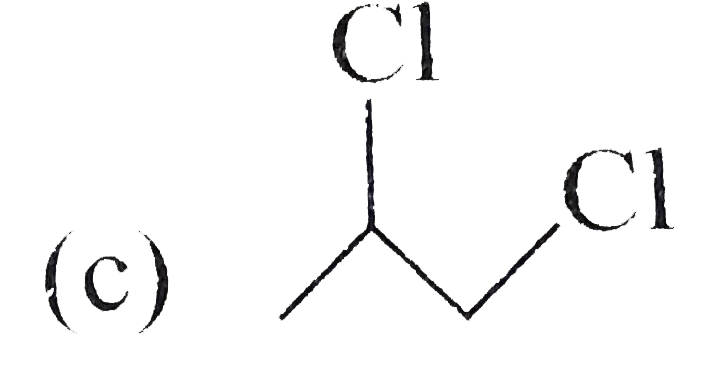
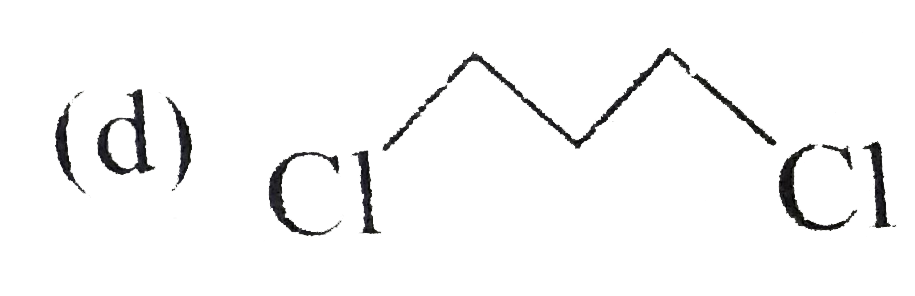
The compound A is :

A

B

C

D

Text Solution

AI Generated Solution

The correct Answer is:

To determine the compound A in the given sequence of reactions, we will analyze the reactions step by step. ### Step 1: Identify the structure of compound A The question states that compound A is a dichloro compound with the formula C₃H₆Cl₂. This indicates that A has three carbon atoms and two chlorine atoms. Given that it is a dichloro compound, we can assume that the chlorines are likely on adjacent carbons, leading to a structure that can undergo elimination reactions. **Hint:** Look for a structure that has two chlorine atoms on adjacent carbons. ### Step 2: Reaction with alc. KOH When compound A reacts with alcoholic KOH and is heated, it undergoes an elimination reaction (dehydrohalogenation). This reaction will remove HCl from the compound, resulting in the formation of an alkyne (B). Since we are starting with a dichloro compound, we can expect that the elimination will lead to the formation of a triple bond. **Hint:** Consider the mechanism of elimination reactions and how they lead to the formation of alkynes. ### Step 3: Identify compound B After the elimination reaction, compound B will be an alkyne. Given the structure of A, we can deduce that B is likely to be propyne (C₃H₄), as it is formed from the removal of two chlorine atoms and two hydrogen atoms. **Hint:** Remember that the product of elimination reactions involving dichloro compounds often leads to terminal alkynes. ### Step 4: Hydroboration-oxidation of B Next, compound B (propyne) undergoes hydroboration-oxidation with B₂H₆ followed by H₂O₂ in the presence of OH⁻. This reaction will convert the terminal alkyne into an aldehyde (C). The hydroboration step adds boron to the less substituted carbon, and the subsequent oxidation replaces the boron with an OH group, resulting in the formation of an aldehyde. **Hint:** Hydroboration-oxidation transforms terminal alkynes into aldehydes. ### Step 5: Aqueous KOH reaction with A The second reaction indicates that compound A also reacts with aqueous KOH. This reaction will lead to the substitution of the chlorine atoms with hydroxyl groups (OH), resulting in the formation of a gem-diol (C). **Hint:** Aqueous KOH typically leads to nucleophilic substitution reactions. ### Step 6: Conclusion Based on the analysis, the compound A is identified as 3,3-dichloropropene (or a similar structure) which allows for both reactions to proceed as described. The final products C from both reactions are consistent with the expected outcomes. ### Final Answer The compound A is **3,3-dichloropropene**. ---
Promotional Banner

Topper's Solved these Questions

  • HALIDES

    HIMANSHU PANDEY|Exercise Level 2 (Q.101 To Q.125)|25 Videos
  • HALIDES

    HIMANSHU PANDEY|Exercise Level 2 (Q.126 To Q.150)|25 Videos
  • HALIDES

    HIMANSHU PANDEY|Exercise Level 2 (Q.51 To Q.75)|25 Videos
  • GENERAL ORGANIC CHEMISTRY

    HIMANSHU PANDEY|Exercise Subjective Type Problems|19 Videos
  • ISOMERISM

    HIMANSHU PANDEY|Exercise Subjective Type Problems|11 Videos

Similar Questions

Explore conceptually related problems

Identify 'M' in the following sequence of reactions underset((M))(C_(8)H_(6)Cl_(2)O)overset(NH_(3))rarrC_(8)H_(8)ClNO overset(Br_(2))underset(NaOH)rarr

What is Z in the following sequence of reactions? Z overset(PCl_(3))toX overset(alc.KOH)to Y underset((ii)H_(2)O boil)overset((i)Conc.H_(2)SO_(4))toZ

Consider the following sequence of reactions CH_(2)=CH_(2)overset(PhCO_(3)H)underset(CH_(2)Cl_(2))(rarr)Aoverset(dil.H_(2)SO_(4))(rarr)B The product (B) is

overset(Cl_(2))underset(FeCl_(3))rarrAoverset(HNO_(3))underset(H_(2)SO_(4).Delta)rarrBoverset(KCN)underset(EtOH.Delta)rarrC . The product C is -

The acid D obtained through the following sequence of reactions is: C_(2)H_(5)Br overset(Alc. KOH)rarrA overset(Br_(2))underset(C Cl_(4))rarrBoverset(KCN)underset((excees))rarrCoverset(H_(3)O^(+))rarr
