Home
Class 12
CHEMISTRY
Which of the following reactions involve...

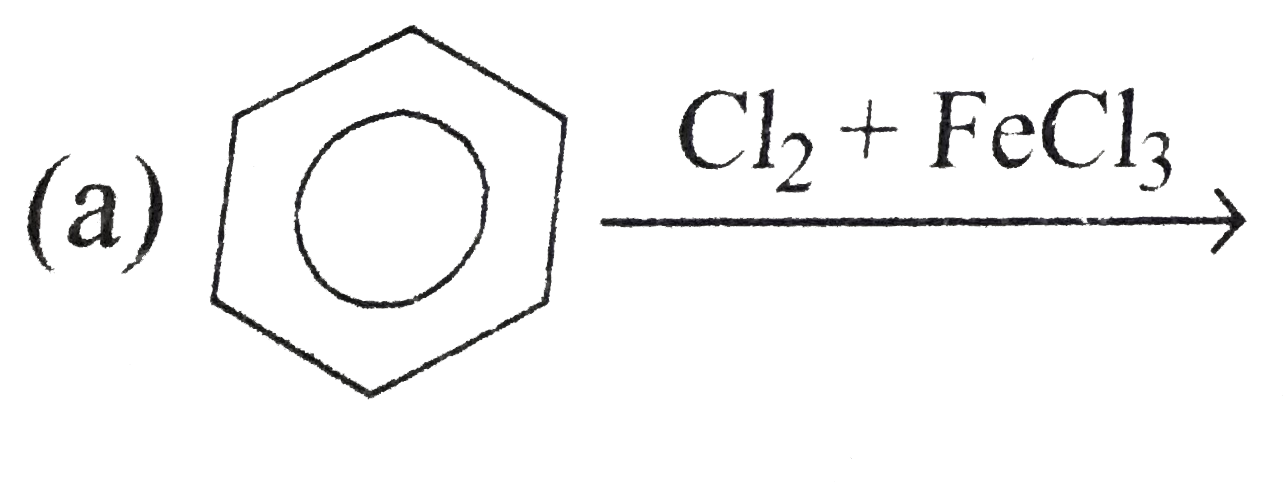
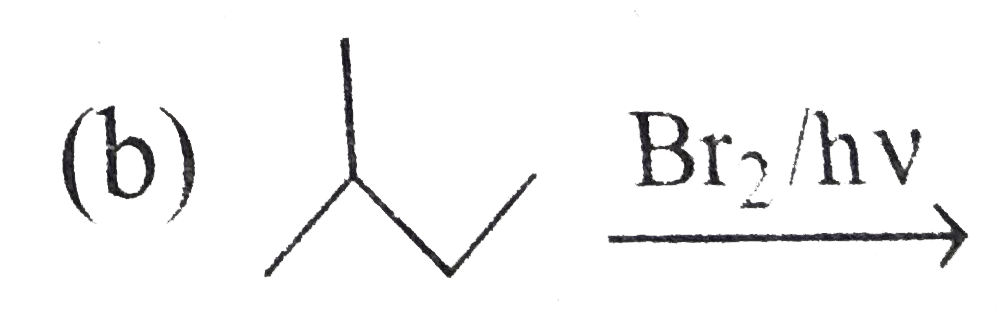
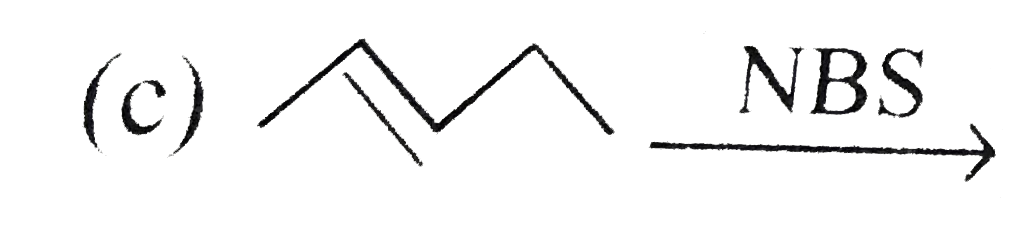
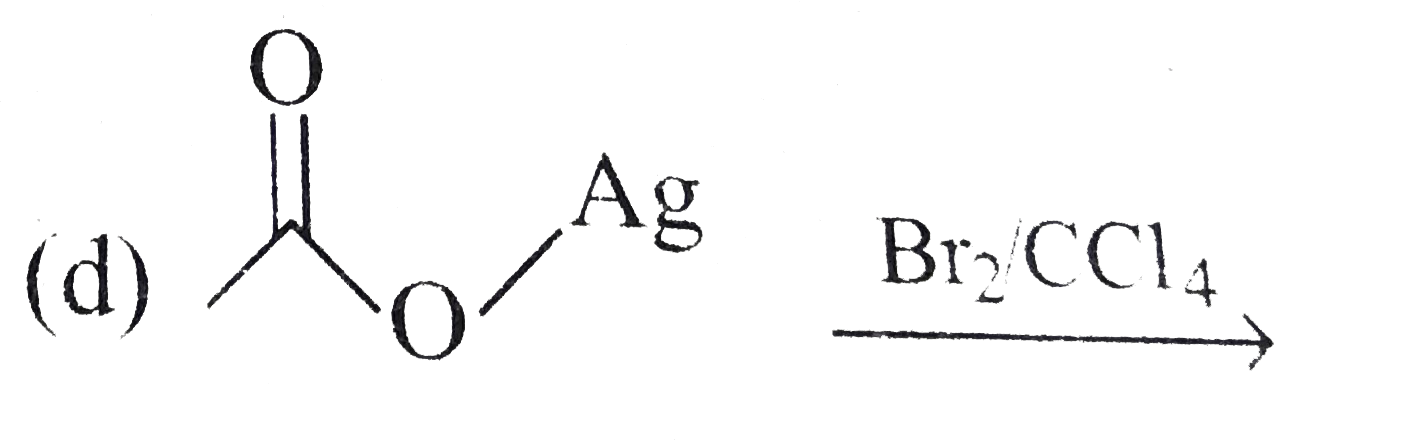
Which of the following reactions involve free radical as intermediate ?

A

B

C

D

Text Solution

AI Generated Solution

The correct Answer is:

To determine which of the reactions involve free radicals as intermediates, we can analyze each reaction step by step. ### Step 1: Analyze Reaction A (Benzene with Cl2 and FeCl3) - In this reaction, benzene reacts with chlorine (Cl2) in the presence of iron(III) chloride (FeCl3). - The FeCl3 acts as a Lewis acid and facilitates the formation of the electrophile Cl+. - The mechanism involves the formation of a carbocation intermediate, not a free radical. - **Conclusion**: This reaction does not involve free radicals. ### Step 2: Analyze Reaction B (Alkane with Br2 in sunlight) - In this reaction, bromine (Br2) reacts with an alkane in the presence of sunlight. - The sunlight provides energy for the homolytic cleavage of the Br-Br bond, generating two bromine radicals (Br•). - The bromine radical then abstracts a hydrogen atom from the alkane, forming an alkyl radical (R•). - The alkyl radical can then react with another bromine radical to form the bromoalkane (RBr). - **Conclusion**: This reaction involves free radicals as intermediates. ### Step 3: Analyze Reaction C (Alkene with N-bromosuccinimide, NBS) - In this reaction, N-bromosuccinimide (NBS) reacts with an alkene. - The N-Br bond in NBS can undergo homolytic cleavage to generate a bromine radical (Br•) and a nitrogen radical (N•). - The bromine radical abstracts a hydrogen atom from the alkene, forming an allylic radical. - This allylic radical can then react with another bromine radical to form the brominated product. - **Conclusion**: This reaction involves free radicals as intermediates. ### Step 4: Analyze Reaction D (Silver Acetate with Br2 in CCl4) - In this reaction, silver acetate reacts with bromine (Br2) in carbon tetrachloride (CCl4). - The Br-Br bond undergoes homolytic cleavage to form bromine radicals (Br•). - The silver acetate can interact with the bromine radical, leading to the formation of a radical on the acetate. - This radical can then rearrange or react further, involving free radical mechanisms. - **Conclusion**: This reaction involves free radicals as intermediates. ### Final Conclusion Based on the analysis: - **Reactions that involve free radicals as intermediates**: B, C, and D. - **Reactions that do not involve free radicals**: A. ### Answer: B, C, D involve free radicals as intermediates. ---
Promotional Banner

Topper's Solved these Questions

  • HALIDES

    HIMANSHU PANDEY|Exercise Linked Comprehension Type (Q.1 To Q.25)|25 Videos
  • HALIDES

    HIMANSHU PANDEY|Exercise Linked Comprehension Type (Q.26 To Q.27)|2 Videos
  • HALIDES

    HIMANSHU PANDEY|Exercise More Than One Correct (Q.1 To Q.25)|25 Videos
  • GENERAL ORGANIC CHEMISTRY

    HIMANSHU PANDEY|Exercise Subjective Type Problems|19 Videos
  • ISOMERISM

    HIMANSHU PANDEY|Exercise Subjective Type Problems|11 Videos

Similar Questions

Explore conceptually related problems

Which of the following reactions involve benzyne intermediate?

Which of the following is the free radical chain reaction ?

Which of the following is/are true for a free radical?

Hunsdiecker reaction involve free radical in intermediate steps.

Which of the following is not a free radical ?

HIMANSHU PANDEY-HALIDES-More Than One Correct (Q.26 To Q.50)
  1. Aryl halide undergo :

    Text Solution

    |

  2. Which of the following reactions take place by S(N^(2)) reaction?

    Text Solution

    |

  3. Which of the following reactions involve free radical as intermediate ...

    Text Solution

    |

  4. Which of the following are possible intermediate in the following reac...

    Text Solution

    |

  5. Which of the following compounds will give racemic mixture by S(N^(1))...

    Text Solution

    |

  6. Which of the following compounds will give E(1) reaction?

    Text Solution

    |

  7. X and Y :

    Text Solution

    |

  8. R-CH(2)-CH(2)-overset(Θ)Ooverset(oplus)Naoverset(CS(2))underset(CH(3)-...

    Text Solution

    |

  9. For the reaction Choose the correct statements :

    Text Solution

    |

  10. Which of the following can give E(1)cb reaction?

    Text Solution

    |

  11. Identify the compounds which may give NGP reaction :

    Text Solution

    |

  12. Which of the following reactions involve benzyne intermediate?

    Text Solution

    |

  13. Which of the following products can be obtained by S(N^(1)) reaction?

    Text Solution

    |

  14. Among the following pair of reactions in which pair second reaction is...

    Text Solution

    |

  15. Which of the following reactions produce the same product?

    Text Solution

    |

  16. Which of the following are correct order of nucleophilcity in CH(3)OH?

    Text Solution

    |

  17. Which of the following can give E(1)cb reaction in basic medium?

    Text Solution

    |

  18. Choose the correct comparison of reactivity toward E(2) reaction :

    Text Solution

    |

  19. Which of the following compounds cannot give E(2) reaction with strong...

    Text Solution

    |

  20. Which of the following are better leaving group than

    Text Solution

    |
