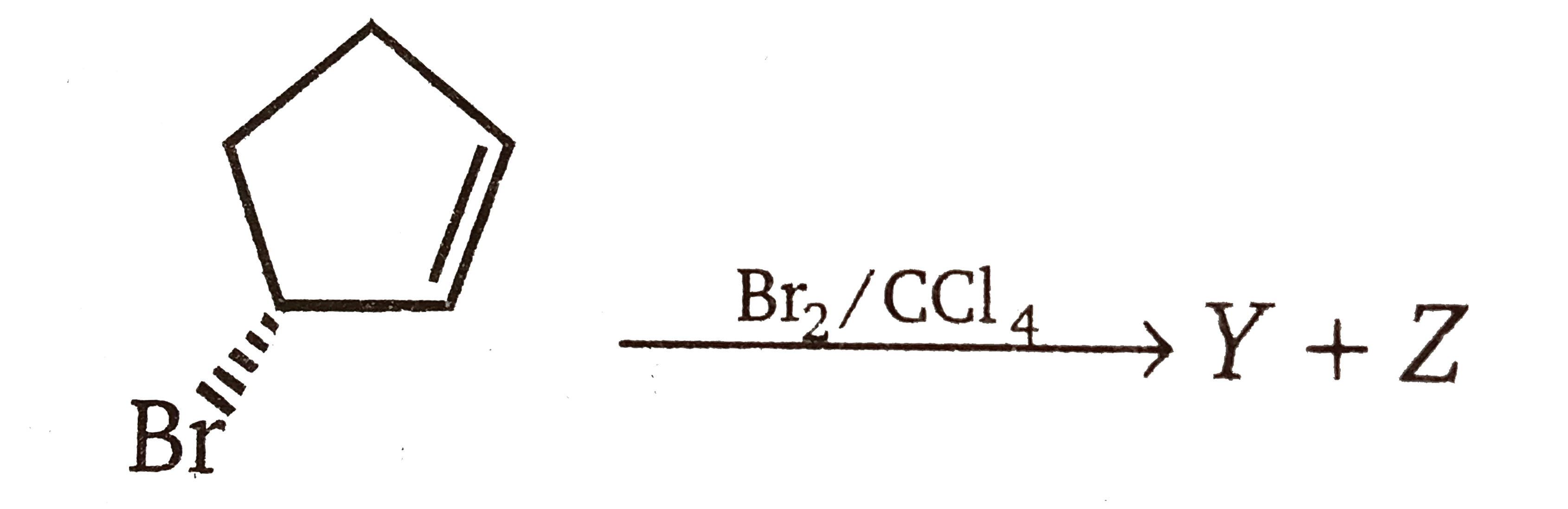
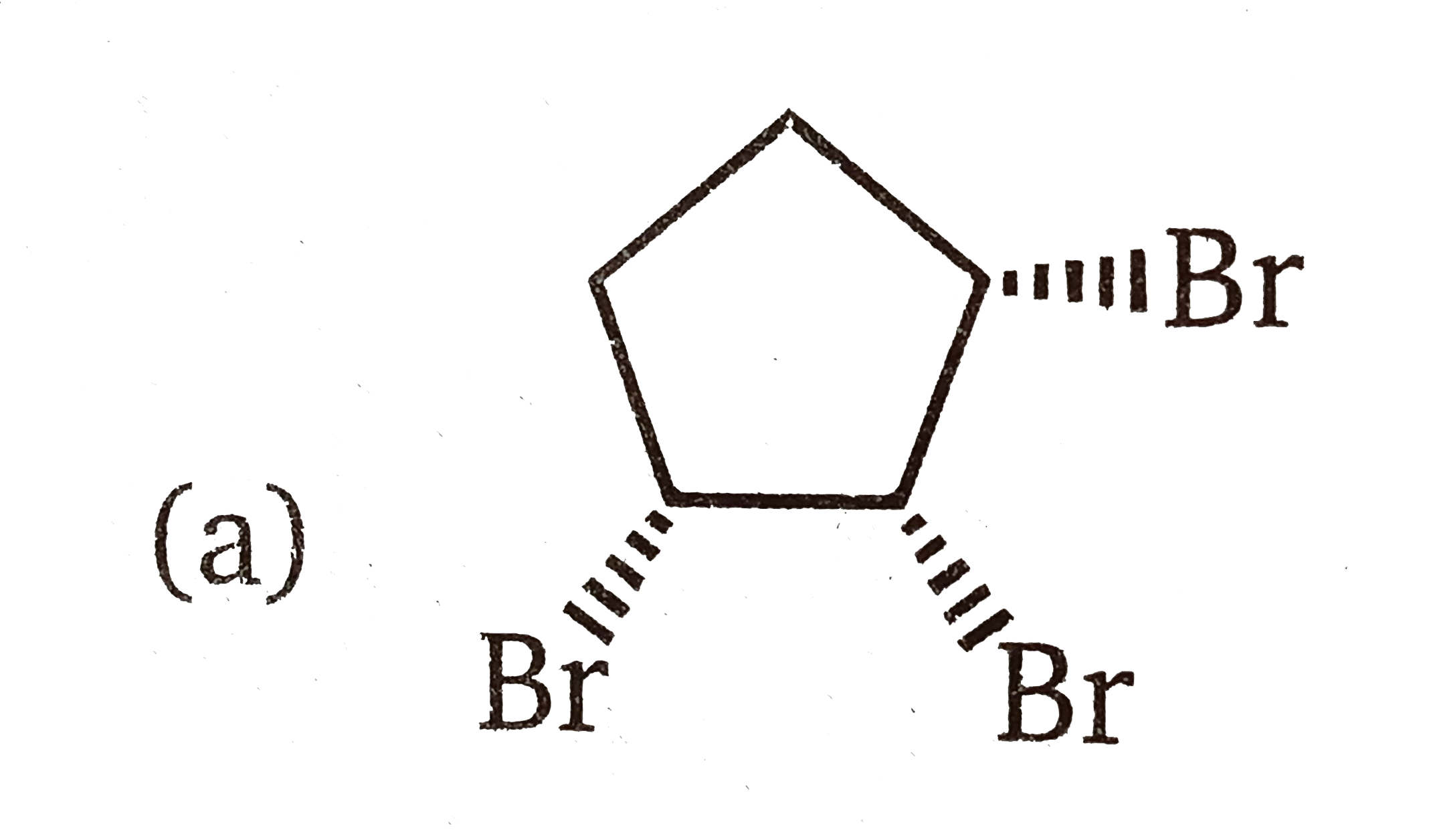
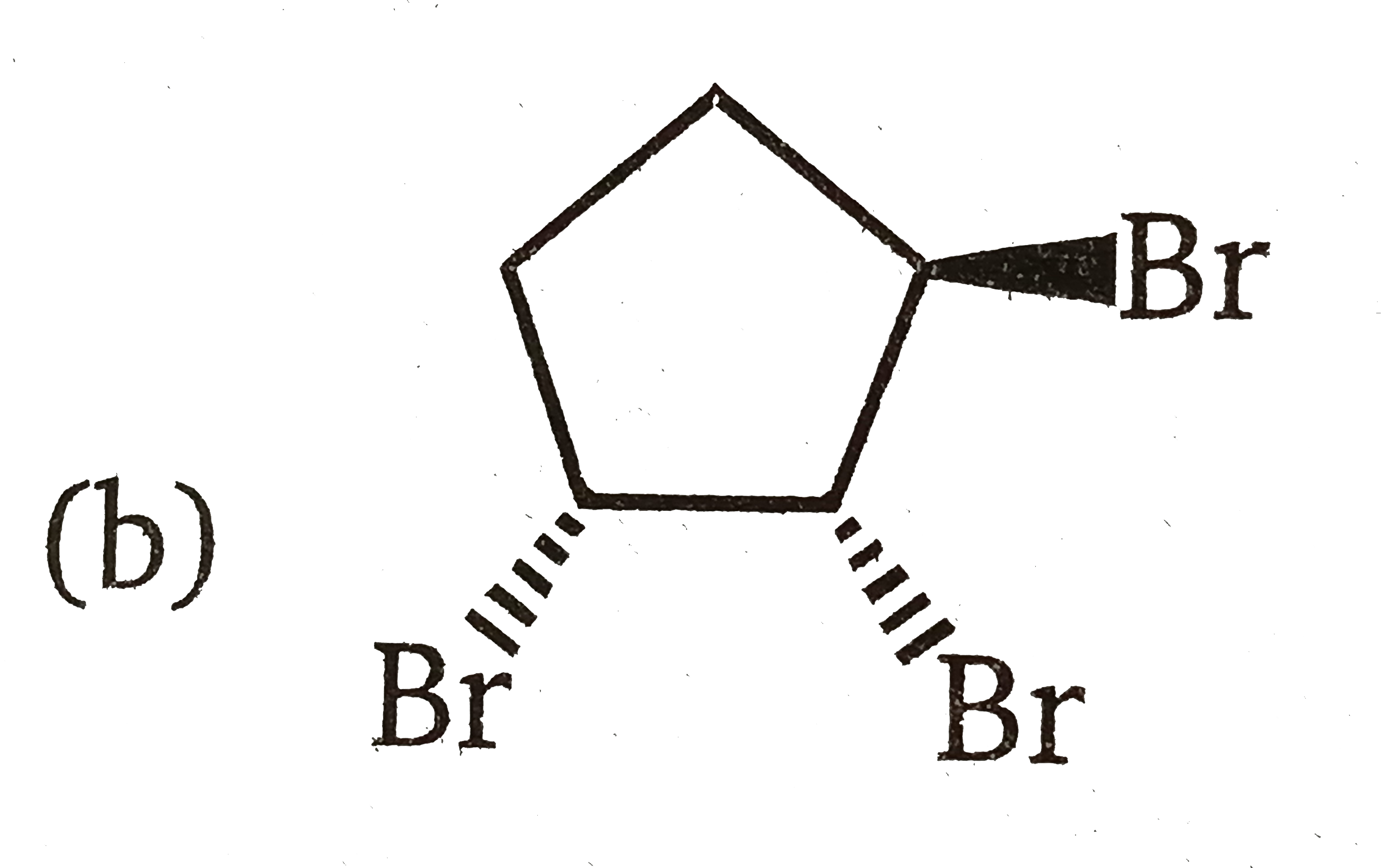
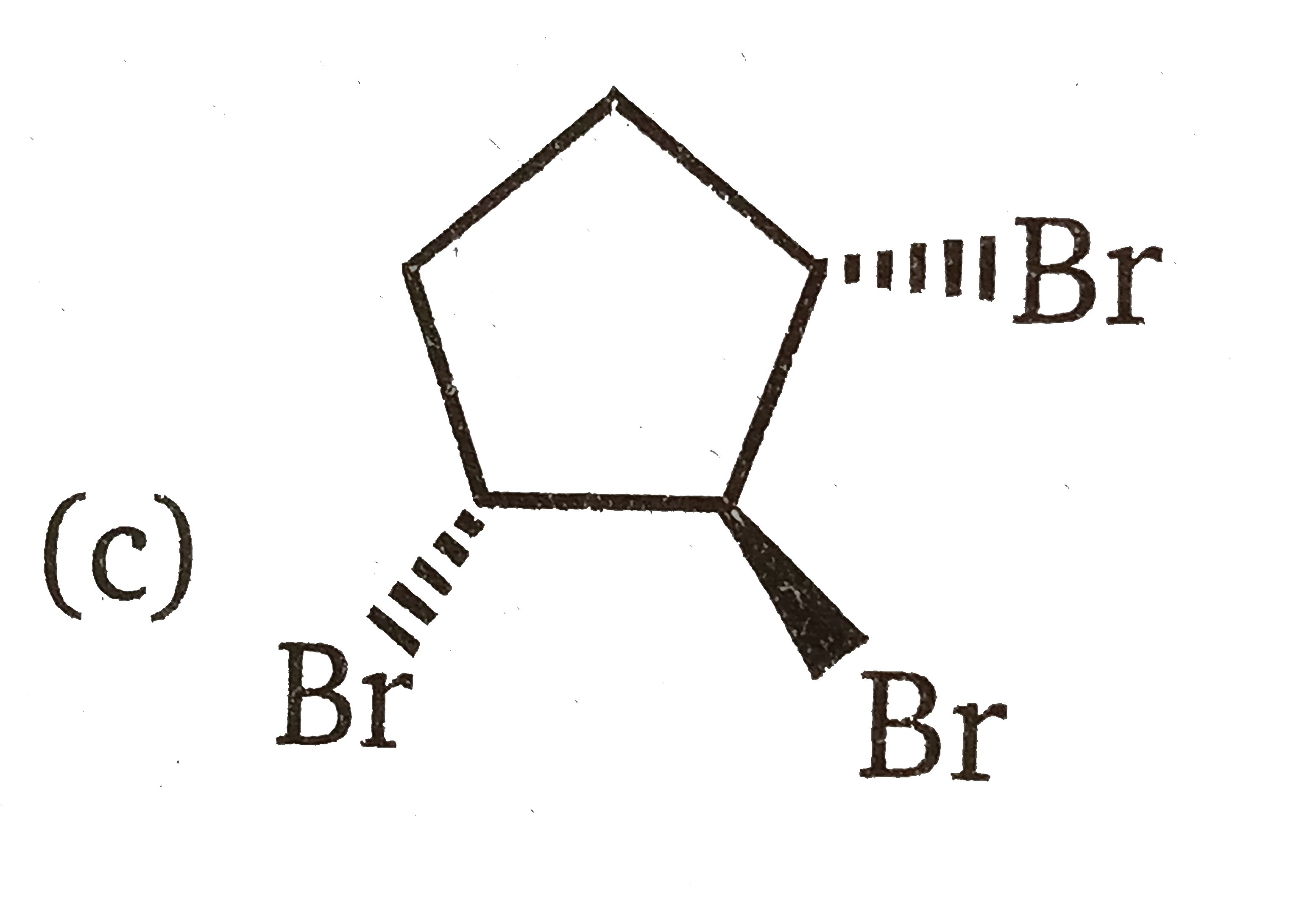
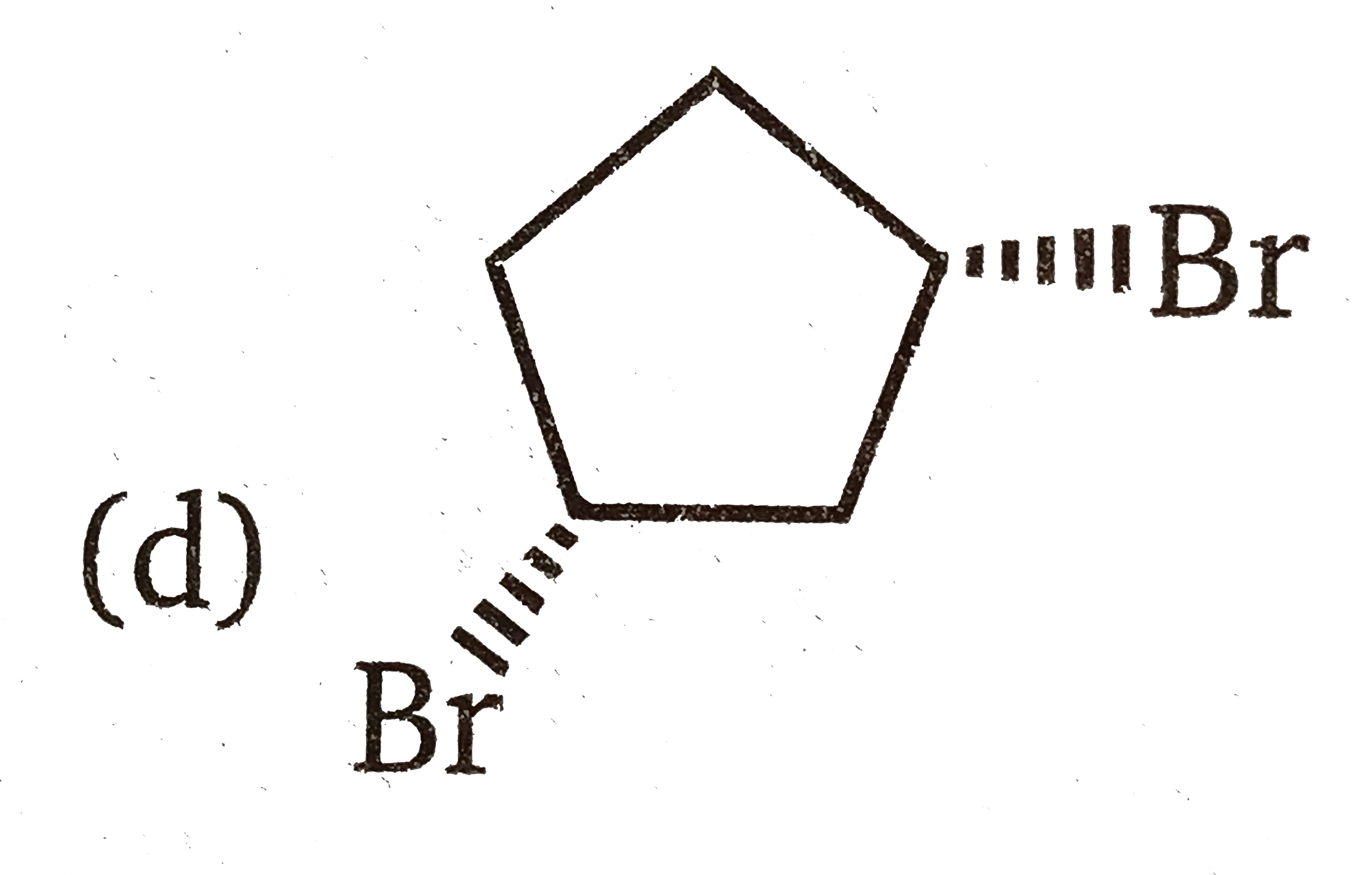
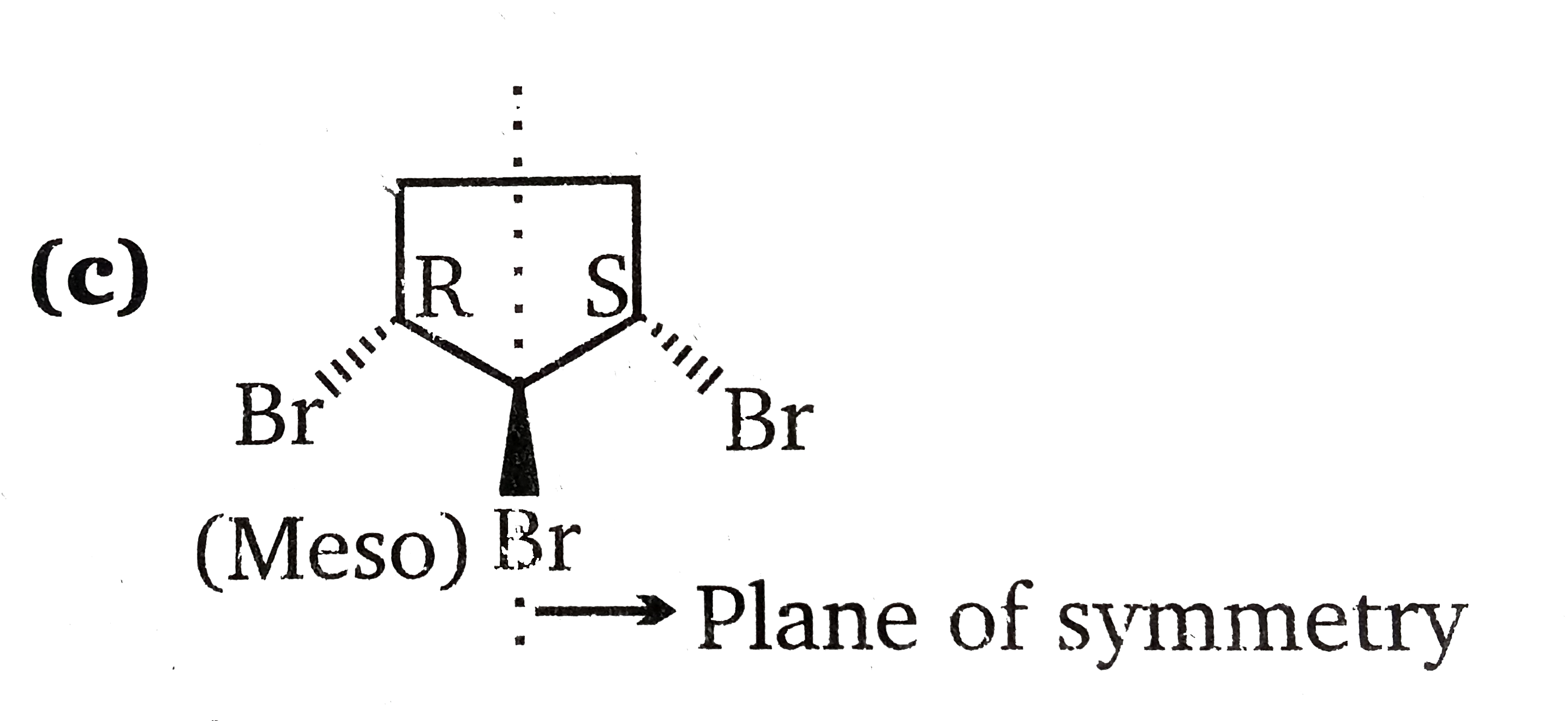
(R)-3-bromocyclopentene (shown below) reacts with `Br_(2)//C Cl_(4)` to form two products, Y and Z, Y is not optically active (does not rotate plane-polarized light). What is the structure of Y
A
B
C
D
Text Solution
Verified by Experts
The correct Answer is:
C
Anti addition of halogen takes place on alkane.
Topper's Solved these Questions
HYDROCARBONS (ALKENES)
MS CHOUHAN|Exercise Level 1 (Q.1 To Q.30)|1 Videos
HYDROCARBONS (ALKENES)
MS CHOUHAN|Exercise Level 1 (Q.61 To Q.90)|2 Videos
HYDROCARBONS (ALKANES)
MS CHOUHAN|Exercise Level 1 (Q.31 To Q.50)|1 Videos
HYDROCARBONS (ALKYNES)
MS CHOUHAN|Exercise Level 1 (Q.1 To Q.30)|2 Videos
Similar Questions
Explore conceptually related problems
possible products overset(Br_(2)//C Cl_(4))(to)(y) products The number of possible products for x and y is:
An optically active compound [A] C_(5)H_(13)N reacts with alkaline CHCl_(3) to give an optically active, compound [B]. [A] also reacts with nitrous acid to give an optically inactive alcohol [C] C_(5)H_(11)OH as the major product. What would be the structure of [A]?