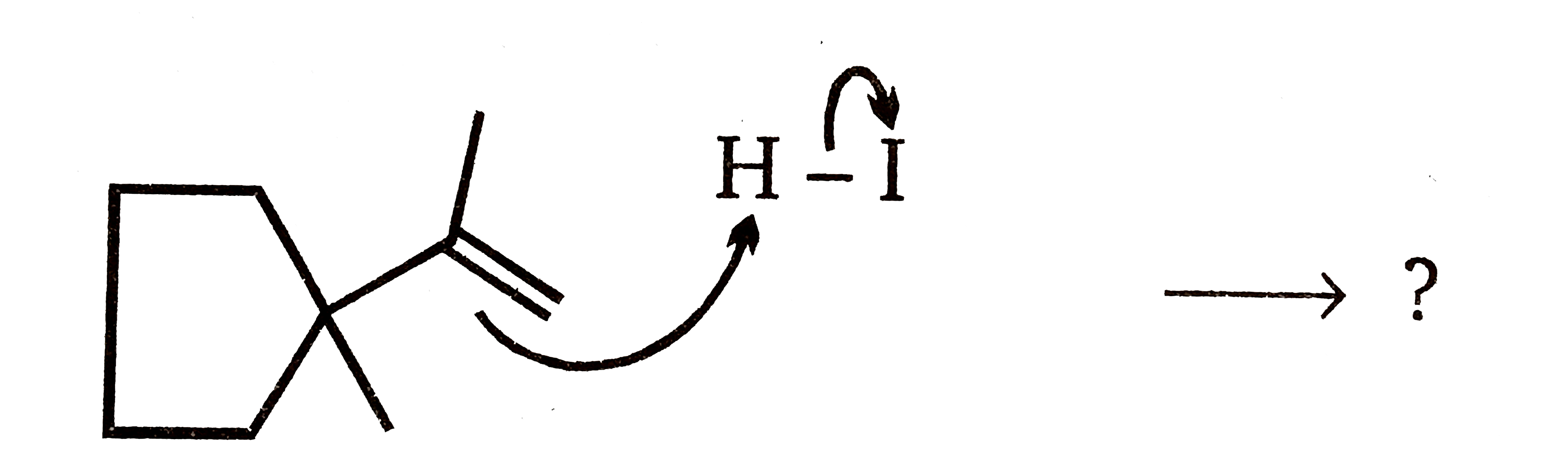
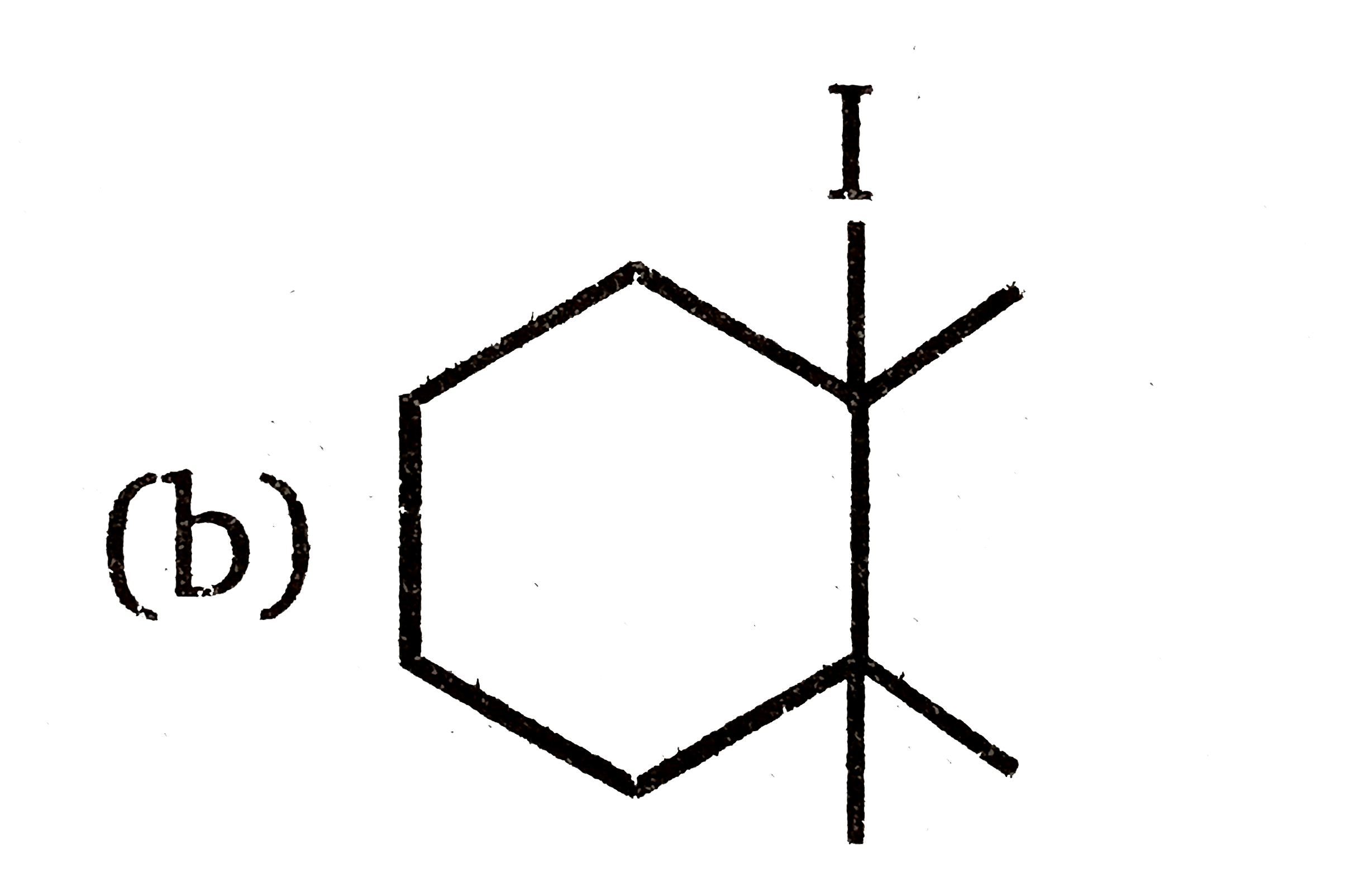
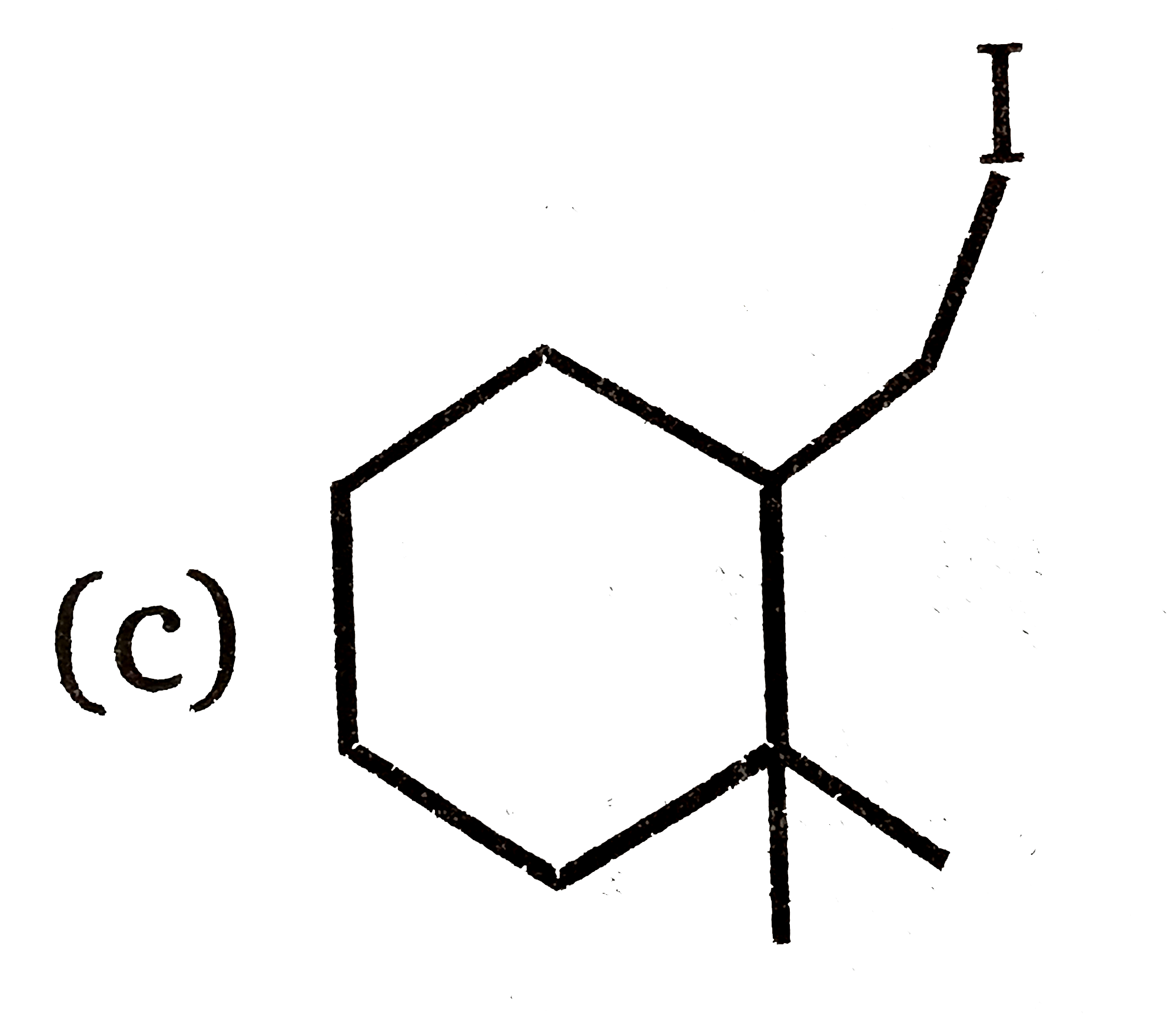
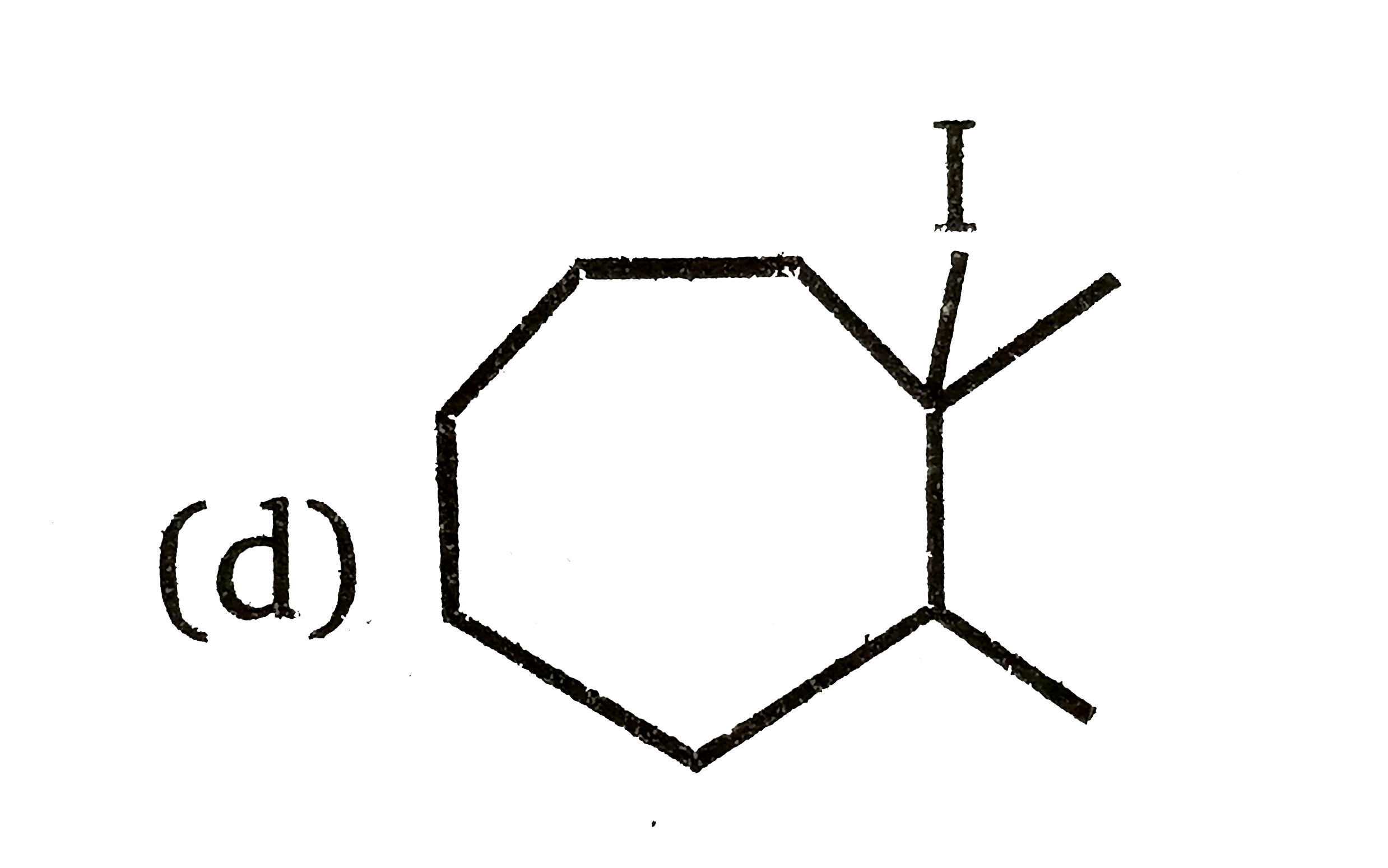
Taking into account the stability of various cycloalkanes and carbocations, as well as the rules governing mechanisms of carbocation rearrangements, what is the most likely product of this reaction?
A
B
C
D
Text Solution
Verified by Experts
The correct Answer is:
b
Ring expansion take place .
Topper's Solved these Questions
HYDROCARBONS (ALKENES)
MS CHOUHAN|Exercise Level 1 (Q.1 To Q.30)|1 Videos
HYDROCARBONS (ALKENES)
MS CHOUHAN|Exercise Level 1 (Q.61 To Q.90)|2 Videos
HYDROCARBONS (ALKANES)
MS CHOUHAN|Exercise Level 1 (Q.31 To Q.50)|1 Videos
HYDROCARBONS (ALKYNES)
MS CHOUHAN|Exercise Level 1 (Q.1 To Q.30)|2 Videos
Similar Questions
Explore conceptually related problems
Taking into account the stability of various carbocations and, as well as the rules governing mechanism of carbocation rearrangements, which reaction is most likely to occur during the given reaction?
What are the most likely products of the reaction shown below ?
Give possible mechanism of the given reaction using carbocation rearrangement.
The reaction shown below goes through classical carbocation What is the major product of this reaction .
Surprisingly, the reaction shown below goes through classical carbocation. What is the major product of this reaction?
Reaction Mechanism : transition state - reaction intermediates, carbocation - rearrangement and hydride shift
Under common reaction conditions, a carboncation rearranges to another carbocation of equal or greater stability. For example secondary carbocation will rearrange to a tertiary carbocation. It will not rearrange to a less stable primary carbocation. This generalization is not absolute, and because there is not is a high energy barrier to the rearrangement of carbocations, rearrangement to a less stable cation can occur if it offers the chance to forme a more stable product. In which of the following cations rearrangement takes place most rapidly?