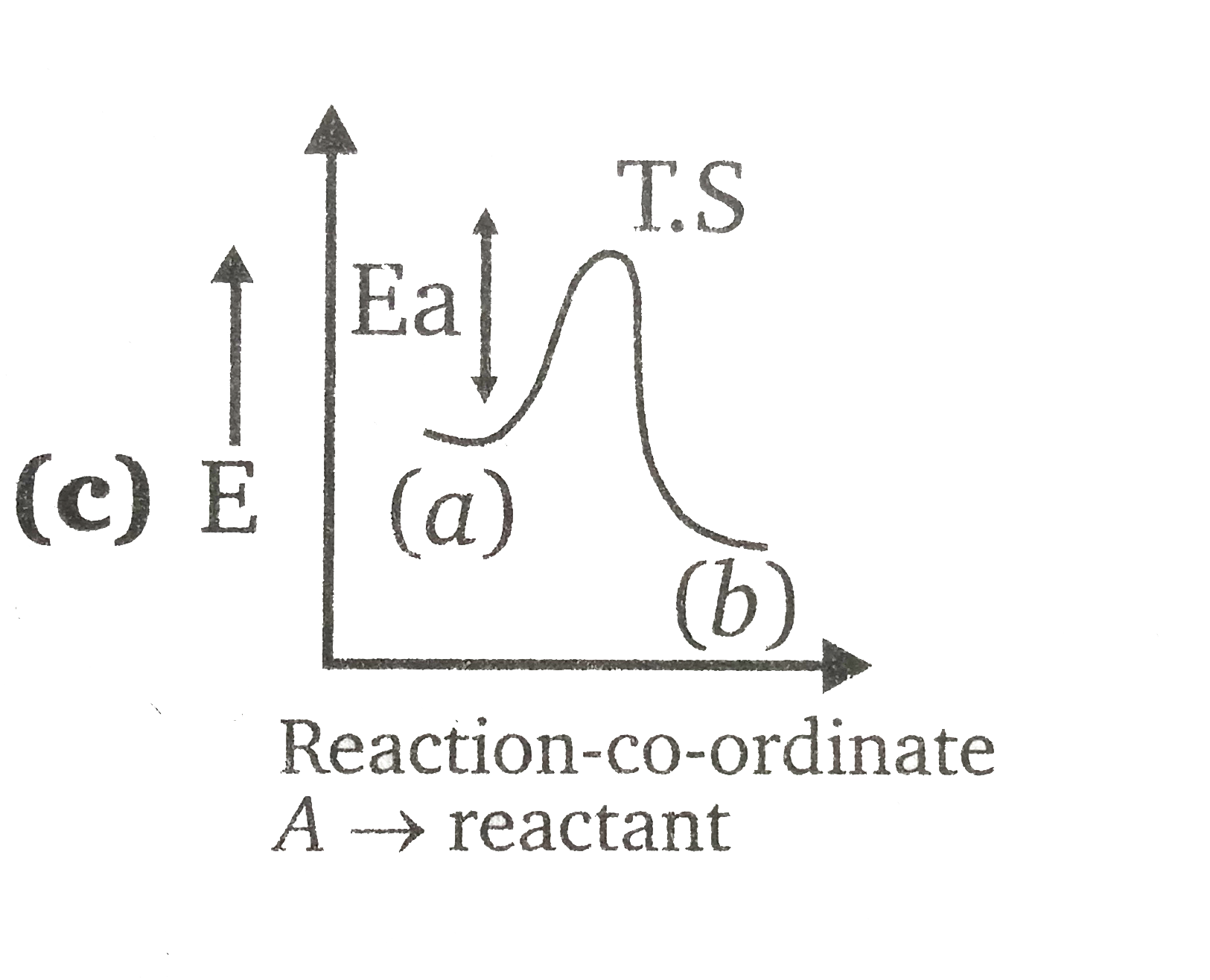
The rate constant for a reaction can be increased by `underset(bar)(a)` the stability of the reactant or by `underset(bar)(b)` the stability of the transition state. Select the correct choice for a and b.
A
decreasing, decreasing
B
increasing, decreasing
C
decreaseing, increasing
D
increasing, increasing
Text Solution
Verified by Experts
The correct Answer is:
c
more the stable reactant and more will be rate constant more the stable transition stable less will activation energy more is rate of reaction.
Topper's Solved these Questions
HYDROCARBONS (ALKENES)
MS CHOUHAN|Exercise Level 1 (Q.1 To Q.30)|1 Videos
HYDROCARBONS (ALKENES)
MS CHOUHAN|Exercise Level 1 (Q.61 To Q.90)|2 Videos
HYDROCARBONS (ALKANES)
MS CHOUHAN|Exercise Level 1 (Q.31 To Q.50)|1 Videos
HYDROCARBONS (ALKYNES)
MS CHOUHAN|Exercise Level 1 (Q.1 To Q.30)|2 Videos
Similar Questions
Explore conceptually related problems
In a reaction A to B the rate of reaction increases two times on increasing the concentration of the reactant four times, then order of reaction is
The rate of reaction between two reactants A and B increases by a factor of 4 if the concentration of reactant B is doubled. The order of this reaction with respect to reactant B is
In a reaction A to B, the rate of reaction increases eight times on increasing the concentration of the reactant four times, then order of reaction is:
In a first order reaction A to B, if k is rate constant and initial concentration of the reactant A is 2 M then the half life of the reaction is: