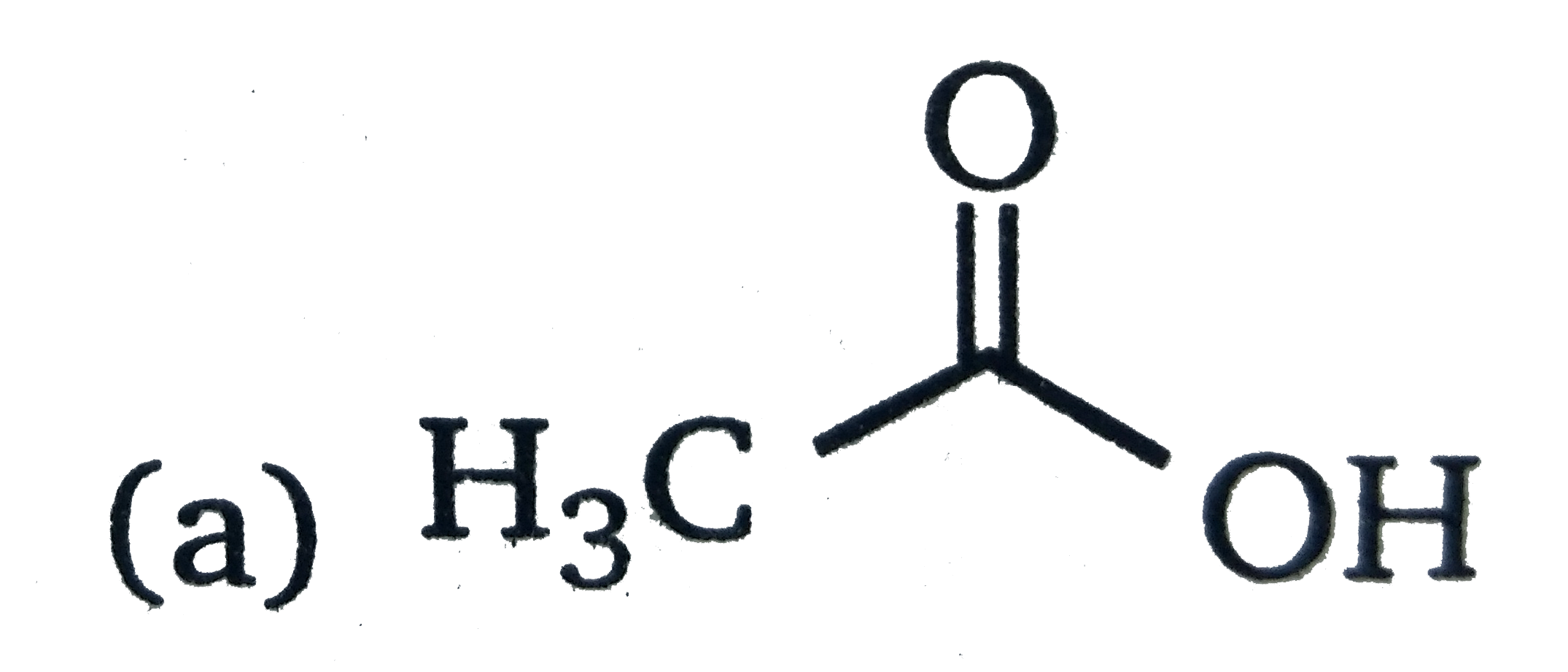
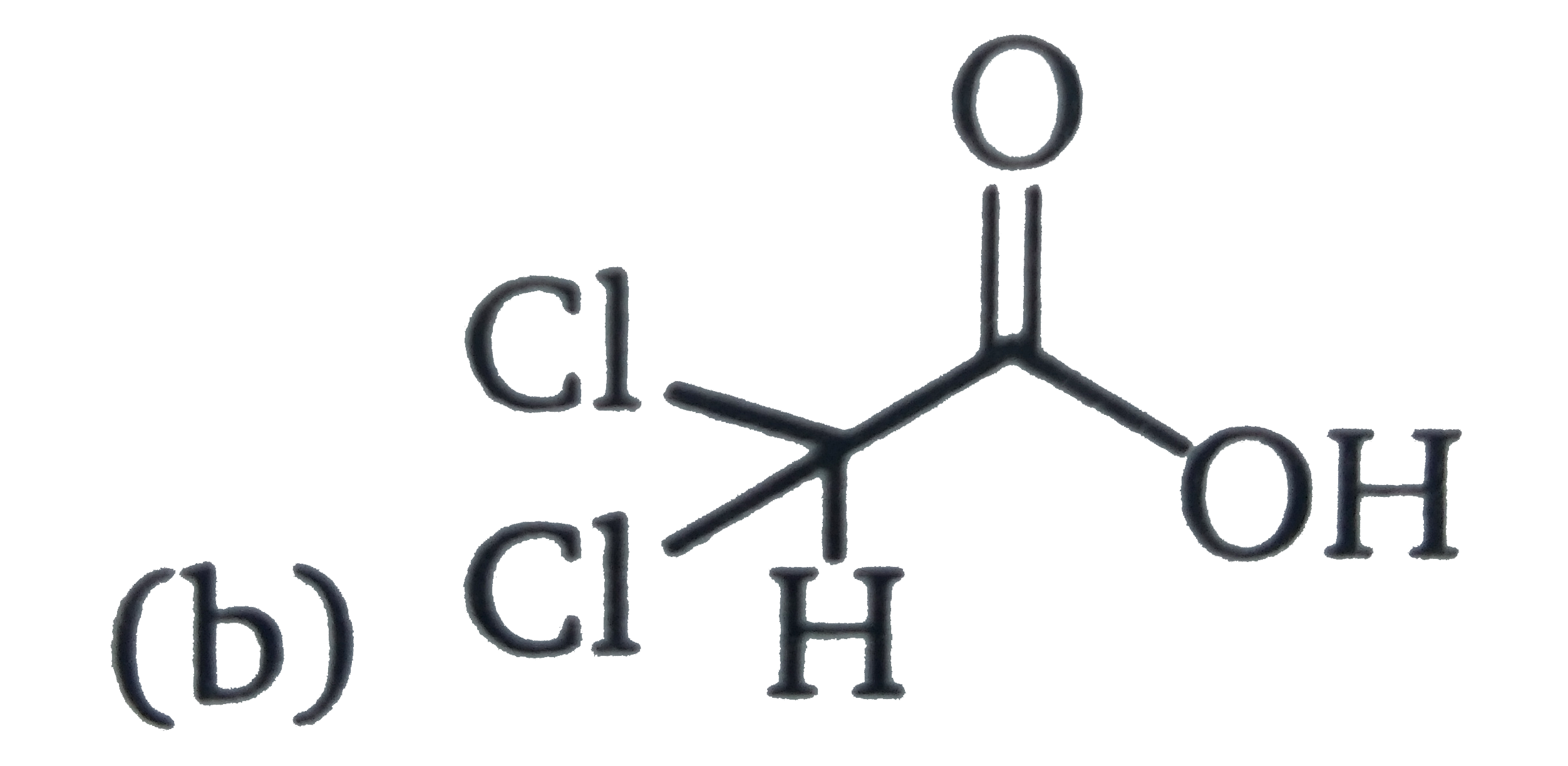
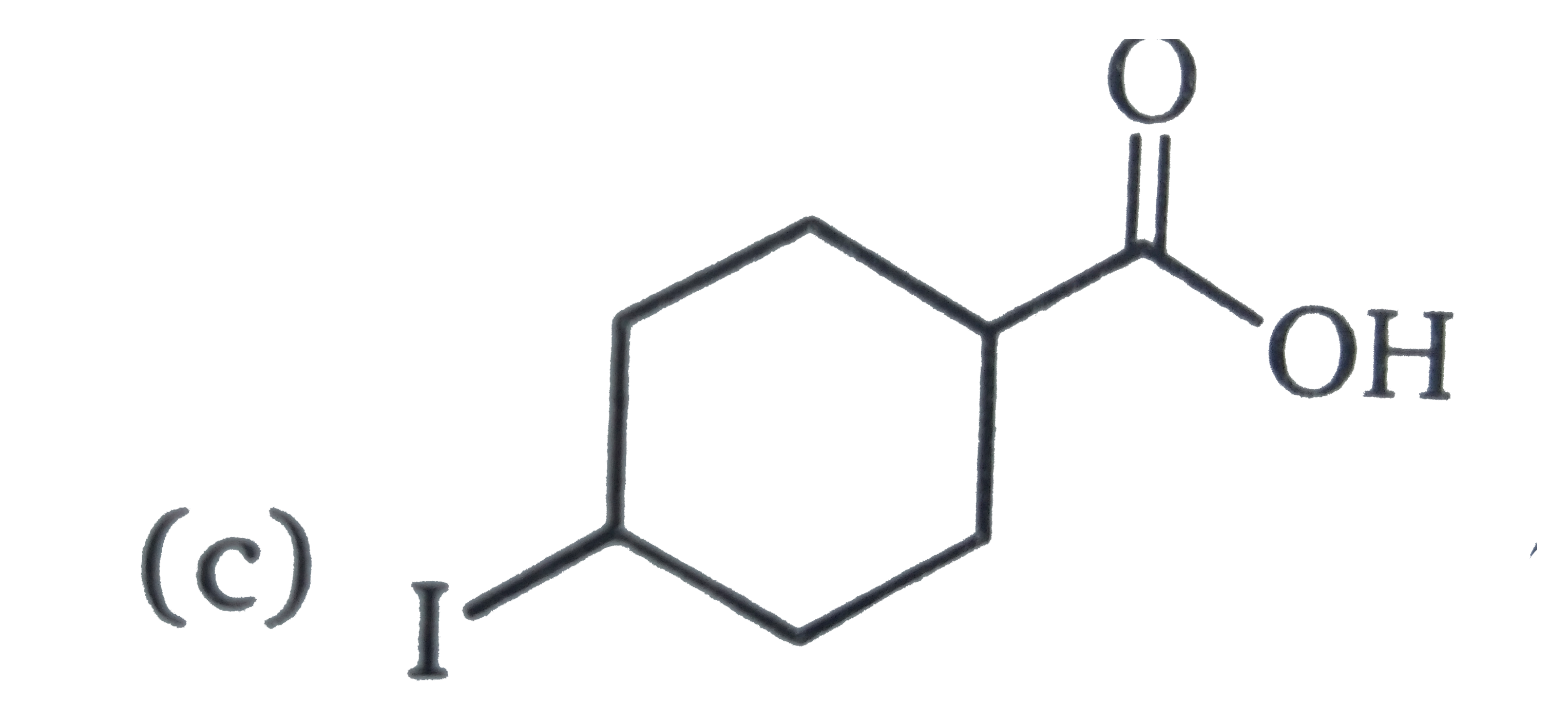
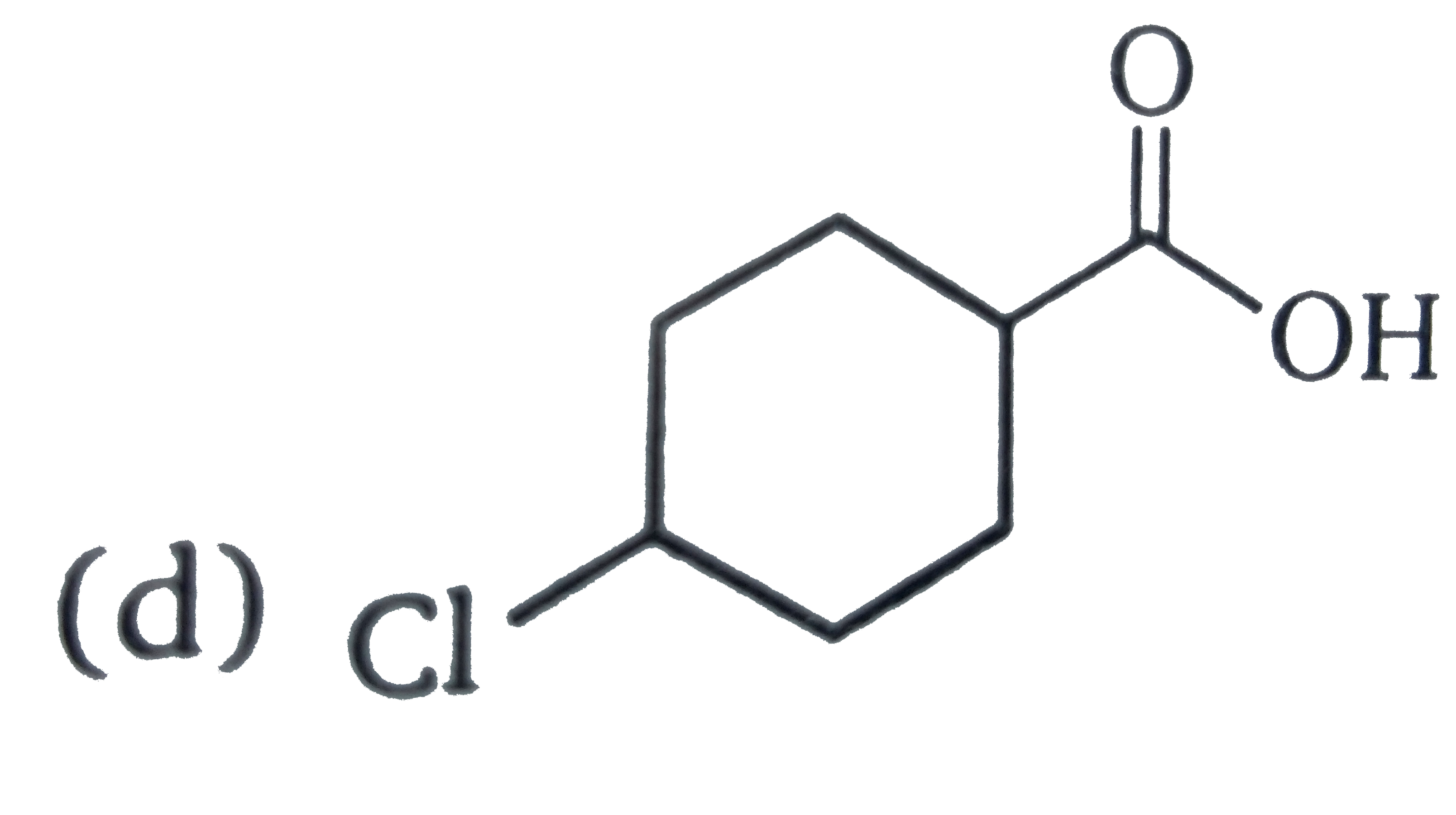
Select the acid with the highest `K_(a)` (i.e., lowest `pK_(a))`.
A
B
C
D
Text Solution
AI Generated Solution
The correct Answer is:
To determine which acid has the highest \( K_a \) (and thus the lowest \( pK_a \)), we need to analyze the given acids and their conjugate bases in terms of stability. The stronger the acid, the higher the \( K_a \) value, and the lower the \( pK_a \) value.
### Step-by-Step Solution:
1. **Identify the Acids**:
We have four acids to consider:
- Option A: Acetic Acid (CH₃COOH)
- Option B: Dichloroacetic Acid (CCl₂COOH)
- Option C: Iodobenzoic Acid (C₆H₄I-COOH)
- Option D: Benzoic Acid (C₆H₅COOH)
2. **Analyze the Conjugate Bases**:
For each acid, we need to consider the stability of its conjugate base, as the stability of the conjugate base influences the acidity of the acid.
- **Acetic Acid**: The conjugate base (CH₃COO⁻) has resonance stabilization due to the carboxylate structure.
- **Dichloroacetic Acid**: The conjugate base (CCl₂COO⁻) benefits from resonance stabilization and the strong -I (inductive) effect of the two chlorine atoms, which withdraw electron density and stabilize the negative charge.
- **Iodobenzoic Acid**: The conjugate base (C₆H₄I-COO⁻) has some resonance but is less stabilized due to the -I effect of iodine being weaker than that of chlorine.
- **Benzoic Acid**: The conjugate base (C₆H₅COO⁻) has resonance stabilization but lacks strong electron-withdrawing groups that would enhance stability.
3. **Compare the Stability of Conjugate Bases**:
- The conjugate base of **Dichloroacetic Acid** is the most stable due to the strong -I effect from the two chlorine atoms and resonance.
- The conjugate base of **Acetic Acid** is next, with only resonance stabilization.
- The conjugate base of **Benzoic Acid** follows, as it has resonance but no strong -I effect.
- The conjugate base of **Iodobenzoic Acid** is the least stable due to the weaker -I effect of iodine and the presence of the benzene ring which has a +I effect.
4. **Determine the Order of Acidity**:
Based on the stability of the conjugate bases, we can rank the acids:
- Strongest Acid: **Dichloroacetic Acid (B)**
- Next: **Acetic Acid (A)**
- Then: **Benzoic Acid (D)**
- Weakest: **Iodobenzoic Acid (C)**
5. **Conclusion**:
The acid with the highest \( K_a \) (and thus the lowest \( pK_a \)) is **Dichloroacetic Acid (B)**.
### Final Answer:
The acid with the highest \( K_a \) is **Option B: Dichloroacetic Acid (CCl₂COOH)**.
To determine which acid has the highest \( K_a \) (and thus the lowest \( pK_a \)), we need to analyze the given acids and their conjugate bases in terms of stability. The stronger the acid, the higher the \( K_a \) value, and the lower the \( pK_a \) value.
### Step-by-Step Solution:
1. **Identify the Acids**:
We have four acids to consider:
- Option A: Acetic Acid (CH₃COOH)
- Option B: Dichloroacetic Acid (CCl₂COOH)
...
Topper's Solved these Questions
GENERAL ORGANIC CHEMISTRY
MS CHOUHAN|Exercise LEVEL- 1|1 Videos
FAMILIES OF CARBON COMPOUNDS: FUNCTIONAL GROUPS AND INTERMOLECULAR FORCES
MS CHOUHAN|Exercise ADDITIONAL OBJECTIVE QUESTIONS ( Matrix Match Type ) |4 Videos
GRIGNARD REAGENTS
MS CHOUHAN|Exercise Level 1 (Q.61 To Q.66)|1 Videos
Similar Questions
Explore conceptually related problems
Which has highest pk_(a) value
Which has the highest pK_(b) value?
Among the acids which have lowest pK_(a) value ?
Which of the following has the highest PK_(a) ?
The base with lowest pK_(a) value is
Which of the following has the highest pK_(a) value?