To determine which carbocation is the most stabilized, we need to analyze the resonance structures and the degree of conjugation in each carbocation. Here’s a step-by-step solution:
### Step 1: Identify the Carbocations
Assume we have four carbocations (let's label them A, B, C, and D) to analyze. Each carbocation has a positive charge and varying degrees of resonance and conjugation.
### Step 2: Analyze Resonance in Each Carbocation
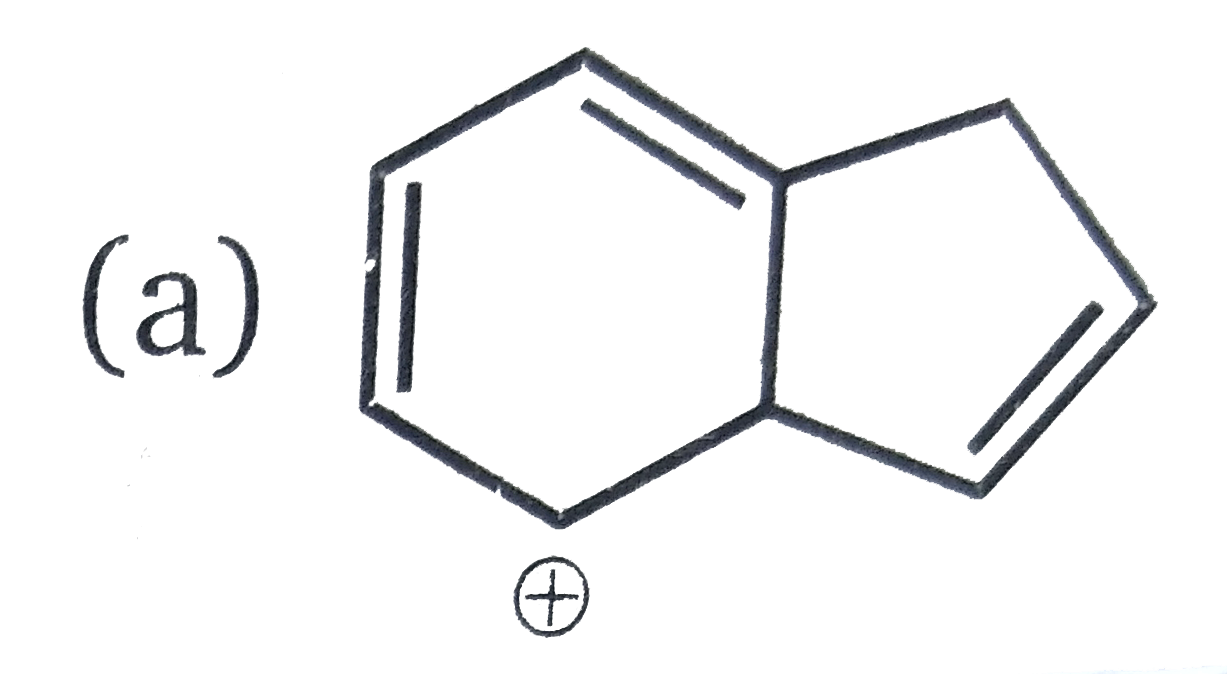
1. **Carbocation A**:
- The positive charge is adjacent to two double bonds.
- It can participate in resonance with both double bonds, leading to multiple resonance structures.
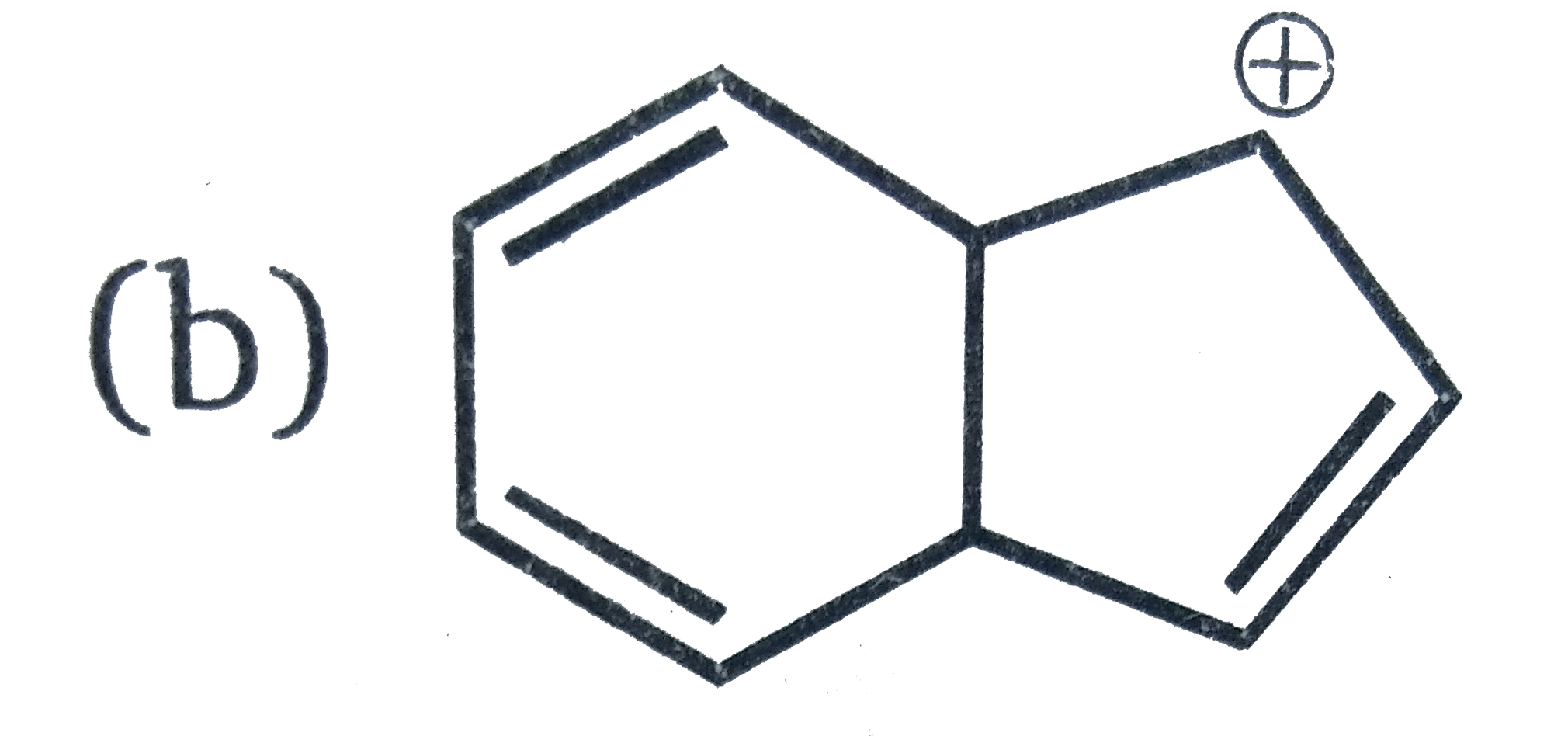
2. **Carbocation B**:
- The positive charge is adjacent to one double bond.
- It can only participate in resonance with that single double bond.
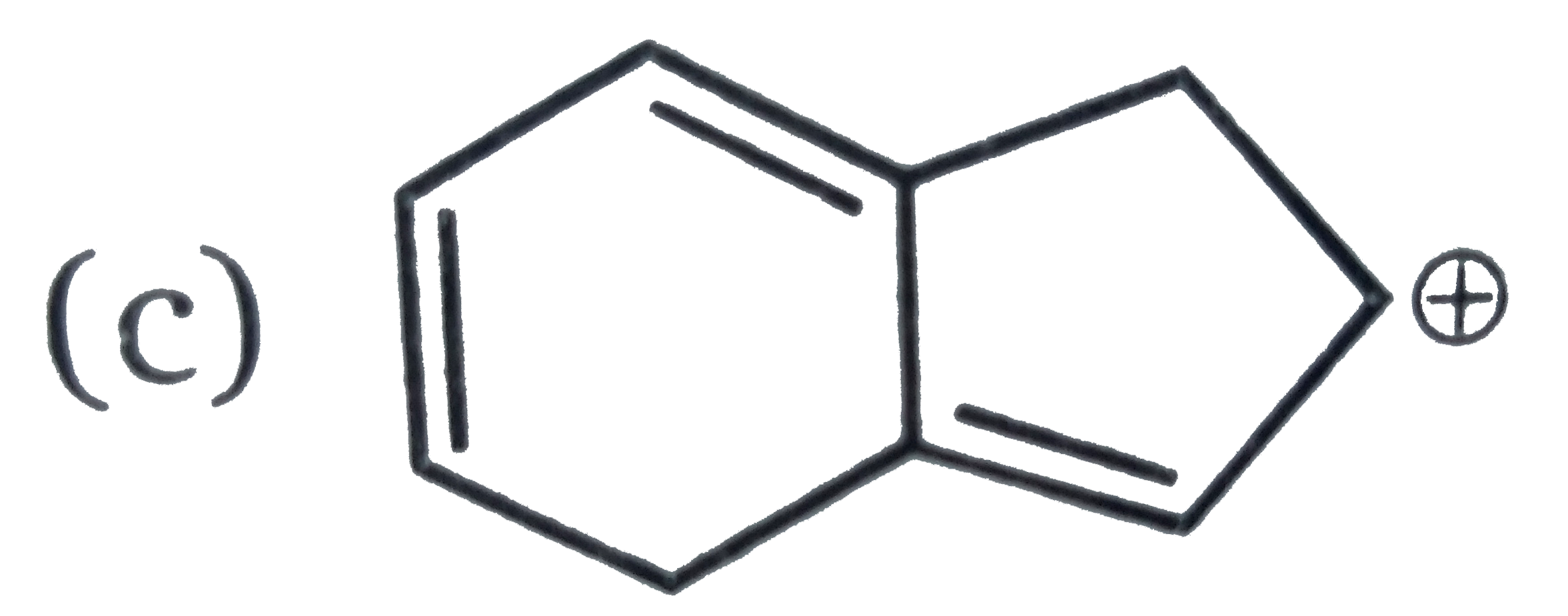
3. **Carbocation C**:
- The positive charge is in a position where it can participate in resonance with three double bonds.
- This allows for the formation of multiple resonance structures, enhancing stability.
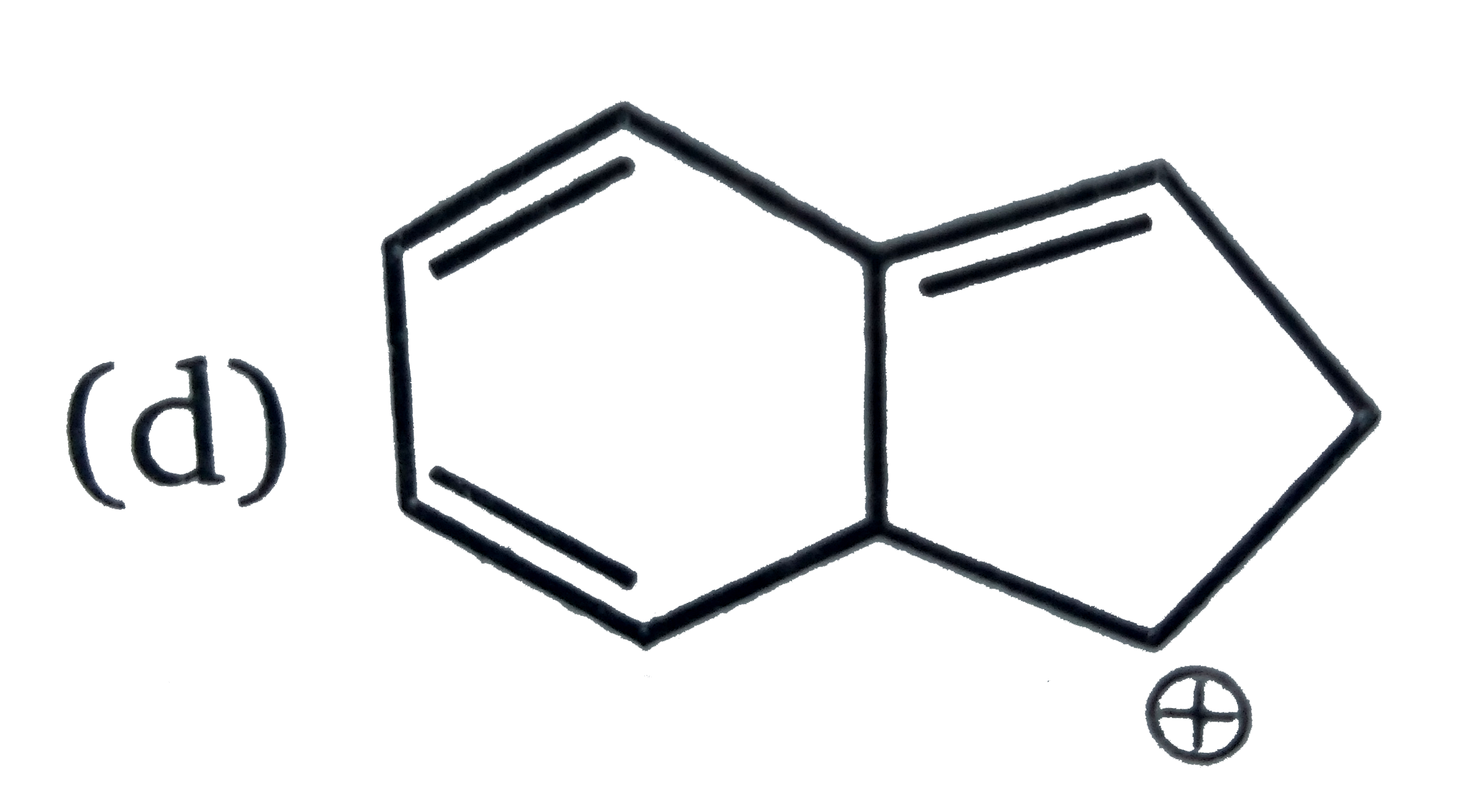
4. **Carbocation D**:
- The positive charge has no adjacent double bonds and is surrounded by sigma bonds only.
- Its stability relies solely on hyperconjugation from adjacent alkyl groups, which is less effective than resonance.
### Step 3: Count the Resonance Structures
- **Carbocation A**: 3 resonance structures (due to 2 double bonds)
- **Carbocation B**: 2 resonance structures (due to 1 double bond)
- **Carbocation C**: 4 resonance structures (due to 3 double bonds)
- **Carbocation D**: 1 resonance structure (no double bonds, only hyperconjugation)
### Step 4: Determine Stability Based on Resonance
- The more resonance structures a carbocation can form, the more stable it is due to the delocalization of the positive charge.
- **Carbocation C**, with the ability to resonate with three double bonds, will be the most stable.
- **Carbocation A** is next, followed by **Carbocation B**.
- **Carbocation D** is the least stable due to lack of resonance.
### Conclusion
The most stabilized carbocation is **Carbocation C** because it has the highest number of resonance structures (4), allowing for greater delocalization of the positive charge.
---
To determine which carbocation is the most stabilized, we need to analyze the resonance structures and the degree of conjugation in each carbocation. Here’s a step-by-step solution:
### Step 1: Identify the Carbocations
Assume we have four carbocations (let's label them A, B, C, and D) to analyze. Each carbocation has a positive charge and varying degrees of resonance and conjugation.
### Step 2: Analyze Resonance in Each Carbocation
1. **Carbocation A**:
- The positive charge is adjacent to two double bonds.
...
Topper's Solved these Questions
GENERAL ORGANIC CHEMISTRY
MS CHOUHAN|Exercise LEVEL- 1|1 Videos
FAMILIES OF CARBON COMPOUNDS: FUNCTIONAL GROUPS AND INTERMOLECULAR FORCES
MS CHOUHAN|Exercise ADDITIONAL OBJECTIVE QUESTIONS ( Matrix Match Type ) |4 Videos
GRIGNARD REAGENTS
MS CHOUHAN|Exercise Level 1 (Q.61 To Q.66)|1 Videos
Similar Questions
Explore conceptually related problems
Which carbocation is the most stable-
Which carbocation in the most stable ?
Which carbocation is most stable
Which allylic carbocation is most stable?
Which of the following carbocation will be the most stable?
Which of the following carbocation is most stable ?