Home
Class 12
CHEMISTRY
The strongest base is :...

The strongest base is :

A

`CH_(3)-underset(CH_(3))underset(|)N-CH_(3)`

B

C

`C_(6)H_(5)-underset(C_(6)H_(5))underset(|)N-C_(6)H_(5)`

D

`CH_(3)-NH-CH_(3)`

Text Solution

AI Generated Solution

The correct Answer is:

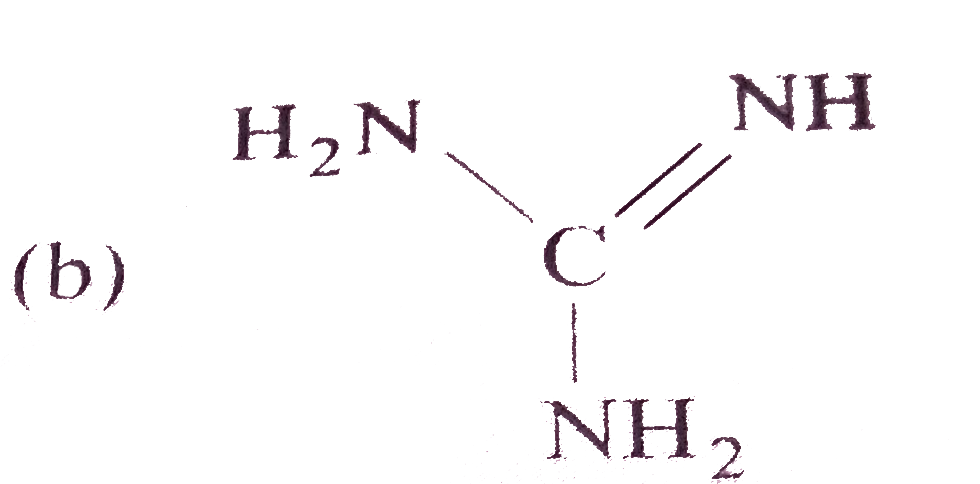
To determine the strongest base among the given options, we need to analyze the structures and the electron-donating effects of the substituents present in each compound. Here's a step-by-step breakdown of the solution: ### Step 1: Understand Basicity Basicity refers to the ability of a compound to accept protons (H⁺ ions). The stronger the base, the more readily it can accept a proton. Basicity is influenced by the electron density around the basic site (usually a nitrogen atom in amines). ### Step 2: Analyze the Given Options Assuming we have four options (A, B, C, D), we need to evaluate each based on their substituents and the electron-donating effects. ### Step 3: Evaluate Each Option 1. **Option A**: Contains a nitrogen atom with a double bond (NH) and possible resonance structures. The presence of resonance can stabilize the base, but it can also delocalize the electron density, which may reduce basicity. 2. **Option B**: Contains a nitrogen atom with two methyl groups. Methyl groups are electron-donating through the +I effect, which increases electron density on the nitrogen, making it a stronger base. 3. **Option C**: Contains a nitrogen atom with three benzene rings. The benzene rings can withdraw electron density due to resonance, making the nitrogen less basic. 4. **Option D**: Similar to option C, but with only two methyl groups. While methyl groups do donate electrons, the presence of multiple benzene rings will still dominate the electron-withdrawing effect. ### Step 4: Compare Options A and B - In **Option A**, the NH group is involved in resonance, which can stabilize the base but also reduce its ability to accept protons. - In **Option B**, the nitrogen is surrounded by two methyl groups that strongly donate electrons, enhancing its basicity. ### Step 5: Conclusion Based on the analysis, **Option B** is the strongest base because it has two methyl groups that significantly increase the electron density on the nitrogen, allowing it to accept protons more readily than the other options. ### Final Answer **The strongest base is Option B.** ---

To determine the strongest base among the given options, we need to analyze the structures and the electron-donating effects of the substituents present in each compound. Here's a step-by-step breakdown of the solution: ### Step 1: Understand Basicity Basicity refers to the ability of a compound to accept protons (H⁺ ions). The stronger the base, the more readily it can accept a proton. Basicity is influenced by the electron density around the basic site (usually a nitrogen atom in amines). ### Step 2: Analyze the Given Options Assuming we have four options (A, B, C, D), we need to evaluate each based on their substituents and the electron-donating effects. ...
Promotional Banner

Topper's Solved these Questions

  • GENERAL ORGANIC CHEMISTRY

    HIMANSHU PANDEY|Exercise Level 1 (Q.26 To Q.49)|24 Videos
  • GENERAL ORGANIC CHEMISTRY

    HIMANSHU PANDEY|Exercise Level 2 (Q.1 To Q.25)|25 Videos
  • CHEMISTRY IN DAILY LIFE

    HIMANSHU PANDEY|Exercise Integer Answer Type Problems|7 Videos
  • HALIDES

    HIMANSHU PANDEY|Exercise Subjective Type Problems|10 Videos

Similar Questions

Explore conceptually related problems

The strongest base in the following is :

Which of the following is the strongest base:

Which of the following is the strongest base :-

Which of the following is the strongest base :-

The strongest base of the following species is

HIMANSHU PANDEY-GENERAL ORGANIC CHEMISTRY-Subjective Type Problems
  1. The strongest base is :

    Text Solution

    |

  2. Which of the following systems are conjugated?

    Text Solution

    |

  3. Draw all reasonable resonance structures for each species.

    Text Solution

    |

  4. Draw all reasonable resonance structures for each species.

    Text Solution

    |

  5. Determine the hybridization at the carbon atom indicated in each speci...

    Text Solution

    |

  6. Explain each statement using resonance theory. (a) The indicated C-...

    Text Solution

    |

  7. Rank the following dienes in order of increasin heat of hydrogenation.

    Text Solution

    |

  8. How many pi electrons are contained in each molecule ?

    Text Solution

    |

  9. Which compaounds are aromatic? For any compound that is not aromatic, ...

    Text Solution

    |

  10. Which of the following heterocycles are aromatic?

    Text Solution

    |

  11. Lebel each compound as aromatic, antiaromatic, or not aromatic. Assume...

    Text Solution

    |

  12. Hydrocarbons A and B both possess a significant dipolel, even though e...

    Text Solution

    |

  13. Rank the indicated C-C bonds in order of increasing bond length, and e...

    Text Solution

    |

  14. The purine heterocycle occurs commonly in the structure of DNA. (a) ...

    Text Solution

    |

  15. (a) How many pi electrons does C contion? (b) How many pi electrons ...

    Text Solution

    |

  16. Draw additional resonance structure for each species.

    Text Solution

    |

  17. The carbon-carbon bond lengths in naphthalene are not equal. Use a res...

    Text Solution

    |

  18. Which compound in each pair is the stronger acid?

    Text Solution

    |

  19. Treatment of indene with NaNH(2) forms its conjugate base in a Bronste...

    Text Solution

    |

  20. Draw the conjugate bases of pyrrole and cyclopentadiene. Explain why t...

    Text Solution

    |
