Home
Class 12
CHEMISTRY
Acid catalysed conversation of 1,2-diol ...

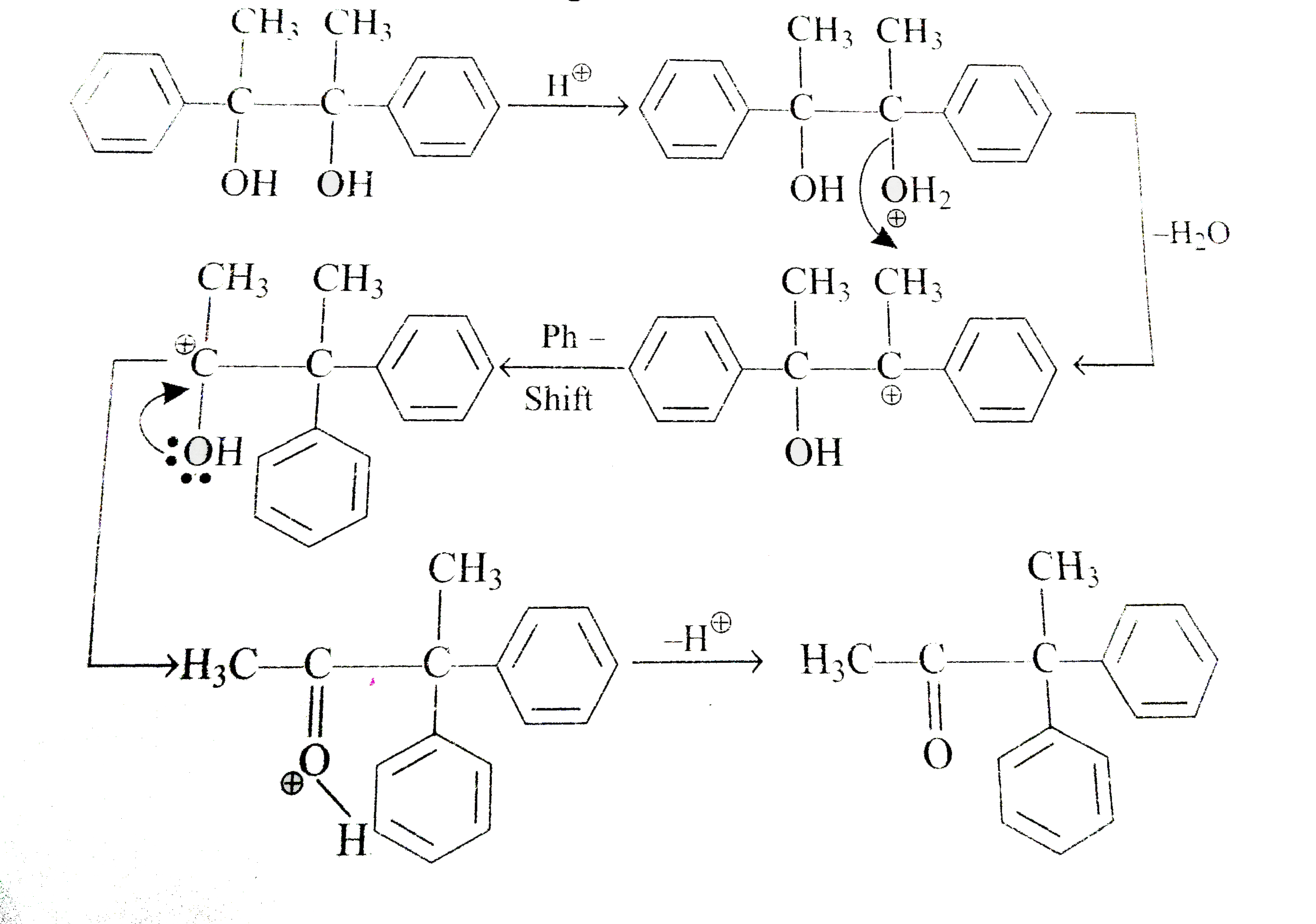
Acid catalysed conversation of 1,2-diol or vicinal, into carbonyl compound known as pinocaol-pinacolone rearrangement.

Generally more electron donating group migrate during mechanism, migration of H is faster because of its smaller size.
Which of the following is not correct about this rearrangement?

A

B

The carboncation is stabilised by 1,2-shift

C

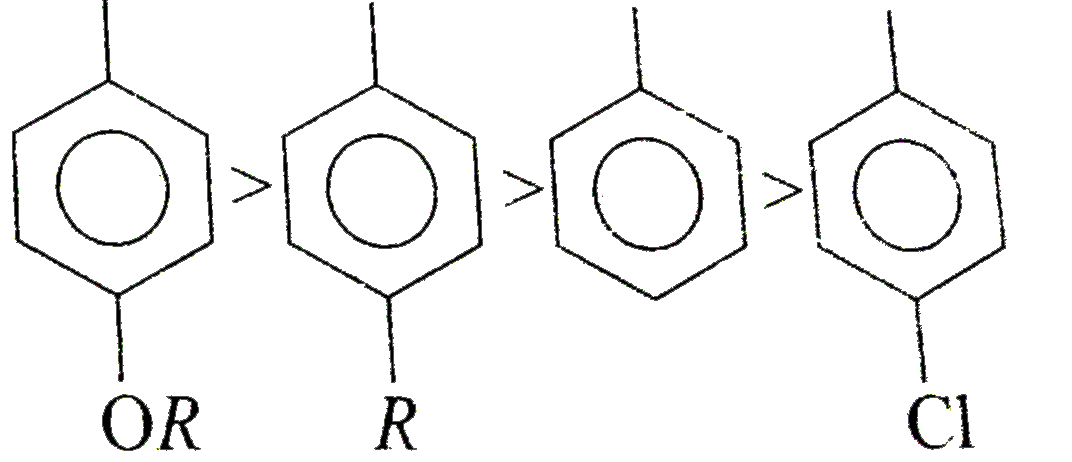
Migration aptitude for substituent is in `R-gtH-gtC_(6)H_(5)`

D

Product of reaction is carbonyl compound.

Text Solution

Verified by Experts

The correct Answer is:

C
Promotional Banner

Topper's Solved these Questions

  • ALCOHOLS AND ETHERS

    HIMANSHU PANDEY|Exercise Match The Column|8 Videos
  • ALCOHOLS AND ETHERS

    HIMANSHU PANDEY|Exercise Integer Answer Type Problems|10 Videos
  • ALCOHOLS AND ETHERS

    HIMANSHU PANDEY|Exercise More Than One Correct (Q.26 To Q.50)|25 Videos
  • AMINES

    HIMANSHU PANDEY|Exercise Subjective Type Problems|5 Videos

Similar Questions

Explore conceptually related problems

Acid catalysed conversation of 1,2-diol or vicinal, into carbonyl compound known as pinocaol-pinacolone rearrangement. Generally more electron donating group migrate during mechanism, migration of H is faster because of its smaller size. What would be the major product of reaction?

Acid catalysed conversation of 1,2-diol or vicinal, into carbonyl compound known as pinocaol-pinacolone rearrangement. Generally more electron donating group migrate during mechanism, migration of H is faster because of its smaller size. In this sequence of reaction final product is"

The base catalysed reaction of 1,2-diketone to a salt of 2-hydroxy carbonxylic acid is known as benzile acid rearrangement . The reaction is not application to 1,2-diketones containing alpha- methylene group because of competing aldol condensation .

The base catalysed reaction of 1,2-diketone to a salt of 2-hydroxy carbonxylic acid is known as benzile acid rearrangement . The reaction is not application to 1,2-diketones containing alpha- methylene group because of competing aldol condensation . Find out product of following reaction :

The base catalysed reaction of 1,2-diketone to a salt of 2-hydroxy carbonxylic acid is known as benzile acid rearrangement . The reaction is not application to 1,2-diketones containing alpha- methylene group because of competing aldol condensation . Find 'P' :

Aldehydes and ketones ar specially susecptible to nucleophilic addition because carbonyl group is polar (due to electronegativity difference between carbon and oxygen) Positive charge on carbon makes it reactive towards the nucleophili. This addition is catalysed by acid. Reactivity of carbonyl compound towards nucleophilic addition increases with increases in the electron deficiency at carbonyl carbon. Thus, (-I.E.)groups increase while (+I.E.) groups decrease the reactivity of carbonyl compound. Which among the following is most reactive to give nucleophilic addtion ?

Aldehyde and ketones are specially susceptible susceptible to nucleophile addition because carbonyl group (due to electronegatvity different between carbon and oxygen). Positive charge on carbon makes it reactive towards the nucleophile. This addition is catalysed by acid. Reactivity of carbonyl compound towards nucleophilic addition increases in the electron deficience at carbonyl carbon. Thus, (-I.E.) group increase while (+I.E.) groups decrease the reactivity of carbonyl compound Which of the following is most reactve to give nucleophilic addition?

HIMANSHU PANDEY-ALCOHOLS AND ETHERS-Linked Comprehension Type
  1. 1,2-diols are oxidised to ketones or aldehydes by periodic acid HIO(4)...

    Text Solution

    |

  2. 1,2-diols are oxidised to ketones or aldehydes by periodic acid HIO(4)...

    Text Solution

    |

  3. Carbon oxygen double bond are easily reduced by NaBH(4) or LiAlH(4). T...

    Text Solution

    |

  4. Carbon oxygen double bond are easily reduced by NaBH(4) or LiAlH(4). T...

    Text Solution

    |

  5. Carbon oxygen double bond are easily reduced by NaBH(4) or LiAlH(4). T...

    Text Solution

    |

  6. An organic compound (A) on treatment with CHCl(3) and KOH gives (Y) an...

    Text Solution

    |

  7. An organic compound (A) on treatment with CHCl(3) and KOH gives (Y) an...

    Text Solution

    |

  8. An organic compound (A) on treatment with CHCl(3) and KOH gives (Y) an...

    Text Solution

    |

  9. A tertiary alcohol (H) upon acid-catalysed dehydration gives a product...

    Text Solution

    |

  10. A tertiary alcohol (H) upon acid-catalysed dehydration gives a product...

    Text Solution

    |

  11. A tertiary alcohol (H) upon acid-catalysed dehydration gives a product...

    Text Solution

    |

  12. Alcohols are converted to tosylates by treatment with p-toluence sulfo...

    Text Solution

    |

  13. Alcohols are converted to tosylates by treatment with p-toluence sulfo...

    Text Solution

    |

  14. Alcohols are converted to tosylates by treatment with p-toluence sulfo...

    Text Solution

    |

  15. Acid catalysed conversation of 1,2-diol or vicinal, into carbonyl comp...

    Text Solution

    |

  16. Acid catalysed conversation of 1,2-diol or vicinal, into carbonyl comp...

    Text Solution

    |

  17. Acid catalysed conversation of 1,2-diol or vicinal, into carbonyl comp...

    Text Solution

    |

  18. Compound (A) C(10)H(22)0(2) is insoluble in aq. NaOH bu not is NaHCO(3...

    Text Solution

    |

  19. Compound (A) C(10)H(22)0(2) is insoluble in aq. NaOH bu not is NaHCO(3...

    Text Solution

    |

  20. Compound (A) C(10)H(22)0(2) is insoluble in aq. NaOH bu not is NaHCO(3...

    Text Solution

    |
