Home
Class 12
PHYSICS
The correct curve between intensity of s...

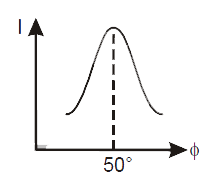
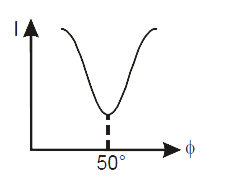
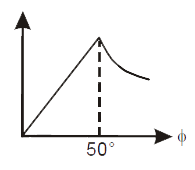
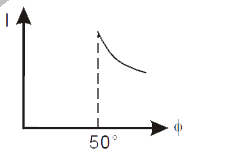
The correct curve between intensity of scattering (I) and the angle of diffraction `phi` in Davison - Germer experiment is :

A

B

C

D

Text Solution

AI Generated Solution

The correct Answer is:

### Step-by-Step Solution: 1. **Understanding the Davison-Germer Experiment**: - The Davison-Germer experiment demonstrated the wave nature of electrons through diffraction patterns. The intensity of scattered electrons is measured at various angles of diffraction. 2. **Identifying Key Parameters**: - The experiment indicates that the maximum intensity of scattering occurs at a specific angle of diffraction, which is 50 degrees in this case. 3. **Analyzing the Intensity vs. Angle of Diffraction**: - As the angle of diffraction increases from 0 degrees, the intensity of scattering will rise, reaching a peak at 50 degrees, and then it will start to decrease. This behavior is typical for diffraction patterns. 4. **Evaluating the Options**: - The problem provides four options for the graph of intensity (I) versus angle of diffraction (φ). We need to identify which graph correctly represents the behavior described. - **Option A**: Shows a peak at 50 degrees, which corresponds to the highest intensity. - **Option B**: Indicates low intensity at 50 degrees, which is incorrect. - **Option C**: Displays a straight line, which does not represent the expected curve. - **Option D**: Does not show an increase in intensity leading up to 50 degrees, making it incorrect. 5. **Conclusion**: - The correct graph is the one that shows the intensity peaking at 50 degrees. Therefore, **Option A** is the correct answer. ### Final Answer: The correct curve between intensity of scattering (I) and the angle of diffraction (φ) in the Davison-Germer experiment is represented by **Option A**. ---
Promotional Banner

Topper's Solved these Questions

  • MATTER WAVE

    MOTION|Exercise EXERCISE 3 (SECTION A)|17 Videos
  • MATTER WAVE

    MOTION|Exercise EXERCISE 3 (SECTION B)|7 Videos
  • MATTER WAVE

    MOTION|Exercise EXERCISE 1 (SECTION B : DAVISSION GERMER EXPERIMENT )|11 Videos
  • MAGNETISM -1

    MOTION|Exercise Exercise - 3 SECTION -A|56 Videos
  • MODERN PHYSICS

    MOTION|Exercise PHYSICS|73 Videos
MOTION-MATTER WAVE-EXERCISE 2
  1. According to the modern theory for nature of light, the light has

    Text Solution

    |

  2. A proton and an alpha - particle have kinetic energy in the ratio 16:1...

    Text Solution

    |

  3. The momentum of photon of frequency 10^9 Hz will be

    Text Solution

    |

  4. What is de-Broglie wavelength of an atom of mass m, moving at absolute...

    Text Solution

    |

  5. Electron has energy of 100 eV what will be its wavelength &

    Text Solution

    |

  6. The ratio of wavelength of deutron and proton accelerated through the ...

    Text Solution

    |

  7. The velocity at which the mass of a particle becomes twice of its rest...

    Text Solution

    |

  8. The speed of a proton is (c )/(20) . The wavelength associated with it...

    Text Solution

    |

  9. If E and P are the energy and the momentum of a photon respectively,th...

    Text Solution

    |

  10. The de-Broglie wavelength associated with electrons revolving round th...

    Text Solution

    |

  11. From rest an electron is accelerated between two such points which has...

    Text Solution

    |

  12. The wavelength of very fast moving electron (v ~~ c) is :

    Text Solution

    |

  13. If the mass of neutron is 1.7xx10^(-27) kg, then the de Broglie wavele...

    Text Solution

    |

  14. An electron of mass m(e) and a proton of mass m(p) are moving with the...

    Text Solution

    |

  15. The magnitude of the de-Broglie wavelength (lambda) of an electron (e)...

    Text Solution

    |

  16. The De broglie wavelength associated with protons accelerated through ...

    Text Solution

    |

  17. A proton moves on a circular path of radius 6.6 × 10^(-3) m in a perp...

    Text Solution

    |

  18. The electron behaves as waves because they can

    Text Solution

    |

  19. The correct curve between intensity of scattering (I) and the angle of...

    Text Solution

    |
