Home
Class 11
CHEMISTRY
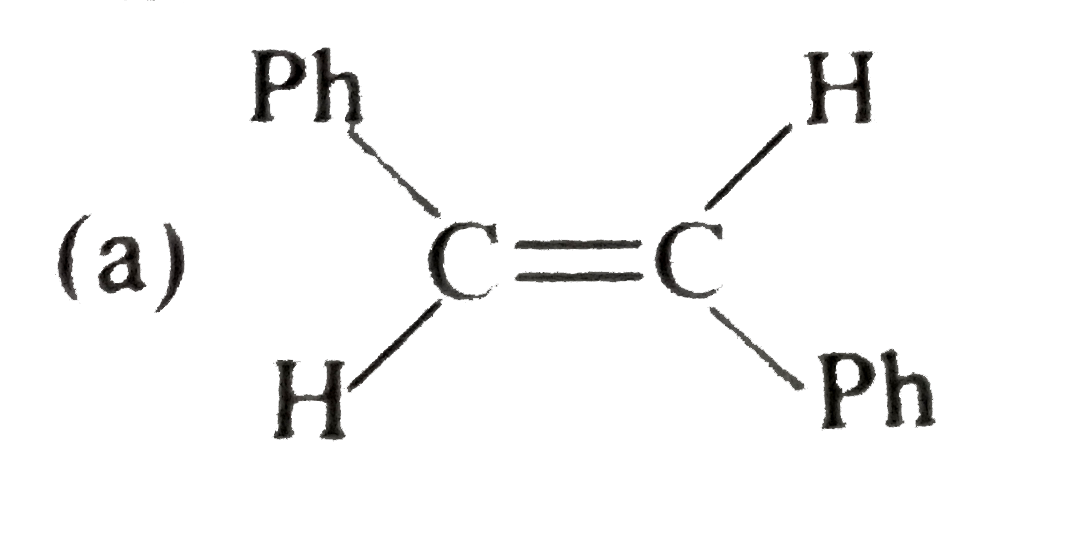
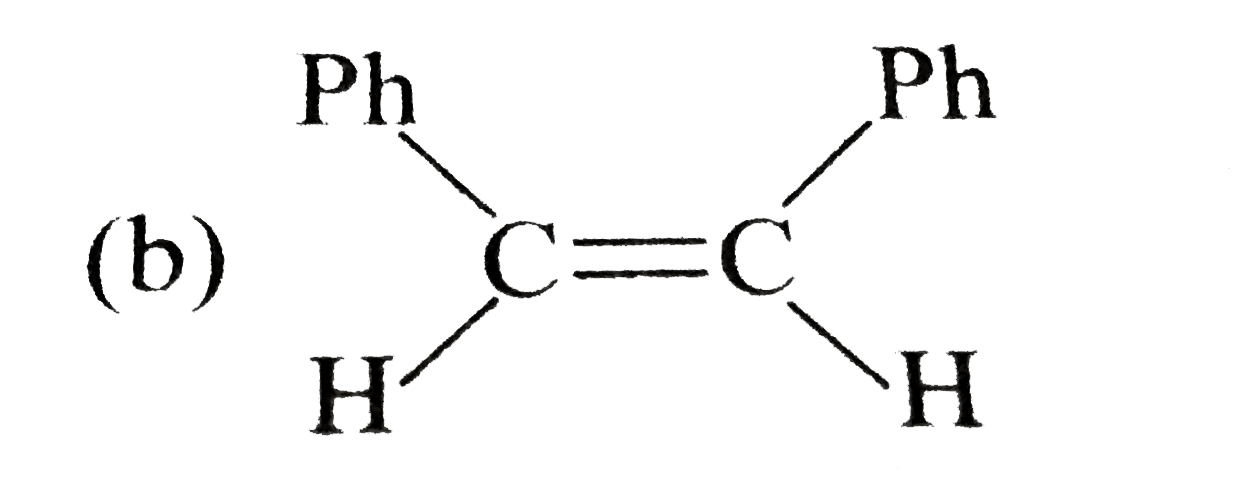
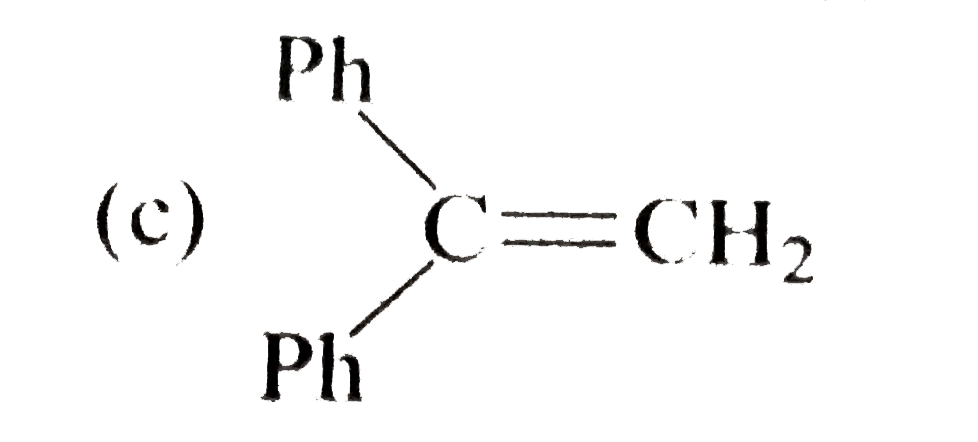
Ph-CH=CH=Ph underset(CCI(4))overset(CI(2...

`Ph-CH=CH=Ph underset(CCI_(4))overset(CI_(2))rarr X overset(2NaNH_(2))rarrYoverset(H_(2),Pd-CaCO_(3))rarrZ`
Identify product (Z) of the reaction.

A

B

C

D

`Ph-C-=C-Ph`

Text Solution

AI Generated Solution

The correct Answer is:

To identify the product (Z) of the given reaction sequence, let's break down the steps involved: ### Step 1: Identify the Starting Material The starting material is an alkene: Ph-CH=CH=Ph, which is a compound with two phenyl groups (Ph) attached to a conjugated diene. ### Step 2: Reaction with Chlorine (Cl2 in CCl4) The first reaction involves the addition of chlorine (Cl2) in carbon tetrachloride (CCl4). This reaction is an anti-addition across the double bond of the alkene. - **Product X**: The product of this reaction will be a dichlorinated compound: - Structure: Ph-CH(Cl)-CH(Cl)-Ph ### Step 3: Reaction with Sodium Amide (2NaNH2) Next, the product X undergoes a reaction with sodium amide (2NaNH2). In this reaction, the two chlorine atoms and the two hydrogen atoms from the adjacent carbon atoms will be eliminated, resulting in the formation of a triple bond. - **Product Y**: The product after this elimination will be: - Structure: Ph-C≡C-Ph (a phenyl-substituted alkyne) ### Step 4: Hydrogenation with Lindlar's Catalyst (H2, Pd-CaCO3) Finally, the alkyne (Product Y) is subjected to hydrogenation using Lindlar's catalyst (H2, Pd-CaCO3). This type of hydrogenation selectively converts alkynes to cis-alkenes. - **Product Z**: The product after this hydrogenation will be: - Structure: Ph-CH=CH-Ph (a cis-alkene) ### Final Answer The product (Z) of the reaction is **Ph-CH=CH-Ph**, which is a cis-stilbene. ---

To identify the product (Z) of the given reaction sequence, let's break down the steps involved: ### Step 1: Identify the Starting Material The starting material is an alkene: Ph-CH=CH=Ph, which is a compound with two phenyl groups (Ph) attached to a conjugated diene. ### Step 2: Reaction with Chlorine (Cl2 in CCl4) The first reaction involves the addition of chlorine (Cl2) in carbon tetrachloride (CCl4). This reaction is an anti-addition across the double bond of the alkene. ...
Promotional Banner

Topper's Solved these Questions

  • HYDROCARBONS (ALKANE, ALKENE and ALKYNE)

    HIMANSHU PANDEY|Exercise Level 2 (Q.151 To Q.175)|24 Videos
  • HYDROCARBONS (ALKANE, ALKENE and ALKYNE)

    HIMANSHU PANDEY|Exercise Level 2 (Q.176 To Q.200)|25 Videos
  • HYDROCARBONS (ALKANE, ALKENE and ALKYNE)

    HIMANSHU PANDEY|Exercise Level 2 (Q.101 To Q.125)|25 Videos

Similar Questions

Explore conceptually related problems

Ph -ch_(2)-ch=ch_(2)overset(dil H_(2)SO_(4))rarrX, Identify product 'X' is :

CH_3CH=CH_2underset(C Cl_4)overset(Br_2)tounderset(excess)overset(NaNH_2)tooverset(H_2O)to Identify the end product of the above sequence of reactions.

In the following reaction sequence Ph -C -= CH underset(Hg^(2+)) overset(aq.H_(2)SO_(4)) rarr A underset(2.H_(2)O)overset(1.CH_(3)Mgl)rarr B the product (B) is

2CH_(3)CHO overset(OH^(-))rarr X rarr Y overset(H_(2)-Pd//C)rarr Z, Z is

C CI_(3)CH=CH_(2) overset(Cl_(2)+H_(2)O)rarr P , Identify major product P.

Ph-CH_(2)-underset(OH)underset(|)(CH)-CH_(3) overset(K)(rarr) overset(C_(2)H_(5)Br)(rarr) (A) Product (A) in above reaction is :
