Home
Class 11
CHEMISTRY
Free radical substitution chalcogenation...

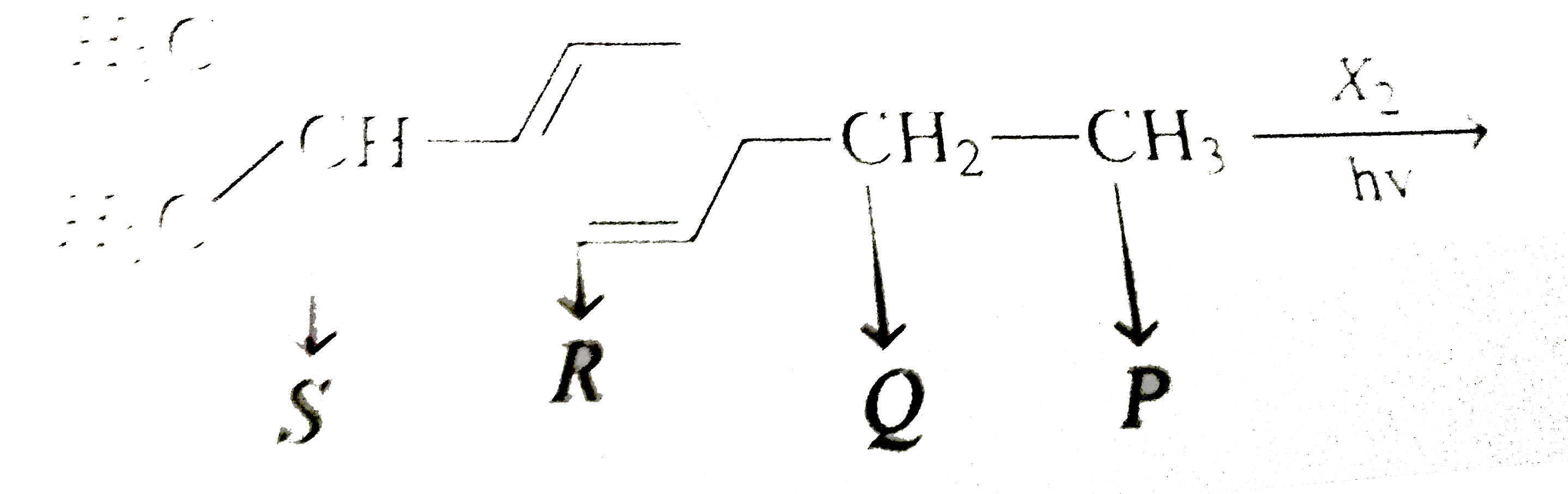
Free radical substitution chalcogenation is hown by the compunds having least one H-atom an `sp^(3)` hyvbridised carbon atom. Here substitution is due to free radical formation in presence of sunlight or heat or peroxide.The abstruction of H-atom is on the basis of staability of free radical flrmed

Which of these H-atom can be substituted to get an optically active lhalide?

A

P

B

Q

C

R

D

S

Text Solution

Verified by Experts

The correct Answer is:
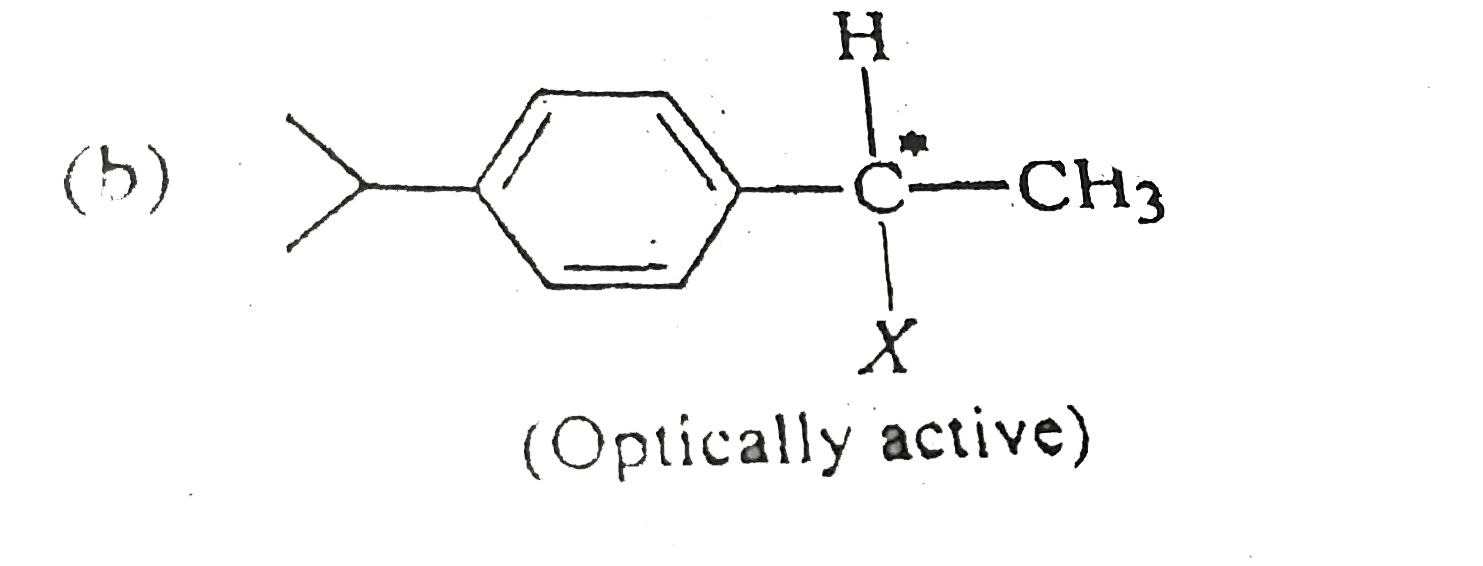
B

The following Reaction are
Promotional Banner

Topper's Solved these Questions

  • HYDROCARBONS (ALKANE, ALKENE and ALKYNE)

    HIMANSHU PANDEY|Exercise Match The Column|12 Videos
  • HYDROCARBONS (ALKANE, ALKENE and ALKYNE)

    HIMANSHU PANDEY|Exercise Integer Answer Type Problems|10 Videos
  • HYDROCARBONS (ALKANE, ALKENE and ALKYNE)

    HIMANSHU PANDEY|Exercise Linked Comprehension Type (Q.1 To Q.25)|25 Videos

Similar Questions

Explore conceptually related problems

Free radical substitution chalcogenation is hown by the compunds having least one H-atom an sp^(3) hyvbridised carbon atom. Here substitution is due to free radical formation in presence of sunlight or heat or peroxide.The abstruction of H-atom is on the basis of staability of free radical flrmed Which of the above hydrogen can be abstracted easily by halogen in presence of sunlight?

Free radical substitution chalcogenation is hown by the compunds having least one H-atom an sp^(3) hyvbridised carbon atom. Here substitution is due to free radical formation in presence of sunlight or heat or peroxide.The abstruction of H-atom is on the basis of staability of free radical flrmed In the above reaction how many monobrominated products are possible?

If the reactivity factor for chlorine substitution through free radical by abstracting a primary H - atom is 1 then the ratio of the amount of product A and B is -

Halogenation is a substitution reaction, where halogen replaces one or more hydrogens of hydrocarbon Chlorine free radical make 1^(@), 2^(@), 3^(@) radicals with almost equal ease, whereas bromine free radicals have a clear preference for the formation of tertiary free radicals. So, bromine is less reactive, and more selectrive whereas chlorine is less selective and more reactive. The relative rate of abstraction of hydrogen by Br^(**) is underset(1600)(3^(@)) gt underset(82)(2^(@)) gt underset(1)(1^(@)) underset(5)(3^(@)) gt underset(3.8)(2^(@)) gt underset(1)(1^(@)) 1-halo-2,3-dimethyl butane will be obtained in better yields, if halogen is:

Halogenation is a substitution reaction, where halogen replaces one or more hydrogens of hydrocarbon Chlorine free radical make 1^(@), 2^(@), 3^(@) radicals with almost equal ease, whereas bromine free radicals have a clear preference for the formation of tertiary free radicals. So, bromine is less reactive, and more selectrive whereas chlorine is less selective and more reactive. The relative rate of abstraction of hydrogen by Br^(**) is underset(1600)(3^(@)) gt underset(82)(2^(@)) gt underset(1)(1^(@)) underset(5)(3^(@)) gt underset(3.8)(2^(@)) gt underset(1)(1^(@)) Above product will obtained in better yield if X is

Halogenation is a substitution reaction, where halogen replaces one or more hydrogens of hydrocarbon Chlorine free radical make 1^(@), 2^(@), 3^(@) radicals with almost equal ease, whereas bromine free radicals have a clear preference for the formation of tertiary free radicals. So, bromine is less reactive, and more selectrive whereas chlorine is less selective and more reactive. The relative rate of abstraction of hydrogen by Br^(**) is underset(1600)(3^(@)) gt underset(82)(2^(@)) gt underset(1)(1^(@)) underset(5)(3^(@)) gt underset(3.8)(2^(@)) gt underset(1)(1^(@)) What is the value of x (% yield of product)?

