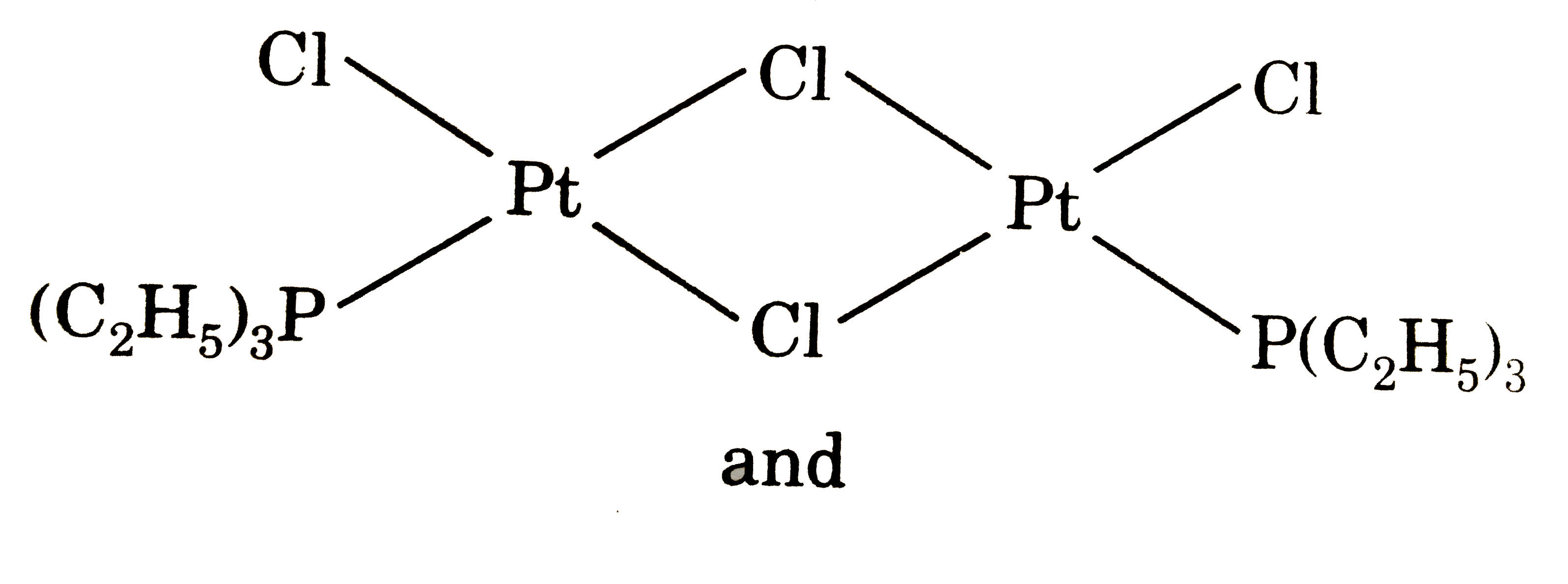
 " and "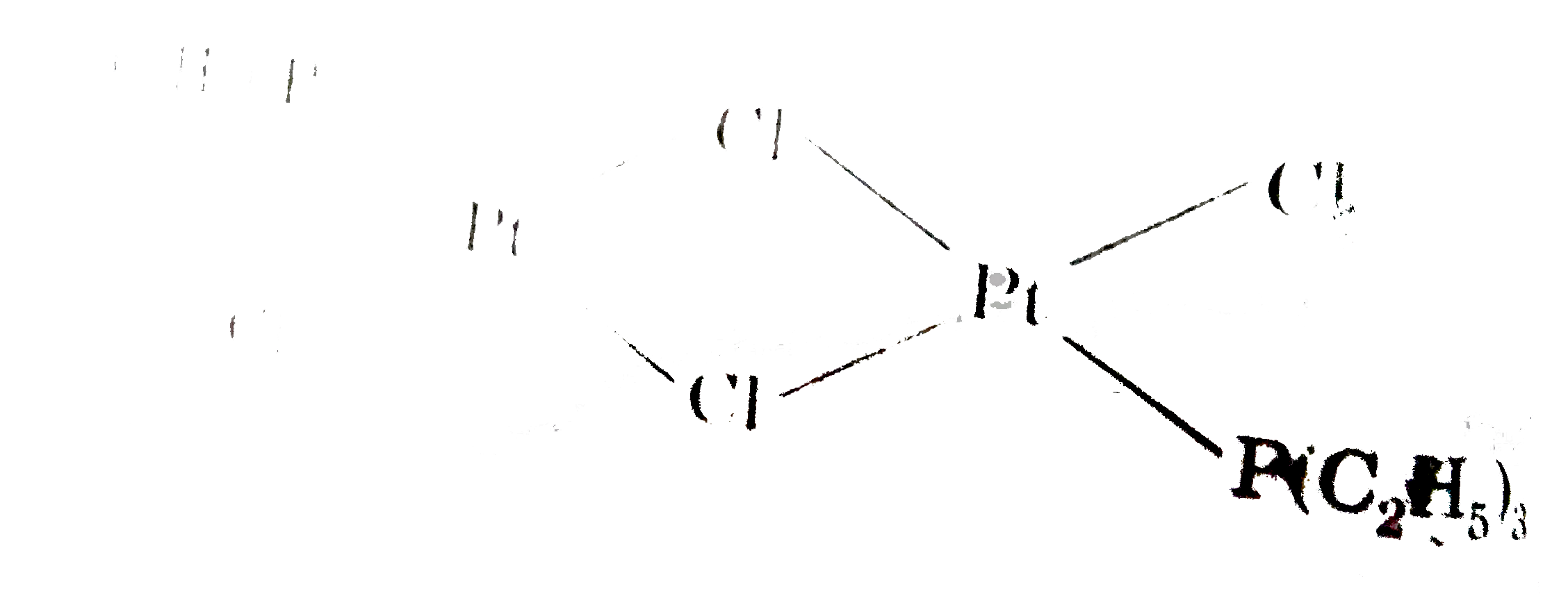
A
B
C
D
Text Solution
Verified by Experts
The correct Answer is:



Topper's Solved these Questions
COORDINATION COMPOUND
MOTION|Exercise EXERCISE-2 (LEVEL -II) MULTIPLE CORRECT JEE ADVANCED|50 VideosCOORDINATION COMPOUND
MOTION|Exercise EXERCISE-2 (LEVEL -II) MULTIPLE CORRECT JEE ADVANCED Match the Column|10 VideosCOORDINATION COMPOUND
MOTION|Exercise EXERCISE-4 LEVEL-II PREVIOUS YEAR JEE ADVANCED|37 VideosCLASSROOM PROBLEMS 1
MOTION|Exercise THERMODYNAMICS|17 VideosD-BLOCK ELEMENTS
MOTION|Exercise Exercise IV Level-II|9 Videos
Similar Questions
Explore conceptually related problems
MOTION-COORDINATION COMPOUND-EXERCISE -2 (LEVEL I) OBJECTIVE PROBLEMS JEE MAIN
- In which complex is the transition metal in zero oxidation state:
Text Solution
|
- The IUPAC name for the coordination compound Ba[BrF4]2 is:
Text Solution
|
- The complexes given below show : " and "
Text Solution
|
- For the complex ion dichloro bis (ethylene diamine) cobalt (III), sele...
Text Solution
|
- Type of isomerism exhibited by [Ir(OCN)2(H2O)3]
Text Solution
|
- Which of the following complex exhibits geometrical isomerism
Text Solution
|
- The total number possible isomers for the complex compound [Cu^(II)(NH...
Text Solution
|
- Which complex is likely to show optical activity :
Text Solution
|
- [Co(NH3)5Br]SO4 and [Co(NH3)5SO4]Br are the examples of:
Text Solution
|
- Which of the following is non-ionizable-
Text Solution
|
- [Cu(NH3)4]^(2+) has hybridisation and magnetic moment
Text Solution
|
- Which of the following statements is incorrect?
Text Solution
|
- The number of geometrical isomers for octahedral [CoCl(4)(NH(3))(2)]^(...
Text Solution
|
- The complex which exhibits cis-trans isomerism as well as can be resol...
Text Solution
|
- [Co(en)3]^(3+) ion is expected to show
Text Solution
|
- An ion M^(2+) forms the complexes. [M(H(2)O)(6)]^(2+)" "[M(en)(3)]^(...
Text Solution
|
- Among TiF(6)^(2-), CoF(6)^(3-), Cu(2)Cl(2)" and "NiCl(4)^(2-) the colo...
Text Solution
|
- Which of the following statements is not correct?
Text Solution
|
- The geometry of Ni(CO(4)) and Ni(PPh(3))(2)Cl(2) are
Text Solution
|
- Which one of the following is paramagnetic in nature ?
Text Solution
|