A
B
C
D
Text Solution
Verified by Experts
The correct Answer is:



Topper's Solved these Questions
Similar Questions
Explore conceptually related problems
GRB PUBLICATION-VECTORS-OBJECTIVE QUESTIONS
- A particle is moving on a cicular path of radius 'R' . As it moves ...
Text Solution
|
- If vec(A) makes an angle alpha, beta and gamma from x,y and z axis res...
Text Solution
|
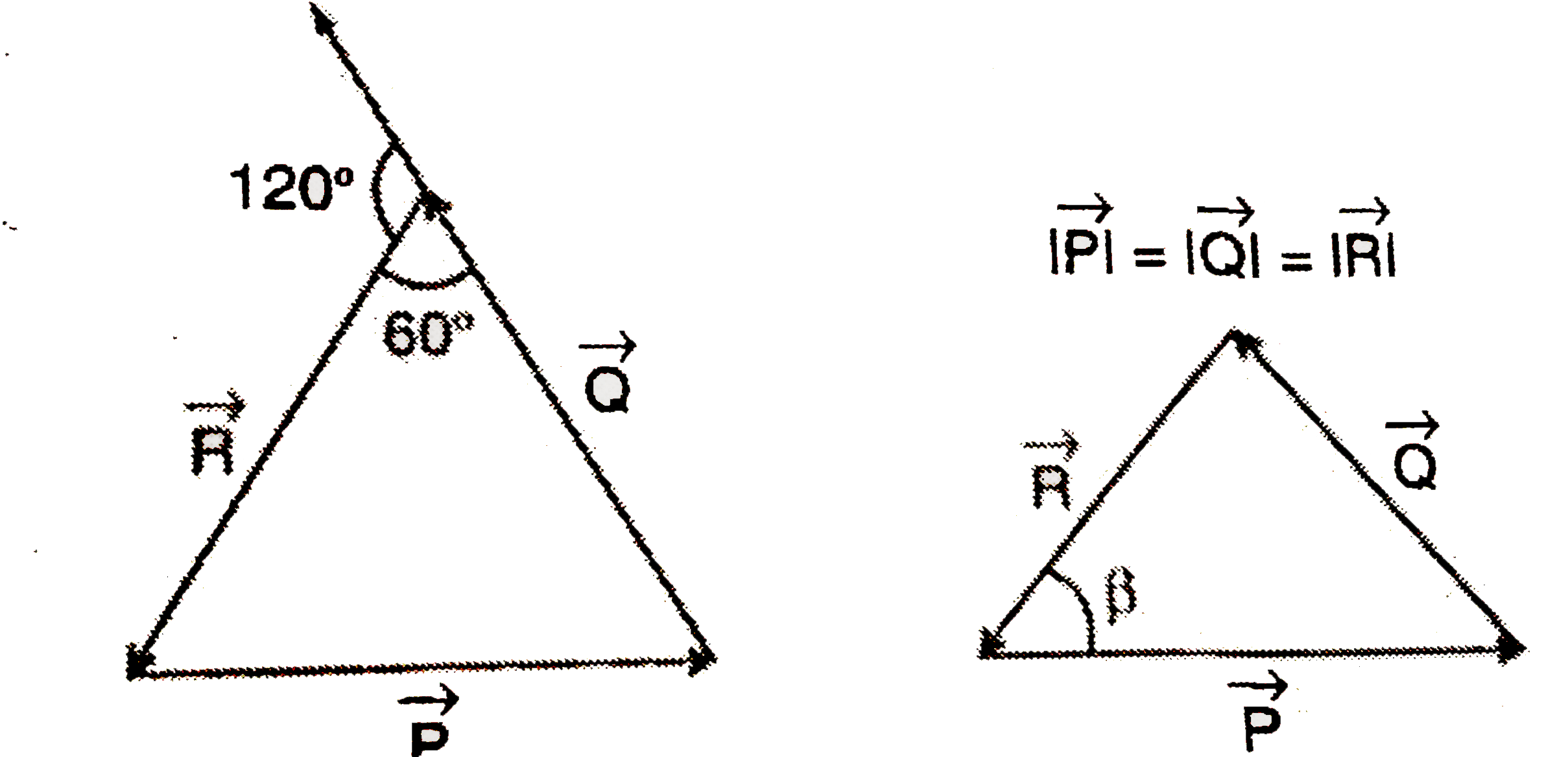
- Magnitudes of vectors vecP, vecQ and vecR are equal, If vecP + vecQ+...
Text Solution
|
- A vector vecA is rotated through angle theta about its tail. Chan...
Text Solution
|
- A particle is moving on a circular path with a constant speed 'v'. ...
Text Solution
|
- Linear momentum of an object can be expressed as vecP= (4 cos t)ha...
Text Solution
|
- vecA and vecB are two vectors. (vecA + vecB) xx (vecA - vecB) can...
Text Solution
|
- Vertices of a triangle are A(3, 1, 2), B(1, -1, 2) and C(2, 1, 1). ...
Text Solution
|
- A vector remins unchanged on :
Text Solution
|
- The velocity of a particle is v=6hati+2hatj-2hatk The component of the...
Text Solution
|
- A particle is displaced from a position 2hati-hatj+hatk (m) to another...
Text Solution
|
- Two vectors vecP and vecQ that are perpendicular to each other are ...
Text Solution
|
- The angle between the two vectors vecA=5hati+5hatj and vecB=5hati-5hat...
Text Solution
|
- A paricle starting from the origin (0,0) moves in a straight line in (...
Text Solution
|
- The sum of two vectors A and B is at right angles to their difference....
Text Solution
|
- If vecA=2hati+3hatj-hatk and vecB=-hati+3hatj+4hatk then projection of...
Text Solution
|
- A particle acted upon by constant forces 4hati +hatj- 4 hatk and ...
Text Solution
|
- The component of vector A=a(x)hati+a(y)hatj+a(z)hatk and the directioi...
Text Solution
|
- The angle subtended by vector vecA = 4 hati + 3hatj + 12hatk with t...
Text Solution
|
- vecA and vecB are two vectors gives by vecA = 2 hati + 3hatj and ve...
Text Solution
|