A
B
C
D
Text Solution
Verified by Experts
The correct Answer is:



Topper's Solved these Questions
Similar Questions
Explore conceptually related problems
DINESH PUBLICATION-ALCOHOLS AND PHENOLS-Comprehension
- A compound [A] gives positive iodoform test in 5 minutes. When 6.0 g o...
Text Solution
|
- A compound [A] gives positive iodoform test in 5 minutes. When 6.0 g o...
Text Solution
|
- A compound [A] gives positive iodoform test in 5 minutes. When 6.0 g o...
Text Solution
|
- An organic compound (A) on treatment with ethyl alcohol gives a carbox...
Text Solution
|
- An organic compound (A) on treatment with ethyl alcohol gives a carbox...
Text Solution
|
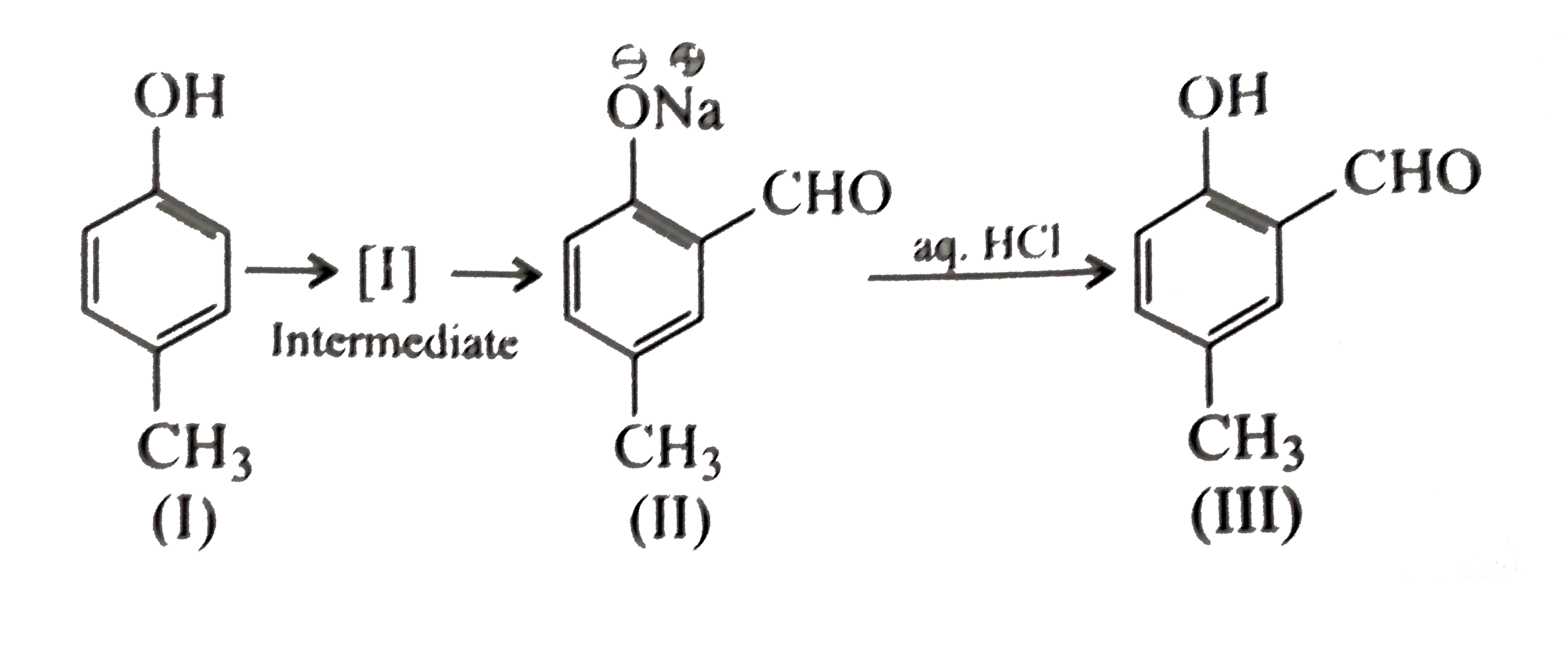
- Reimer-Tiemann reaction introduces an aldehyde group on to the aromati...
Text Solution
|
- Reimer-Tiemann reaction introduces an aldehyde group on to the aromati...
Text Solution
|
- Reimer-Tiemann reaction introduces an aldehyde group on to the aromati...
Text Solution
|
- Phenols and alcohols have both the same functional group (-OH) but phe...
Text Solution
|
- Phenols and alcohols have both the same functional group (-OH) but phe...
Text Solution
|
- Phenols and alcohols have both the same functional group (-OH) but phe...
Text Solution
|
- Phenols and alcohols have both the same functional group (-OH) but phe...
Text Solution
|