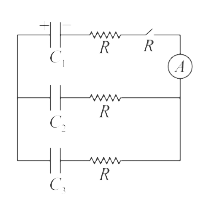
A
B
C
D
Text Solution
Verified by Experts
The correct Answer is:
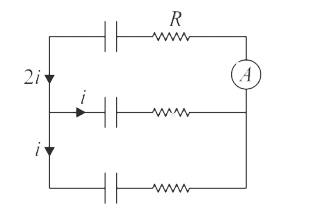



Recommended Questions
- A capacitor C(1) is charged to a potential V and connected as shown wi...
Text Solution
|
- Consider the circuit shown where C(1) = 6 mu F, C(2) = 3 mu F and V=20...
Text Solution
|
- Two capacitor C(1) and C(2) , charged with charges q(1) and q(2) then ...
Text Solution
|
- धारिता C(0) का एक संधारित्र विभव V(0) तक आवेशित किया जाता है तथा यह एक...
Text Solution
|
- A capacitor or capacitance C(1) is charge to a potential V and then co...
Text Solution
|
- A capacitor of capacitance C(1) is charged to a potential difference V...
Text Solution
|
- A capacitor of capacitance C(0) is charged to a potential V(0) and is ...
Text Solution
|
- प्रदर्शित चित्र में संधारित्र पर प्रारंभिक आवेशों को दिखाया गया है | स...
Text Solution
|
- प्रदर्शित चित्र में संधारित्र पर प्रारंभिक आवेशों को दिखाया गया है | स...
Text Solution
|