Text Solution
Verified by Experts



Topper's Solved these Questions
Similar Questions
Explore conceptually related problems
NCERT EXEMPLAR-REPRODUCTION IN ORGANISMS-Reproduction In Organisms
- Why do gametes produced in large numbers in organisms exhibit external...
Text Solution
|
- Which of the following are monoecious and dioecious organisms ? (a) ...
Text Solution
|
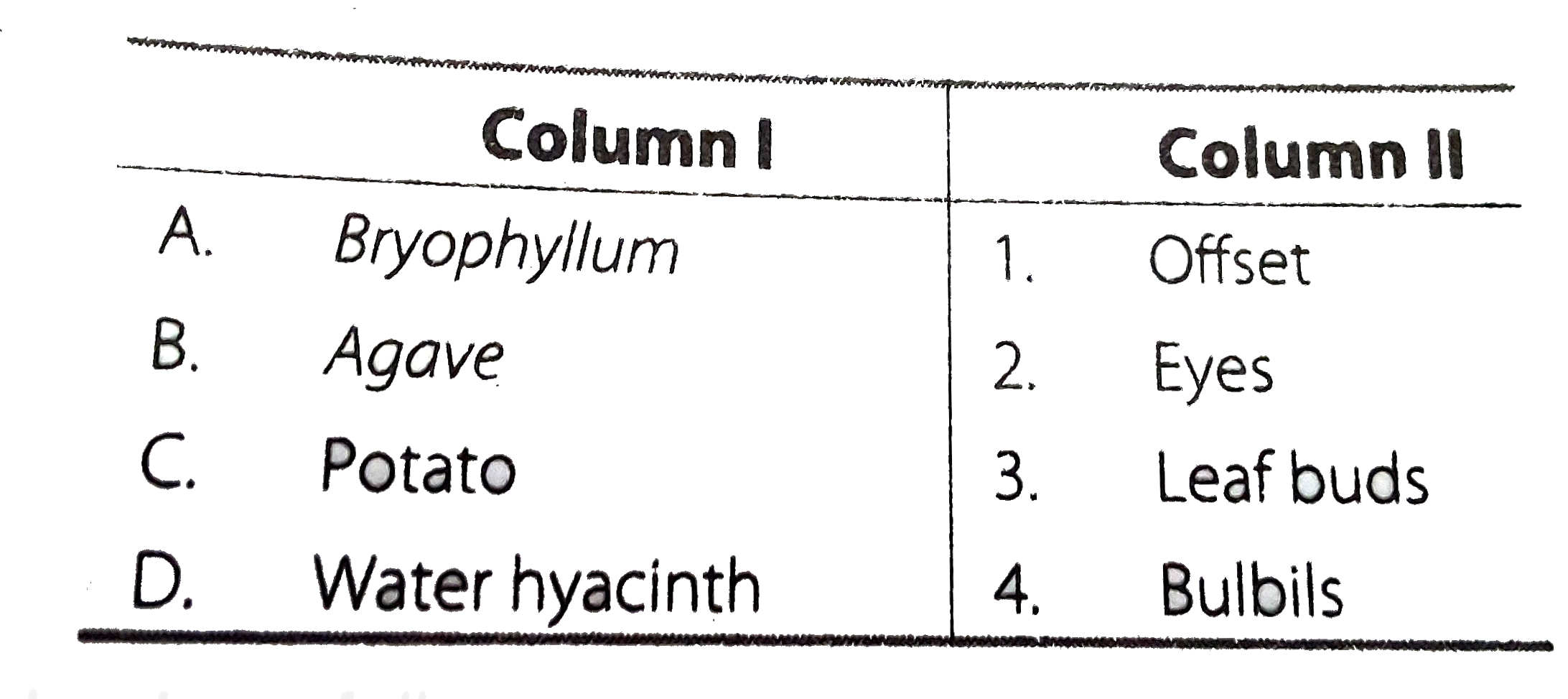
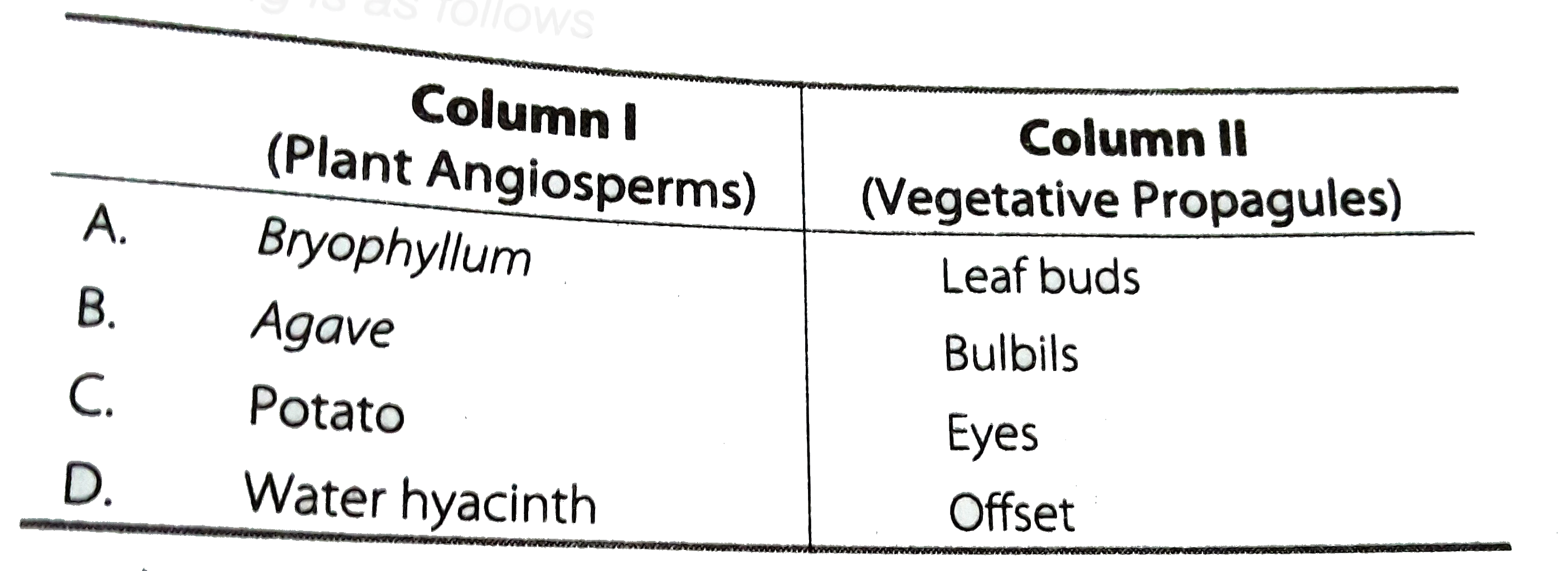
- Match the organisms given in column I with the vegetative propagules g...
Text Solution
|
- What do the following parts of a flower develop into after fertilisati...
Text Solution
|
- In haploid organisms that undergo sexual reproduction, name the stage ...
Text Solution
|
- The number of taxa exhibiting asexual reproduction is drastically redu...
Text Solution
|
- Honeybees produce their young ones by sexual reproduction. Inspite of ...
Text Solution
|
- With which type of reproduction do we associate the reduction division...
Text Solution
|
- Is it possible to consider vegetative propagation observed in certain ...
Text Solution
|
- Fertilisation is not an obligatory event for fruit production in certa...
Text Solution
|
- In a developing embryo, analyse the consequences if cell divisions are...
Text Solution
|
- List the changes observed in an angiosperm flower subsequent to polli...
Text Solution
|
- Suggest a possible explanation why the seeds in a pea pod are arrange...
Text Solution
|
- Draw the sketch of a zoospore and a conidium. Mention two dissimilarit...
Text Solution
|
- Justify the statement 'vegetative reproduction is also a type of asexu...
Text Solution
|
- Enumerate the differences between asexual and sexual reproduction. Des...
Text Solution
|
- Do all the gametes formed from a parent organism have the same genetic...
Text Solution
|
- Although sexual reproduction is a long drawn, energy-intensive complex...
Text Solution
|
- Differentiate between (a) oestrus and menstrual cycles, (b) ovipary an...
Text Solution
|
- Rose plants produce large, attractive bisexual flowers, but they seldo...
Text Solution
|