

Home
Class 11
BIOLOGY
Distinguish between the following (a) ...

Distinguish between the following
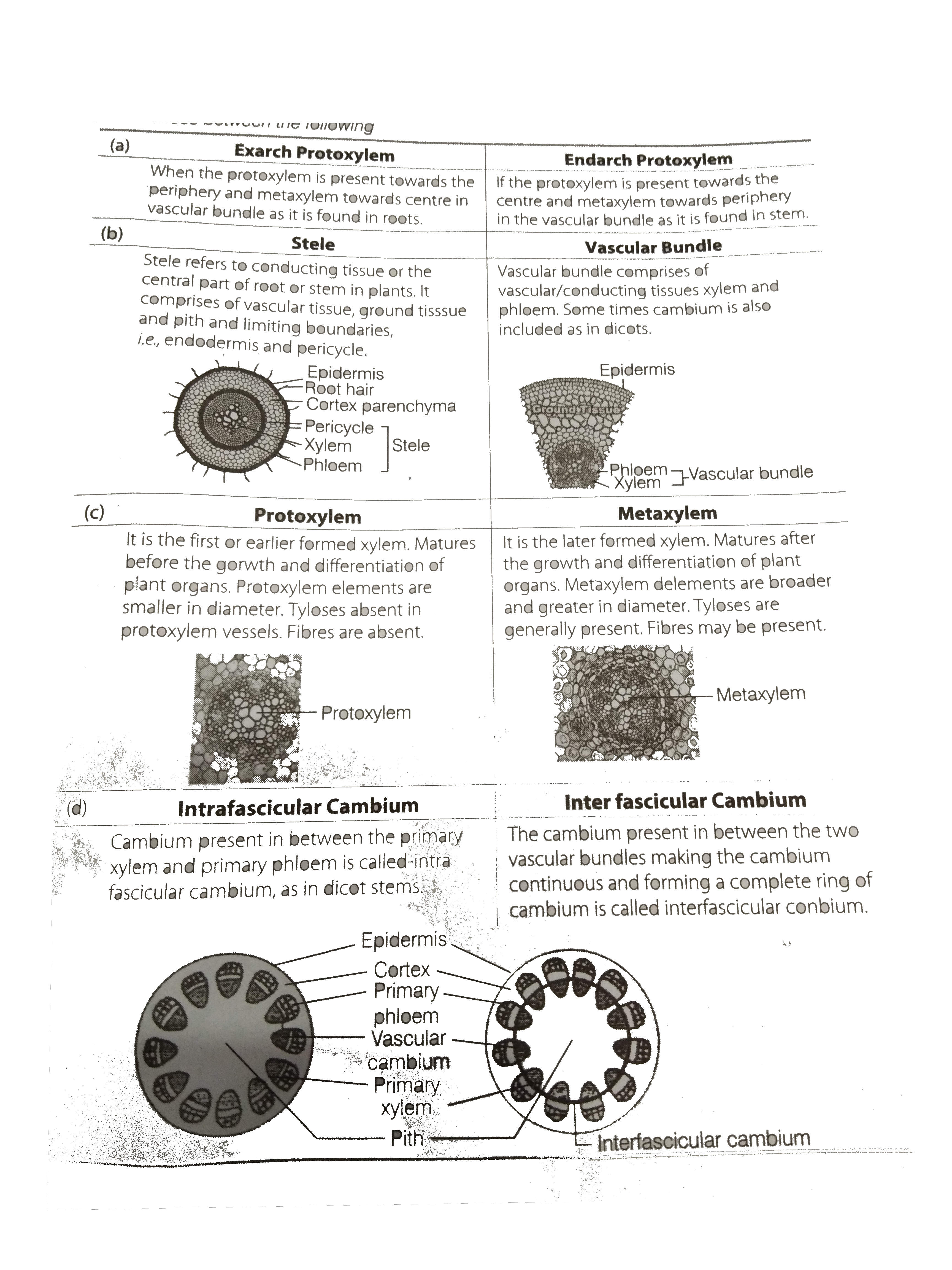
(a) Exarch and endarch condition of protoxylem
(b) Stele and vascular bundle
(c) Protoxylem and metaxylem
(d) Interfascicular cambium and intrafascicular cambium
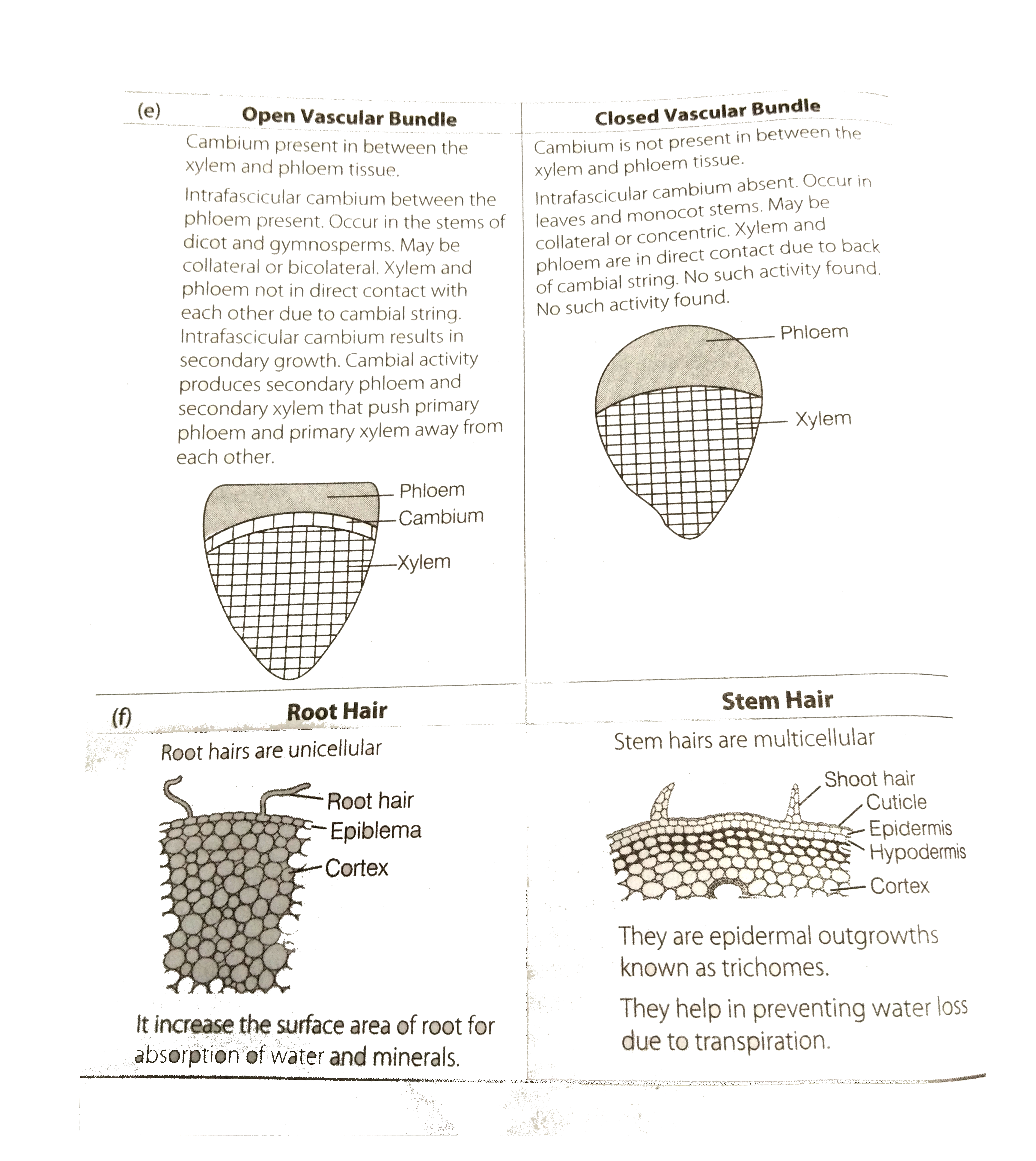
(e) Open and closed vascular bundles
(f) Stem hair and root hair.

Text Solution

Verified by Experts

Differences between the following

Promotional Banner

Topper's Solved these Questions

  • ANATOMY OF FLOWERING PLANTS

    NCERT EXEMPLAR|Exercise Short Answer|14 Videos
  • ANIMAL KINGDOM

    NCERT EXEMPLAR|Exercise LONG ANSWER TYPE QUESTIONS|4 Videos

Similar Questions

Explore conceptually related problems

Distinguish between the following: a. b. c. d. e. f. g.

$ Biosphere is a closed system ! Closed vascular bundles are having intrafascicular cambium.

$ Secondary growth occurs in those plants which have closed vascular bundles. ! Cork is produced by intrafascicular cambium.

Distinguish between the following pairs in one or two sentences for each (a) RBCs and WBCs, (b) bone and cartilage, (c) blood and lymph, (d) striated and unstriated muscle, (e) tendon and ligament, (f) axon and dedrite.

The study the following : A) Formation of tracheary elements from the derivatives of cambium B) Formation of interfascicular cambium and cork cambium from living permanent parenchyma cells. C) Formation of secondary vascular tissues or cork and secondary cortex from the derivatives of lateral meristems . D) The ability of plants to follow different pathways in response to the environment or phases of life to form different kinds of structures. A, B, C and D respectively are

How many of the following meristems are completely secondary in origin ? A. Cork cambium of a dicot stem B. Vascular cambium of a dicot stem C. Cork cambium of a dicot root D. Vascular cambium of a dicot root

Vascular bundles are conjoint, collateral, endarch and lack cambium between xylem and pholem in all, but not in

How will you distinguish between the following (give one chemical test): (a) Chlorobenzene and chlorocyclohexane (b) Chlorobenzene and benzyl chloride (c) Ethyl chloride and vinyl chloride (d) Chlorobenzene and n-hexylchloride (e) Chloroethane and bromoethane (f) 3-Bromopropene and 1-bromopropane.