Home
Class 12
CHEMISTRY
Most reactive towards nitration reaction...

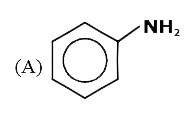
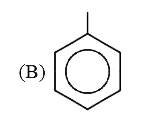
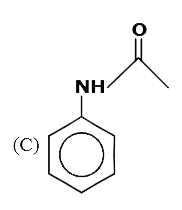
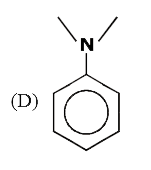
Most reactive towards nitration reaction (Substitu- tion electrophilic aromatic)

A

B

C

D

Text Solution

AI Generated Solution

The correct Answer is:

To determine which compound is the most reactive towards nitration (an electrophilic aromatic substitution reaction), we need to analyze the electron density on the aromatic ring of each compound. The more electron-rich the aromatic ring, the more reactive it will be towards electrophiles such as the nitronium ion (NO2+). ### Step-by-Step Solution: 1. **Identify the Compounds**: The compounds given are: - Aniline (C6H5NH2) - Toluene (C6H5CH3) - Vinyl aniline (C6H5NH=CH2) - N,N-Dimethylaniline (C6H5N(CH3)2) 2. **Analyze Electron Donating/Withdrawing Effects**: - **Aniline**: The amino group (-NH2) has a lone pair of electrons that can donate electron density to the aromatic ring through resonance (+R effect). This increases the electron density on the ring, making it more reactive towards electrophiles. - **Toluene**: The methyl group (-CH3) exhibits a +I (inductive) effect, which also increases the electron density on the ring, but to a lesser extent than the +R effect of the amino group. - **Vinyl aniline**: The nitrogen in the vinyl aniline has a lone pair, but the presence of the double bond (C=C) adjacent to it can act as an electron-withdrawing group due to its resonance effect, making this compound a weaker activator compared to aniline. - **N,N-Dimethylaniline**: This compound has two methyl groups that provide a +I effect and the nitrogen's lone pair that can participate in resonance (+R effect). The combination of these effects significantly increases the electron density on the aromatic ring. 3. **Compare the Electron Density**: - Aniline has a strong +R effect due to the amino group. - Toluene has a moderate +I effect due to the methyl group. - Vinyl aniline has a weaker activating effect due to the electron-withdrawing nature of the adjacent double bond. - N,N-Dimethylaniline has the highest electron density on the ring due to both the +I effects of two methyl groups and the +R effect of the nitrogen's lone pair. 4. **Conclusion**: Since N,N-Dimethylaniline has the highest electron density on the aromatic ring, it will be the most reactive towards electrophilic aromatic substitution (nitration). Therefore, the answer is: **Most reactive towards nitration: N,N-Dimethylaniline (Option 4)**
Promotional Banner

Topper's Solved these Questions

  • AROMATIC COMPOUND

    MOTION|Exercise Exercise - 2 (Level-I)|47 Videos
  • AROMATIC COMPOUND

    MOTION|Exercise Exercise - 2 (Level-II)|29 Videos
  • ALKYI HALIDE

    MOTION|Exercise Exercise - 4 | Level-II|8 Videos
  • ATOMIC STRUCTURE

    MOTION|Exercise EXERCISE-4 (LEVEL-II)|18 Videos

Similar Questions

Explore conceptually related problems

Most reactive for nitration is

Most reactive for nitration is

Which of the following is an o-, p- directing but deactivating substituent in an electrophilic aromatic substitution :

Which of most reactive towards nucleophilic aromatic substitution.

Which of the following is most reactive towards electrophillic aromatic substitution for halogen ?

The correct rate of reaction of given compounds towards electrophilic aromatic substitution reaction is

Rank the following compounds in decreasing order of reactivity in electrophilic aromatic substitution reaction

Rank the following compounds in decreasing order of reactivity in electrophilic aromatic substitution reaction
