Home
Class 12
CHEMISTRY
Which one of the following compounds und...

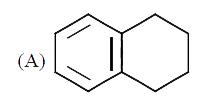
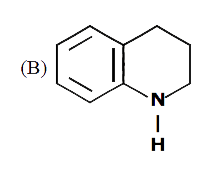
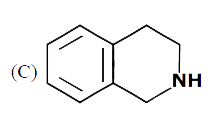
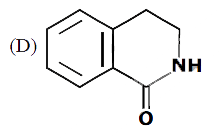
Which one of the following compounds undergoes bromination of its aromatic ring at the fastest rate ?

A

B

C

D

Text Solution

AI Generated Solution

The correct Answer is:

To determine which compound undergoes bromination of its aromatic ring at the fastest rate, we need to analyze the electron density on the aromatic rings of the given compounds. Bromination is facilitated by increased electron density on the aromatic ring, as it enhances the reactivity towards electrophilic substitution. ### Step-by-Step Solution: 1. **Understanding Bromination**: Bromination of aromatic compounds occurs through an electrophilic aromatic substitution mechanism. The rate of bromination depends on the electron density of the aromatic ring. Higher electron density leads to a faster reaction. 2. **Identifying Electron Donating and Withdrawing Groups**: - Electron-donating groups (EDGs) increase the electron density of the aromatic ring, making it more reactive towards bromination. - Electron-withdrawing groups (EWGs) decrease the electron density, making the ring less reactive. 3. **Analyzing the Options**: - **Option 1**: A benzene ring with a cyclohexane ring. Cyclohexane is a saturated hydrocarbon and does not significantly donate electron density to the benzene ring. Thus, the rate of bromination will be moderate. - **Option 2**: A benzene ring with a nitrogen group (e.g., an amine). The nitrogen has a lone pair of electrons that can participate in resonance with the benzene ring, increasing the electron density. This will enhance the rate of bromination. - **Option 3**: A benzene ring with nitrogen, but the nitrogen is further away from the ring. The distance reduces the ability of the nitrogen's lone pair to participate in resonance, resulting in unchanged electron density. Therefore, the bromination rate will be moderate. - **Option 4**: A benzene ring with an amide group (–C(=O)NH2). The carbonyl (C=O) in the amide group is electron-withdrawing, which decreases the electron density of the benzene ring. This will lead to a slower rate of bromination. 4. **Conclusion**: After analyzing all options, **Option 2** has the highest electron density due to the resonance effect of the nitrogen's lone pair, making it the compound that undergoes bromination at the fastest rate. ### Final Answer: **Option 2** is the correct answer as it undergoes bromination of its aromatic ring at the fastest rate.
Promotional Banner

Topper's Solved these Questions

  • AROMATIC COMPOUND

    MOTION|Exercise Exercise - 2 (Level-I)|47 Videos
  • AROMATIC COMPOUND

    MOTION|Exercise Exercise - 2 (Level-II)|29 Videos
  • ALKYI HALIDE

    MOTION|Exercise Exercise - 4 | Level-II|8 Videos
  • ATOMIC STRUCTURE

    MOTION|Exercise EXERCISE-4 (LEVEL-II)|18 Videos

Similar Questions

Explore conceptually related problems

Which one of the following compounds undergoes bromination of its aromatic ring (electrophilic aromatic substitution) at the fastest rate ?

Which one of the following compounds in not aromatic?

Which one of the following compounds is not aromatic?

Which one of the following compound is non-aromatic?

Which one of following compound undergoes bromination of its aromatic ring (electrophilic aromatic substitution) at the faster rate ?

Which one of the following compounds is not aromatic ?

Which of the following compounds undergoes nitration at fastest rate ?
