Home
Class 12
CHEMISTRY
Which of the following carbocations is e...

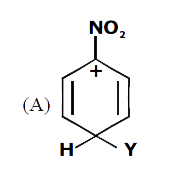
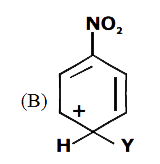
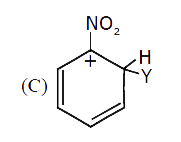
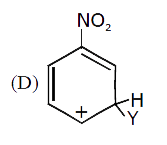
Which of the following carbocations is expected to be most stable ?

A

B

C

D

Text Solution

AI Generated Solution

The correct Answer is:

To determine which carbocation is the most stable among the given options, we need to analyze the effects of substituents on the stability of carbocations. Here’s a step-by-step breakdown of the solution: ### Step 1: Understand the Nature of the Nitro Group The nitro group (-NO2) is known to exhibit a -M (minus mesomeric) effect and a -I (minus inductive) effect. The -M effect means that the nitro group withdraws electron density through resonance, while the -I effect indicates that it withdraws electron density through inductive effects. **Hint:** Remember that electron-withdrawing groups destabilize carbocations by increasing the positive charge density. ### Step 2: Analyze Each Carbocation 1. **Option A:** The nitro group is directly attached to the carbon with the positive charge. The -M effect will withdraw electron density, increasing the positive charge on the carbocation, making it less stable. 2. **Option B:** The nitro group is not directly attached but is present on a benzene ring that can participate in resonance. However, the positive charge will still be affected by the nitro group through conjugation, leading to increased positive charge density and decreased stability. 3. **Option C:** Similar to Option A, the positive charge is directly on the carbon attached to the nitro group. Thus, the nitro group will again withdraw electron density, increasing the positive charge and decreasing stability. 4. **Option D:** The positive charge is adjacent to the nitro group, but the resonance can stabilize the carbocation to some extent. Here, the nitro group will exert a -I effect, which is weaker than the -M effect. The positive charge can be stabilized by resonance with the adjacent double bond, reducing the destabilizing effects of the nitro group. **Hint:** Compare the effects of direct attachment versus resonance stabilization in each option. ### Step 3: Compare Stability - **Options A, B, and C** all have the nitro group directly affecting the carbocation through a strong -M effect, which destabilizes them. - **Option D** benefits from resonance stabilization, and while the nitro group still exerts a -I effect, it is less destabilizing than the -M effect seen in the other options. **Hint:** The presence of resonance stabilization can significantly enhance the stability of carbocations. ### Conclusion After analyzing all options, **Option D** is expected to be the most stable carbocation due to the combination of resonance stabilization and the relatively weaker -I effect of the nitro group compared to the -M effect in the other options. **Final Answer:** **Option D** is the most stable carbocation.
Promotional Banner

Topper's Solved these Questions

  • AROMATIC COMPOUND

    MOTION|Exercise Exercise - 3|17 Videos
  • AROMATIC COMPOUND

    MOTION|Exercise Exercise - 4 | Level-I|13 Videos
  • AROMATIC COMPOUND

    MOTION|Exercise Exercise - 2 (Level-I)|47 Videos
  • ALKYI HALIDE

    MOTION|Exercise Exercise - 4 | Level-II|8 Videos
  • ATOMIC STRUCTURE

    MOTION|Exercise EXERCISE-4 (LEVEL-II)|18 Videos

Similar Questions

Explore conceptually related problems

Which of the following carbocations is excepted to be most stable

Which of the following carbocation is expected to be least stable

Which of the following carbocations is most stable ?

Which of the following carbocations is most stable ?

Which of the following carbocations is most stable ?

MOTION-AROMATIC COMPOUND-Exercise - 2 (Level-II)
  1. An aromatic compound of molecular formula C(6)H(4)Br(2) was nitrated w...

    Text Solution

    |

  2. major product (A) will be

    Text Solution

    |

  3. Which of the following carbocations is expected to be most stable ?

    Text Solution

    |

  4. Which of the following structures correspond to the product expected, ...

    Text Solution

    |

  5. Conjugation of electron withdrawing groups, e.g., -CHO, -overset(O)ove...

    Text Solution

    |

  6. Which of most reactive towards nucleophilic aromatic substitution.

    Text Solution

    |

  7. Nitro benzene reacts with Me-overset(O)overset("||")(C)-Cl in presence...

    Text Solution

    |

  8. Which of the following is ortho-para directing group

    Text Solution

    |

  9. The structure of the compound that gives a tribromo derivative on trea...

    Text Solution

    |

  10. Amongst the following, moderately activating groups is

    Text Solution

    |

  11. Which of the following is ortho para directing

    Text Solution

    |

  12. Of the species PhSH, Ph underset(O)underset("||")(S)R, ph underset(O)u...

    Text Solution

    |

  13. Which of the following group(s) activate the benzene ring towards elec...

    Text Solution

    |

  14. Statement-1 : Rate of nitration is C(6)H(6) cong C(6) D(6) cong C(6)T(...

    Text Solution

    |

  15. Product (A) will be

    Text Solution

    |

  16. Product (A) is

    Text Solution

    |

  17. Which aromatic compound is obtained when noctane undergoes catalytic h...

    Text Solution

    |

  18. Benzoic acid may be prepared by the oxidation of:

    Text Solution

    |

  19. Isopropylbenzene can be prepared by :

    Text Solution

    |

  20. In which of the following reaction t-butylbenzene is formed:

    Text Solution

    |
