Home
Class 12
CHEMISTRY
The most likely representation of resona...

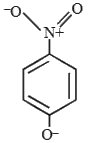
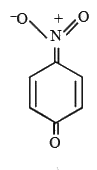
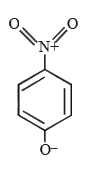
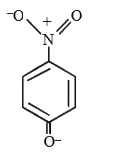
The most likely representation of resonance structure of p-nitrophenoxide is :

A

B

C

D

Text Solution

AI Generated Solution

The correct Answer is:

To determine the most likely representation of the resonance structure of para-nitrophenoxide, we need to follow these steps: ### Step 1: Understand the Structure of Para-Nitrophenoxide Para-nitrophenoxide consists of a phenolic ring (benzene with an -OH group) with a nitro group (-NO2) attached to the para position relative to the hydroxyl group. The structure can be represented as follows: ``` O || C6H4 - NO2 | OH ``` ### Step 2: Identify Possible Resonance Structures We can draw several resonance structures for para-nitrophenoxide by moving electrons around while keeping the overall charge and the connectivity of atoms the same. The important feature is to ensure that we maintain the aromaticity of the benzene ring. ### Step 3: Check for Octet Completion For each resonance structure, we need to check if all atoms have a complete octet (8 electrons) around them: 1. **Structure A**: - The nitrogen in the nitro group has a complete octet. - The oxygen in the hydroxyl group has a complete octet. - All carbon atoms in the benzene ring have a complete octet. 2. **Structure B**: - The nitrogen has an expanded octet (10 electrons), which is not stable. - The oxygen in the nitro group has a complete octet. - The hydroxyl oxygen has a complete octet. 3. **Structure C**: - The nitrogen has an expanded octet (10 electrons). - The oxygen in the nitro group has a complete octet. - The hydroxyl oxygen has a complete octet. 4. **Structure D**: - The nitrogen has a complete octet. - The oxygen in the nitro group has an expanded octet (9 electrons). - The hydroxyl oxygen has a complete octet. ### Step 4: Determine the Most Stable Structure The most stable resonance structure is the one where all atoms have a complete octet. - **Structure A** is the most stable because all atoms have a complete octet. - **Structures B, C, and D** are less stable due to expanded octets. ### Conclusion The most likely representation of the resonance structure of para-nitrophenoxide is **Structure A**. ---
Promotional Banner

Topper's Solved these Questions

  • CHEMICAL BONDING

    MOTION|Exercise EXERCISE -4 LEVEL-I|39 Videos
  • CHEMICAL BONDING

    MOTION|Exercise EXERCISE -4 LEVEL-II|40 Videos
  • CHEMICAL BONDING

    MOTION|Exercise EXERCISE -2 LEVEL II|71 Videos
  • CARBOXYLIC ACID

    MOTION|Exercise Exercise - 4 (LEVEL - 2 )|22 Videos
  • CHEMICAL EQUILIBRIUM

    MOTION|Exercise Exercise - 4|20 Videos

Similar Questions

Explore conceptually related problems

The most unlikely representation of resonance structure of p-nitrophenoxide is :

The most unlikely representation of resonance structure of p-nitrophenoxide ion is:

The most unlikely representation of resonance structure of p -nitrophenoxide ion is:

The most unlikely representation of resonance structures of p-nitrophenoxide ion is:

MOTION-CHEMICAL BONDING -EXERCISE -3
  1. The geometry and the type of hybrid orbitals present about the central...

    Text Solution

    |

  2. The hybridisation of atomic orbitals of nitrogen in NO2^+ , NO3^- and...

    Text Solution

    |

  3. The correct order of hybridisation of the central atom in the oflliwng...

    Text Solution

    |

  4. The correct order of increasig C-O bond length of CO, CO(3)^(2-), CO(2...

    Text Solution

    |

  5. In the dichromate anion

    Text Solution

    |

  6. The geometry of H(2)S and its dipole moment are :

    Text Solution

    |

  7. In compounds of type ECI(3), where E=BP, As or B, the angles CI-E-CI f...

    Text Solution

    |

  8. The most likely representation of resonance structure of p-nitrophenox...

    Text Solution

    |

  9. The common features among the species CN^-, CO and NO^+

    Text Solution

    |

  10. Amongst H2O, H2S, H2 Se and H2 Te, the one with the highest boiling po...

    Text Solution

    |

  11. Arrange the following species in decreasing order of bond angle. NO2...

    Text Solution

    |

  12. Find out the bond order of : (a) H2 (b) H2^(+) (c) He2 (d) Li2 (e) ...

    Text Solution

    |

  13. Why does He2^+ exist whereas He2 does not ?

    Text Solution

    |

  14. The bond length in O2^+, O2, O2^- and O2^(2-) follows the order :

    Text Solution

    |

  15. Write the electronic structures of : (a) CO , (b) NO, (c) HF ,(d) HCl,...

    Text Solution

    |

  16. Of the following species which has the shortest bond length NO, NO^+ ,...

    Text Solution

    |

  17. Based upon M.O. theory, state reason for the paramagnetic character of...

    Text Solution

    |

  18. In the hydrides of group 16th elements the bond angles decrease in the...

    Text Solution

    |
