Home
Class 12
CHEMISTRY
Which is/are corect statement ?...

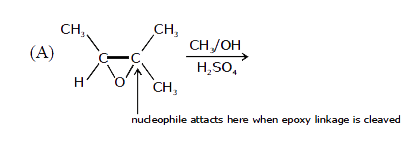
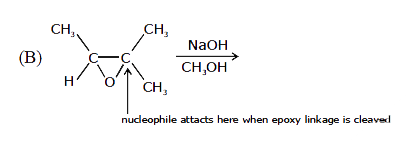
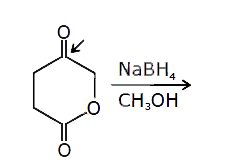
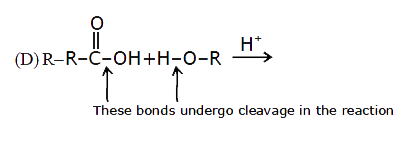
Which is/are corect statement ?

A

B

C

`This is only affected in reduction to `2^@` alcohol

D

Text Solution

AI Generated Solution

The correct Answer is:

To determine which statements are correct regarding the reactions involving ethers and alcohols, we will analyze each statement step by step based on the information provided in the video transcript. ### Step-by-Step Solution: 1. **Analyze Statement A**: - The statement discusses a reaction occurring in the presence of acid, favoring the SN1 mechanism. - In SN1 reactions, the nucleophile attacks the more substituted carbon due to carbocation stability. - The mechanism involves the formation of a carbocation after the leaving group departs. - Since the nucleophile attacks from the more substituted side, this statement is **correct**. 2. **Analyze Statement B**: - This statement involves a reaction in the presence of NaOH, which is a base, favoring the SN2 mechanism. - In SN2 reactions, the nucleophile attacks from the less hindered side to avoid steric hindrance. - If the statement claims that the nucleophile will attack from the more hindered side, it is **incorrect**. 3. **Analyze Statement C**: - This statement involves the reduction of a carbonyl compound using NaBH4. - NaBH4 is a mild reducing agent that can reduce aldehydes and ketones but not esters. - The statement claims that NaBH4 will only reduce the carbonyl carbon and not the ester, which is **correct**. 4. **Analyze Statement D**: - This statement describes the reaction between an acid and an alcohol in the presence of acid (H+), leading to ester formation. - The mechanism involves protonation of the alcohol, followed by nucleophilic attack and subsequent bond cleavage. - The statement correctly describes the cleavage of the acid and alcohol, indicating that the OH group comes from the acid and the H from the alcohol. - Therefore, this statement is also **correct**. ### Conclusion: The correct statements are A, C, and D. Statement B is incorrect. ### Summary of Correct Statements: - **A**: Correct (SN1 mechanism favors attack at the more substituted carbon in the presence of acid). - **B**: Incorrect (SN2 mechanism favors attack at the less hindered side in the presence of a base). - **C**: Correct (NaBH4 reduces carbonyls but not esters). - **D**: Correct (the reaction between acid and alcohol leads to ester formation with proper bond cleavage).
Promotional Banner

Topper's Solved these Questions

  • ALCOHOLS & ETHERS

    MOTION|Exercise EXERCISE -3 OBJECTIVE PROBLEMS JEE ADVANCED|17 Videos
  • ALCOHOLS & ETHERS

    MOTION|Exercise EXERCISE -4 (LEVEL -I) PREVIOUS YEAR JEE MAIN|12 Videos
  • ALCOHOLS & ETHERS

    MOTION|Exercise EXERCISE -2 (LEVEL -I) OBJECTIVE PROBLEMS JEE MAIN|38 Videos
  • ALKYI HALIDE

    MOTION|Exercise Exercise - 4 | Level-II|8 Videos

Similar Questions

Explore conceptually related problems

Which one is not corect statement regarding minimizing enviromental pollution ?

Which of the following statements are correct statements ?

MOTION-ALCOHOLS & ETHERS-EXERCISE -2 (LEVEL -II) MULTIPLE CORRECT JEE ADVANCED
  1. Which of the following compound undergo hydrolysis most easily :

    Text Solution

    |

  2. Which can be cleaved by HIO4 ?

    Text Solution

    |

  3. Explain esterification reaction.

    Text Solution

    |

  4. overset(H2//Pd//BaSO4)to (Z) Identify X, Y, Z :

    Text Solution

    |

  5. Which is/are corect statement ?

    Text Solution

    |

  6. 3-methyl-3-hexanol can be prepared by -

    Text Solution

    |

  7. Which compound will be oxidised by HIO(4) ?

    Text Solution

    |

  8. Which of the following is/are aromatic ?

    Text Solution

    |

  9. Acctaldehyde can be obtained from which of the following rections ?

    Text Solution

    |

  10. Find out number of alcohols that can give positive iodoform test.

    Text Solution

    |

  11. A tertiary alcohol (H) upon acid-catalysed dehydration gives a product...

    Text Solution

    |

  12. A tertiary alcohol (H) upon acid-catalysed dehydration gives a product...

    Text Solution

    |

  13. A tertiary alcohol (H) upon acid-catalysed dehydration gives a product...

    Text Solution

    |

  14. Carbon oxygen double bond are easily reduced by NaBH(4) or LiAlH(4). T...

    Text Solution

    |

  15. Carbon oxygen double bond are easily reduced by NaBH(4) or LiAlH(4). T...

    Text Solution

    |

  16. Acid catalysed conversation of 1,2-diol or vicinal, into carbonyl comp...

    Text Solution

    |

  17. Acid catalysed conversion of 1,2-diol or vicinal diol, into carbonyl c...

    Text Solution

    |

  18. Column - I (A) Oxidation of 1^@ alcohol in aldehyde Oxidation ...

    Text Solution

    |

  19. Column- I (A) Identification of 1^@, 2^@ and 3^@ alcohol (B) Ident...

    Text Solution

    |

  20. Column - I (A) CH3-overset(O)overset(||)-O-overset(Ph)overset(|)unde...

    Text Solution

    |
