Home
Class 12
CHEMISTRY
A overset( "reduction ") to B overset(...

`A overset( "reduction ") to B overset(CHCl_3 //KOH ) to C overset("reduction ") to `N - methyl aniline then A is

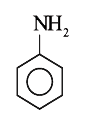
A

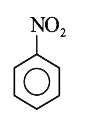
B

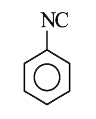
C

`CH_3NH_2`

D

Text Solution

AI Generated Solution

The correct Answer is:

To solve the problem step by step, we need to identify compound A based on the given transformations leading to N-methyl aniline. ### Step 1: Identify the final product The final product is N-methyl aniline. This compound has the structure where a methyl group (–CH₃) is attached to the nitrogen atom of an aniline (C₆H₅NH₂) structure. ### Step 2: Determine the precursor to N-methyl aniline To form N-methyl aniline, we can deduce that it is formed from an aniline derivative. The methyl group on nitrogen suggests that the precursor must have a nitrogen atom that can be methylated. ### Step 3: Identify the reaction leading to aniline The question states that there is a reduction step that leads to compound C. Aniline can be produced by the reduction of a nitro group (–NO₂) or a similar nitrogen-containing compound. The most likely precursor for aniline is nitrobenzene (C₆H₅NO₂), which can be reduced to aniline using reducing agents like Sn/HCl. ### Step 4: Identify the reaction with CHCl₃ and KOH The reaction of aniline with CHCl₃ in the presence of KOH is known as the carbylamine reaction, which leads to the formation of N-methyl aniline. In this reaction, the amine group (–NH₂) reacts with chloroform (CHCl₃) and a strong base (KOH) to form a methylated product. ### Step 5: Conclusion about compound A Since we have established that: - A reduction of nitrobenzene (compound A) leads to aniline (compound B). - The reaction of aniline with CHCl₃ and KOH leads to N-methyl aniline (compound C). Thus, compound A is **nitrobenzene (C₆H₅NO₂)**. ### Final Answer: **A is nitrobenzene (C₆H₅NO₂).** ---
Promotional Banner

Similar Questions

Explore conceptually related problems

HCHO overset("Reduction") to Aoverset (P and l_(2))to Boverset(KCN)to C overset(Hydrolysis)toD. What is D ?

In the reaction CH_(COOH overset (LiAIH) to A overset (PCI_(5)) to B overset (alc KOH) to C
