 and carbonyl compounds
 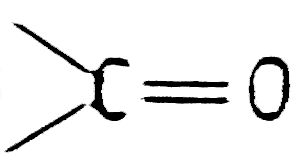 both contain a `pi` bond but alkenes show electrophilic addition reactions whereas carbonyl compounds show nucleophilic addition reactions. Explain.
Text Solution
Verified by Experts




Topper's Solved these Questions
Similar Questions
Explore conceptually related problems
NCERT EXEMPLAR-ALDEHYDE, KETONES AND CARBOXYLIC ACIDS-Aldehyde, Ketones And Carboxylic Acids
- Compound 'A' is prepared by oxidation of compound 'B' with alkaline KM...
Text Solution
|
- Arrange the following in decreasing order of their acidic strength. Gi...
Text Solution
|
- Alkenes and carbonyl compounds both contain a pi bond but alkenes sh...
Text Solution
|
- Carboxylic acids contain carbonyl group but do not show the nucleophil...
Text Solution
|
- Identify the compounds A, B and C in the following reaction : CH(3)-...
Text Solution
|
- Why are carboxylic acids more acidic than alcohols or phenols although...
Text Solution
|
- Complete the following reaction sequence : CH(3)-overset(O)overset(|...
Text Solution
|
- Ethylbenzene is generally prepared by acetylation of benzene followed ...
Text Solution
|
- Can Gattermann-Koch reaction be considered similar to Friedel Craft's ...
Text Solution
|
- Match the common names given in Column I with the IUPAC names given in...
Text Solution
|
- Match the acids given in Column I with their correct IUPAC names given...
Text Solution
|
- Match the reactions given in Column I with the suitable reagents given...
Text Solution
|
- Match the example given in Column I with the name of the reaction in C...
Text Solution
|
- Assertion (A) Formaldehyde is a planar molecule. Reason (R) It conta...
Text Solution
|
- Assertion (A) compound containing -CHO group are easily oxidised to co...
Text Solution
|
- Assertion (A) The alpha-hydrogen atom in carbonyl compounds is less ac...
Text Solution
|
- Assertion : Aromatic aldehydes and formaldehyde undergo Cannizzaro rea...
Text Solution
|
- Assertion (A) Aldehydes and ketones, both react with Tollen's reagent ...
Text Solution
|
- An alkene 'A' (molecular formula C(5)H(10)) on ozonolysis gives a mixt...
Text Solution
|
- An aromatic compound 'A' (Molecular formula C(8)H(8)O)) gives positive...
Text Solution
|