Home
Class 12
CHEMISTRY
The intermediate never formed during cha...

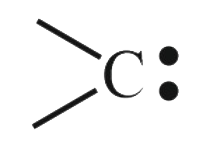
The intermediate never formed during chain growth polymerization is

A

`-overset("| ")underset("| ")(C^(-))`

B

`-overset("| ")underset("| ")(C^(o+))`

C

D

`-overset("| ")underset("| ")(C^(.))`

Text Solution

AI Generated Solution

The correct Answer is:

To solve the question regarding which intermediate is never formed during chain growth polymerization, we will analyze the types of intermediates involved in this process. ### Step-by-Step Solution: 1. **Understanding Chain Growth Polymerization**: - Chain growth polymerization involves the sequential addition of monomer units to a growing polymer chain. This process can occur through various mechanisms: free radical, cationic, or anionic polymerization. 2. **Identifying Intermediates**: - In chain growth polymerization, the common intermediates formed are: - **Carbocations**: Formed in cationic polymerization when a positively charged carbon atom is generated. - **Carbanions**: Formed in anionic polymerization when a negatively charged carbon atom is generated. - **Free Radicals**: Formed in free radical polymerization, which are highly reactive species with unpaired electrons. 3. **Examining the Options**: - The question presents several intermediates, and we need to determine which one is not formed during any of the chain growth polymerization mechanisms. - **Carbocation**: Can be formed during cationic polymerization. - **Carbanion**: Can be formed during anionic polymerization. - **Free Radical**: Can be formed during free radical polymerization. - **Carbene**: A carbene is a neutral species containing a carbon atom with only six valence electrons (R2C:), which is not typically involved in chain growth polymerization. 4. **Conclusion**: - Among the intermediates listed, **carbene** is the one that is never formed during chain growth polymerization. Therefore, the answer to the question is option 3: **Carbene**. ### Final Answer: The intermediate that is never formed during chain growth polymerization is **Carbene**. ---
Promotional Banner

Topper's Solved these Questions

  • NTA JEE MOCK TEST 46

    NTA MOCK TESTS|Exercise CHEMISTRY|25 Videos
  • NTA JEE MOCK TEST 48

    NTA MOCK TESTS|Exercise CHEMISTRY|25 Videos

Similar Questions

Explore conceptually related problems

Which one is a chain growth polymer?

Which one is chain growth polymer ?

Intermediate formed during E1 reaction is -

Intermediate formed during E2 reaction is -

The intermediate formed during the addition of HCl to propene in the presence of peroxide is

The intermediate formed during the addition of HCl to propene in the presence of a peroxide is

The intermediate compound formed during hydrolysis of acetonitrile to acetic acid is

NTA MOCK TESTS-NTA JEE MOCK TEST 47-CHEMISTRY
  1. The smallest ketone and its next homologue are reacted with NH(2)OH to...

    Text Solution

    |

  2. The minimum voltage required to electrolyse alumina in the Hall-Herout...

    Text Solution

    |

  3. Which one of the following mixture does not act as a buffer solution?

    Text Solution

    |

  4. The enthalpy of neutralization of NH(4)OH and CH(3)COOH is – 10.5 kcal...

    Text Solution

    |

  5. Lattice energy of an ionic compound depedns upon :

    Text Solution

    |

  6. Which product will be obtained by Gridnard reaction, when Formaldehyde...

    Text Solution

    |

  7. Which of the following represents the correct order of increasing firs...

    Text Solution

    |

  8. Compound that is both paramagnetic and coloured is:

    Text Solution

    |

  9. The reactant A is

    Text Solution

    |

  10. Out of the following, which is the correct match for the radial probab...

    Text Solution

    |

  11. The rate of decomposition of NH(3) on platinum surface is zero order. ...

    Text Solution

    |

  12. In which of the solution hydrogen peroxide neither acts as oxidising a...

    Text Solution

    |

  13. The intermediate never formed during chain growth polymerization is

    Text Solution

    |

  14. The product A is

    Text Solution

    |

  15. The density of KBr is 2.75 g cm^(-3) length of the unit cell is 654 p ...

    Text Solution

    |

  16. Calculate the number of hours of service that can be derived at 1 atm,...

    Text Solution

    |

  17. The difference in the number of unpaired electrons in Co^(2+) ion in i...

    Text Solution

    |

  18. How many among the following species can be classified as Lewis acids?...

    Text Solution

    |

  19. What weight of glucose dissolved in 100g of water will produce the sam...

    Text Solution

    |

  20. A 1.0 M solution of Cd^(2+) is added to excess iron and the system is ...

    Text Solution

    |
