Home
Class 12
CHEMISTRY
Which of the following cannot give Canni...

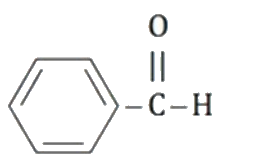
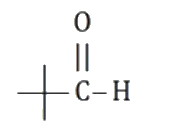
Which of the following cannot give Cannizzaro reaction?

A

B

C

`Cl-underset(Cl)underset(|)overset(Cl)overset(|)-C overset(O)overset(||)C-H`

D

`H-overset(O)overset(||)C-H`

Text Solution

AI Generated Solution

The correct Answer is:

To determine which of the following compounds cannot give the Cannizzaro reaction, we need to understand the conditions required for this reaction to occur. The Cannizzaro reaction typically occurs with aldehydes that do not have alpha hydrogens. ### Step-by-Step Solution: 1. **Understanding the Cannizzaro Reaction**: - The Cannizzaro reaction involves the disproportionation of non-enolizable aldehydes (those without alpha hydrogens) in the presence of a strong base (like NaOH or KOH) to produce an alcohol and a carboxylic acid. 2. **Identifying Aldehydes**: - We need to analyze the given compounds to check for the presence of alpha hydrogens. Aldehydes that lack alpha hydrogens can undergo the Cannizzaro reaction. 3. **Analyzing Each Compound**: - **Compound 1: Benzaldehyde (C6H5CHO)**: - Benzaldehyde has no alpha hydrogens (the carbon adjacent to the carbonyl carbon is part of the aromatic ring). Thus, it can undergo the Cannizzaro reaction. - **Compound 2: Formaldehyde (HCHO)**: - Formaldehyde also has no alpha hydrogens. Therefore, it can undergo the Cannizzaro reaction as well. - **Compound 3: Chloral (CCl3CHO)**: - Chloral has no alpha hydrogens, but it is an exception. Although it seems like it should undergo the Cannizzaro reaction, it does not because it favors a different reaction (the haloform reaction) due to the presence of the three chlorine atoms, which are good leaving groups. - **Compound 4: Acetaldehyde (CH3CHO)**: - Acetaldehyde has alpha hydrogens (the methyl group has hydrogens), so it cannot undergo the Cannizzaro reaction. 4. **Conclusion**: - Among the compounds analyzed, Chloral is the one that cannot give the Cannizzaro reaction due to its tendency to undergo the haloform reaction instead. Therefore, the answer is **Chloral (CCl3CHO)**. ### Final Answer: **Chloral (CCl3CHO) cannot give the Cannizzaro reaction.**
Promotional Banner

Topper's Solved these Questions

  • NTA JEE MOCK TEST 70

    NTA MOCK TESTS|Exercise CHEMISTRY|25 Videos
  • NTA JEE MOCK TEST 72

    NTA MOCK TESTS|Exercise CHEMISTRY|25 Videos

Similar Questions

Explore conceptually related problems

Which of the following donot give Cannizzaro reaction ?

When an aldehyde with no alpha -hydrogen react with concentrated aqueous NaOH, half the aldehyde is converted ot carboxylic acid salt and other half is converted to an alcoho. In other words, half the reaction is oxidized and other half is reduced. This reaction is known as Cannizzaro reaction Which of the following will not give Cannizzaro reaction ?

Which of the following will give Cannizzaro's reaction ?

Which of the following does not give Cannizzaro's reaction

In Cannizzaro reaction-

Cannizzaro's reaction is

Which of the following aldehyde can give Cannizzaro reaction with base ?

Which of the following undergoes Cannizzaro's reaction ?

NTA MOCK TESTS-NTA JEE MOCK TEST 71-CHEMISTRY
  1. Based on the first law of thermodynamics which one of the following is...

    Text Solution

    |

  2. e.m.f. diagram for some ions is given as : FeO(4)^(2-)overset(E^(@)=...

    Text Solution

    |

  3. Among P, Q, R, S the aromatic compound is

    Text Solution

    |

  4. Consider two reactions having same Arrhenius factor A, but different e...

    Text Solution

    |

  5. The correct name of the structure

    Text Solution

    |

  6. Which of the following cannot give Cannizzaro reaction?

    Text Solution

    |

  7. In a solid, oxide ions are arranged in ccp. Cations 'A' occupy one - s...

    Text Solution

    |

  8. Aspirin is an acetylation product of :

    Text Solution

    |

  9. Phenylacetylene on treatment with HgSO(4)//H(2)SO(4), H(2)O produces

    Text Solution

    |

  10. The ions present in Al(4)C(3), CaC(2) and Mg(2)C(3) are respectively

    Text Solution

    |

  11. If 200 ml of 0.031 M solution of H (2) SO(4) is added to 84 ml of a 0....

    Text Solution

    |

  12. The correct statement for the following addition reaction is

    Text Solution

    |

  13. Consider the following reactions, overset(Br(2)//FeBr^(3))toPoverse...

    Text Solution

    |

  14. What will be product of the following given reaction ?

    Text Solution

    |

  15. The elements X and Y form compound having molecular formula XY(2) and ...

    Text Solution

    |

  16. The wave function orbital of H-like atoms is given as onder psi(2s)...

    Text Solution

    |

  17. The number of geometrical isomers possible for the complex [Pt(NH(3))(...

    Text Solution

    |

  18. 0.7 g " of " Na(2)CO(3).xH(2)O were dissolved in water and the volume ...

    Text Solution

    |

  19. Maximum no. of moles of gridnard reagent that can be used is x. Find x...

    Text Solution

    |

  20. underset((A))(C(12)H(16))overset("i) "O(3)"ii) "Zn,H(2)O(2))rarr 2H(3)...

    Text Solution

    |
