Home
Class 12
CHEMISTRY
In which of the following compounds , th...

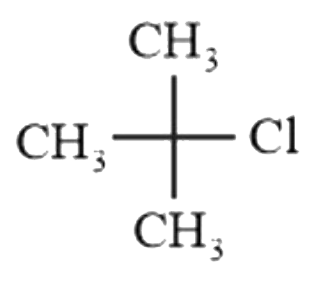
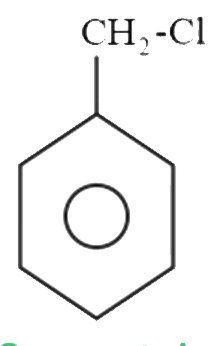
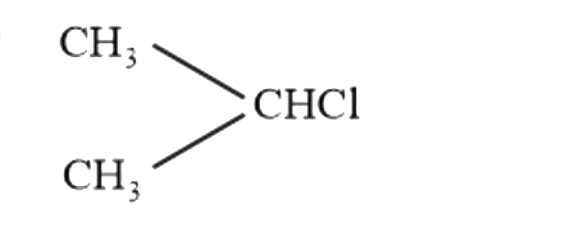
In which of the following compounds , the C - Cl bond ioniosation shall give most stable carbonium ion ?

A

B

C

`O_2NCH_2CH_2Cl`

D

Text Solution

AI Generated Solution

The correct Answer is:

To determine which compound will give the most stable carbonium ion upon C-Cl bond ionization, we need to analyze the stability of the carbocations formed from each compound. Here’s a step-by-step breakdown: ### Step 1: Identify the Compounds We have four compounds to analyze: 1. **Compound 1**: Tertiary alkyl chloride (e.g., tert-butyl chloride). 2. **Compound 2**: Benzyl chloride. 3. **Compound 3**: Nitroalkane (e.g., nitroethane). 4. **Compound 4**: Secondary alkyl chloride (e.g., isopropyl chloride). ### Step 2: Analyze the Stability of the Carbocations 1. **Compound 1 (Tertiary Alkyl Chloride)**: - When the C-Cl bond breaks, a tertiary carbocation is formed. - Tertiary carbocations are stabilized by hyperconjugation and inductive effects from adjacent alkyl groups. - This carbocation has 9 alpha hydrogens contributing to its stability. 2. **Compound 2 (Benzyl Chloride)**: - When the C-Cl bond breaks, a benzyl carbocation is formed. - Benzyl carbocations are highly stable due to resonance. The positive charge can be delocalized over the aromatic ring. - This resonance stabilization makes the benzyl carbocation very stable. 3. **Compound 3 (Nitroalkane)**: - When the C-Cl bond breaks, a carbocation is formed that is adjacent to a nitro group. - The nitro group is a strong electron-withdrawing group (−I effect) and destabilizes the carbocation by pulling electron density away from it. - This makes the carbocation formed here very unstable. 4. **Compound 4 (Secondary Alkyl Chloride)**: - When the C-Cl bond breaks, a secondary carbocation is formed. - Secondary carbocations are less stable than tertiary ones but can still be stabilized by hyperconjugation and inductive effects from adjacent alkyl groups. - This carbocation has 6 alpha hydrogens contributing to its stability. ### Step 3: Compare the Stability - **Tertiary Carbocation**: Stable due to hyperconjugation and inductive effects. - **Benzyl Carbocation**: Very stable due to resonance. - **Nitroalkane Carbocation**: Unstable due to the electron-withdrawing effect of the nitro group. - **Secondary Carbocation**: Moderately stable due to hyperconjugation. ### Conclusion The most stable carbonium ion is formed from **Compound 2 (Benzyl Chloride)** due to resonance stabilization, which dominates over the inductive effects present in the other compounds. ### Final Answer **Benzyl chloride (Compound 2) will give the most stable carbonium ion upon C-Cl bond ionization.** ---
Promotional Banner

Topper's Solved these Questions

  • NTA NEET SET 39

    NTA MOCK TESTS|Exercise CHEMISTRY|45 Videos
  • NTA NEET SET 41

    NTA MOCK TESTS|Exercise CHEMISTRY|45 Videos

Similar Questions

Explore conceptually related problems

Most stable carbonium ion is :

NTA MOCK TESTS-NTA NEET SET 40-CHEMISTRY
  1. Which of these statements about [Co(CN)6]^(3-) is true?

    Text Solution

    |

  2. The reaction of H(3)N(3)B(3)Cl(3)(A) with LiBH(4) in tetrahydrofuran g...

    Text Solution

    |

  3. In which of the following compounds , the C - Cl bond ioniosation shal...

    Text Solution

    |

  4. In the following reaction A is

    Text Solution

    |

  5. Consider the following compounds Hyper conjugation occurs in

    Text Solution

    |

  6. The reaction CH3-underset(CH3)underset(|)overset(CH3)overset(|)C-ONa+C...

    Text Solution

    |

  7. The anodic half-cell of lead-acid battery is recharged using electrici...

    Text Solution

    |

  8. The tests performed on compound X and their inferences are : {:(" ...

    Text Solution

    |

  9. When propyne is treated with aqueous H2SO4 in the presence of HgSO4, t...

    Text Solution

    |

  10. A compound 'X' on treatment with Br(2)//NaOH, provided C(3)H(9)N, whi...

    Text Solution

    |

  11. Among the colloids cheese (C), milk (M) and smoke (S), the correct com...

    Text Solution

    |

  12. An organic compound contains C = 40%, H = 13.33%, and N = 46.67%. Its ...

    Text Solution

    |

  13. The major product of the following reactions

    Text Solution

    |

  14. For the reaction : H(2)+I(2)to 2HI, the differential rate law is

    Text Solution

    |

  15. Given The enthalpy of the hydrogenation of these compounds will ...

    Text Solution

    |

  16. The major product of the following reaction is

    Text Solution

    |

  17. Dissolving 120g of urea (mol wt = 60) in 1000g of water gave a solutio...

    Text Solution

    |

  18. Which polymer has a 'chiral' monomer (s) ?

    Text Solution

    |

  19. Bithional is generally added to the soaps as an additive to function a...

    Text Solution

    |

  20. Consider the following sequence of reaction The final product (Q) i...

    Text Solution

    |
