Home
Class 12
CHEMISTRY
Dehydration of ethylene glycol in presen...

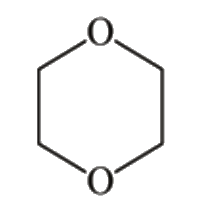
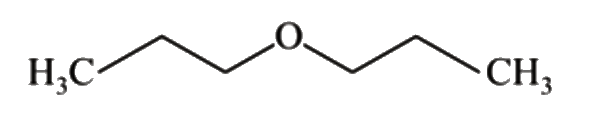
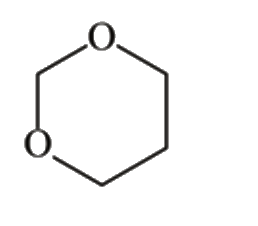
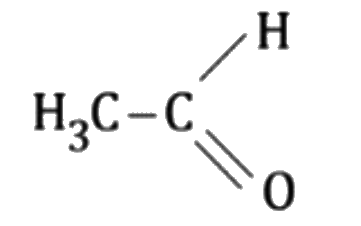
Dehydration of ethylene glycol in presence of concentration `H_2SO_4` will give

A

B

C

D

Text Solution

AI Generated Solution

The correct Answer is:

To solve the question regarding the dehydration of ethylene glycol in the presence of concentrated H₂SO₄, we can follow these steps: ### Step-by-Step Solution: 1. **Identify the Structure of Ethylene Glycol:** Ethylene glycol has the formula C₂H₆O₂, which can be represented as HO-CH₂-CH₂-OH. It contains two hydroxyl (–OH) groups. 2. **Understanding Dehydration:** Dehydration refers to the removal of water (H₂O) from a compound. In this case, we will remove water from ethylene glycol. 3. **Protonation of Hydroxyl Groups:** When concentrated H₂SO₄ is added, it donates protons (H⁺) to the hydroxyl groups of ethylene glycol. This makes the hydroxyl groups more reactive. 4. **Formation of a Good Leaving Group:** The protonation of the hydroxyl group converts it into a better leaving group (water). This leads to the formation of a carbocation intermediate. 5. **Nucleophilic Attack:** The remaining hydroxyl group (–OH) can act as a nucleophile and attack the electrophilic carbon of the carbocation, leading to the elimination of a water molecule (H₂O). 6. **Formation of Ether:** The product formed after the elimination of water is an ether. The structure of the ether formed from ethylene glycol is diethyl ether, which can be represented as CH₂=CH-O-CH₂-CH₂. 7. **Final Product:** The final product of the dehydration of ethylene glycol in the presence of concentrated H₂SO₄ is ethylene oxide (or oxirane), which is a cyclic ether. ### Conclusion: The dehydration of ethylene glycol in the presence of concentrated H₂SO₄ yields ethylene oxide (C₂H₄O).
Promotional Banner

Topper's Solved these Questions

  • NTA NEET SET 69

    NTA MOCK TESTS|Exercise CHEMISTRY|45 Videos
  • NTA NEET SET 71

    NTA MOCK TESTS|Exercise CHEMISTRY|45 Videos

Similar Questions

Explore conceptually related problems

Dehydration of alcohol into alkene by concentration H_2SO_4 involves which among the following reaction intermediate ?

A fatty acid reacts with an alcohol in the presence of concentrated H_(2)SO_(4) to give

Describe the mechanism for the formation of diethyl ether from ethanol in the presence of concentrated H_(2)SO_(4)

Phthalic acid reacts with resorcinol in the presence of concentrated H_(2)SO_(4) to give:

Addition of methanol to 2 - methylpropene in the presence of conc. H_2SO_4 gives

The dehydration of alcohols in the presence of conc. H_(2)SO_(4) at 170^(@)C involves one of the following :

NTA MOCK TESTS-NTA NEET SET 70-CHEMISTRY
  1. If the freezing point of a 0.01 molal aqueous solution of a cobalt (II...

    Text Solution

    |

  2. Find the order of basic character of the following structure.

    Text Solution

    |

  3. Dehydration of ethylene glycol in presence of concentration H2SO4 will...

    Text Solution

    |

  4. Which of the following are thermoplastic polymers ?

    Text Solution

    |

  5. The solubility of Pb(OH)2 in pure water in pure water is 20/3xx10^(-6)...

    Text Solution

    |

  6. The overall reaction electrochemical cell at 298K. Ag(s)|AgI(s)|I^(-...

    Text Solution

    |

  7. The colour of potassium dichromate is due to

    Text Solution

    |

  8. A substance on treatment with dil. H2 SO4 liberates a colourless gas w...

    Text Solution

    |

  9. A crystalline solid of a pure substance has a face-centred cubic struc...

    Text Solution

    |

  10. Van't Hoff's equation for a chemical reaction under equilibrium is giv...

    Text Solution

    |

  11. Phenol on reaction with H2SO4 at high temperature gives mainly

    Text Solution

    |

  12. Which of the following statements is not correct ?

    Text Solution

    |

  13. If the dipole moment of HCl is 1.08 D and the bond distance is 1.27Å, ...

    Text Solution

    |

  14. It is easier to liquefy ammonia than oxygen because

    Text Solution

    |

  15. For the elementary reaction MrarrN, the rate of disappearance of M inc...

    Text Solution

    |

  16. Which of the following alcohols do not give white turbidity on treatme...

    Text Solution

    |

  17. Choose the incorrect statement .

    Text Solution

    |

  18. Which is the most reactive alkyl halide for the following reaction ? ...

    Text Solution

    |

  19. Which of the following metal on burning in moist air does not give sme...

    Text Solution

    |

  20. For which of the following change DeltaH ne DeltaE ? (Where DeltaH i...

    Text Solution

    |
