Mendel first crossed pure-bred tall plants with pure-bred dwarf pea plants and found that only tall pea plants were produced in the first generation or `F_(1)` genrantion (see Figure 1.) No dwarf pea plants (or short plants
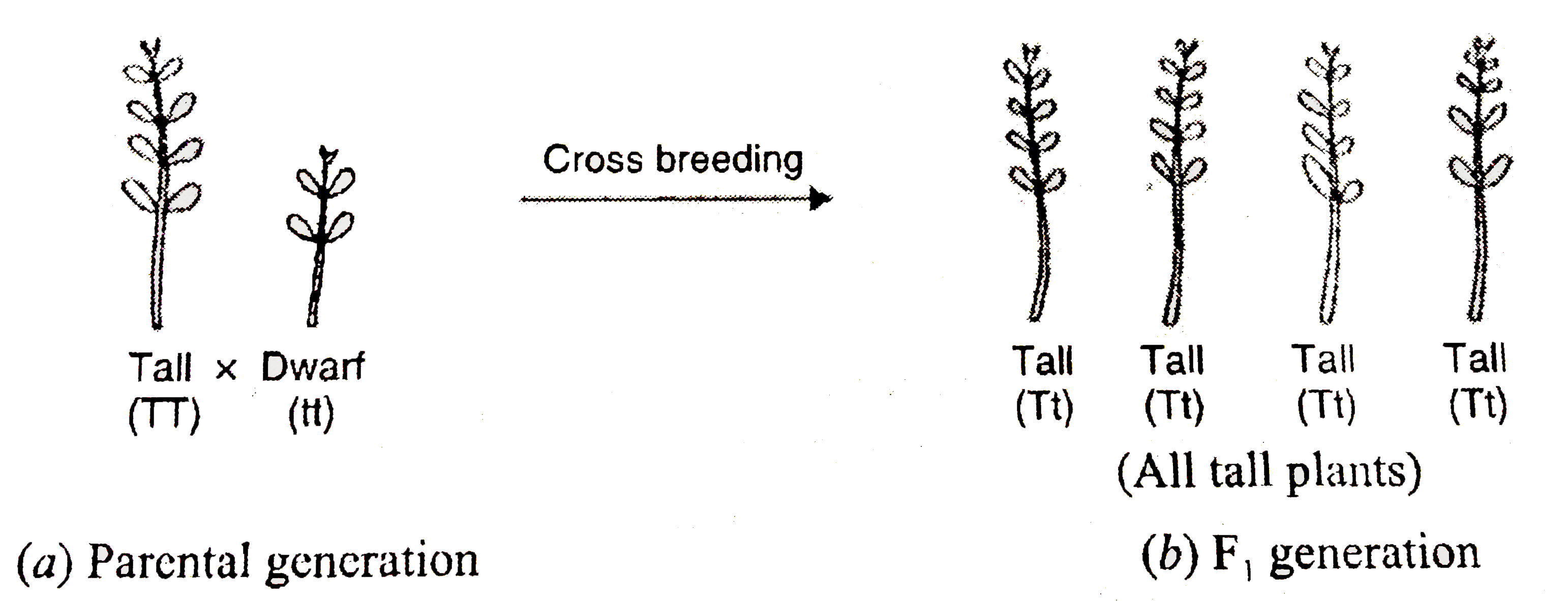
pea plants) were obtained in the first generation of progeny. From this Mendel concluded that the first generation (or `F_(1)` cross) showed the of only of the parent plants: tallness. The trait of other parent plant, dwarfness, did not show up in the progeny of first generation.
Mendel then crossed the tall pea plants of the first generation (`F_(1)` generation) and found that tall plants and dwarf plants were obained in the second generation (or `F_(2)` generation) in the ratio of `3 : 1 ` In other words, in the `F_(2)` generation, three-fourth plants were tall and one-fourth were dwarf (see Figure 2) . Mendel noted that the dwarf trait of the parent pea plant which had seemingly disappeared in the first generation progeny,
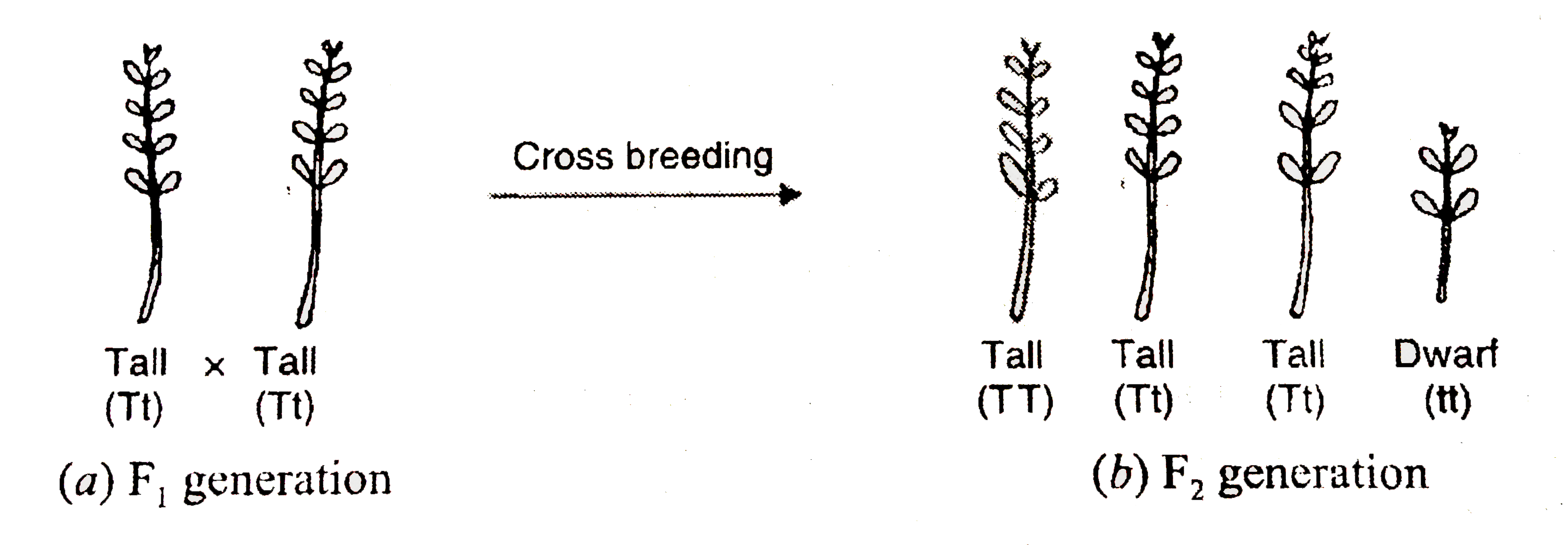
reappeared in the second generation . Mendel said that the trait of dwarfness of one of the parent pea plant had not been lost, it was merely concealed or supressed in the first generation to re-emerge in the second generation. Mendel called the repressed trait of 'dwarfness' as 'recessive trait' and the expressed trait of 'tallness' as the 'dominant trait' . In this way, Mendel's experiments with tall dwarf pea plants showed that the traits may be dominant or reccessive .


