Text Solution
Verified by Experts



Topper's Solved these Questions
PERIODIC CLASSIFICATION OF ELEMENTS
LAKHMIR SINGH & MANJIT KAUR|Exercise SHORT ANSWER TYPE|8 VideosPERIODIC CLASSIFICATION OF ELEMENTS
LAKHMIR SINGH & MANJIT KAUR|Exercise LONG ANSWER TYPE|3 VideosPERIODIC CLASSIFICATION OF ELEMENTS
LAKHMIR SINGH & MANJIT KAUR|Exercise VERY SHORT ANSWER TYPE|6 VideosMETALS AND NON-METALS
LAKHMIR SINGH & MANJIT KAUR|Exercise Short Answer Type Qustions|1 VideosTEST PAPER 1
LAKHMIR SINGH & MANJIT KAUR|Exercise Section B|4 Videos
Similar Questions
Explore conceptually related problems
LAKHMIR SINGH & MANJIT KAUR-PERIODIC CLASSIFICATION OF ELEMENTS-Exercise
- Raghav is a student of class X who was trying to convert the groundnut...
Text Solution
|
- Reshma is the student of class X in a city school. One day she was sit...
Text Solution
|
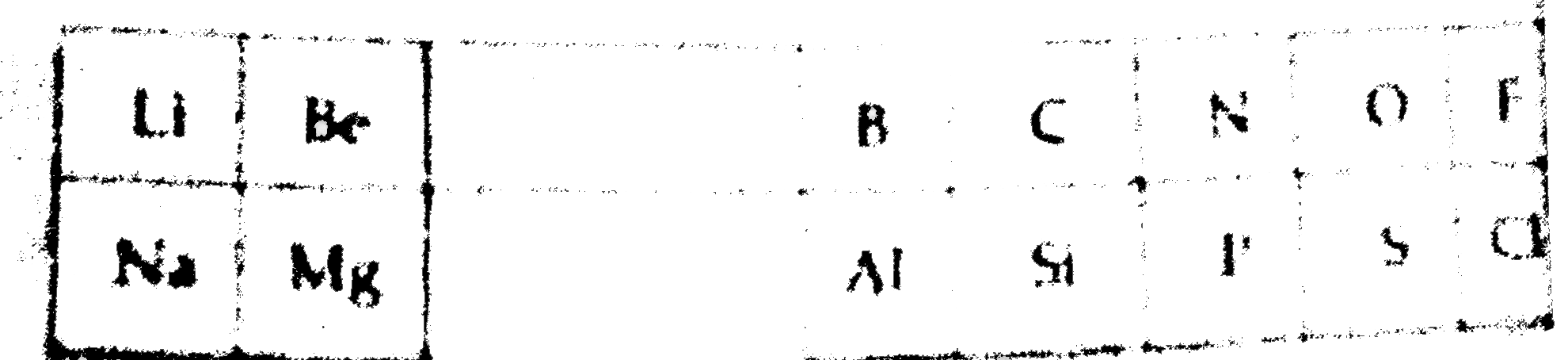
- Given alongside is a part of the periodic table: As we move horizont...
Text Solution
|
- How would the tendency to gain electrons change on moving from left to...
Text Solution
|
- How would the tendency to lose electrons change as we go from left to ...
Text Solution
|
- What property do all elements in the same column of the periodic table...
Text Solution
|
- What property do all the elements in the same group of the periodic ta...
Text Solution
|
- (a) What is the number of valence electrons in the atoms of first elem...
Text Solution
|
- State whether the following statement is true of fals: On going down...
Text Solution
|
- How does the valency of elements vary is going down a group of the per...
Text Solution
|
- Name the element which is in: (a) first group and third period: (b) ...
Text Solution
|
- How do electronic configurations of elements change in second period o...
Text Solution
|
- Arrangement the following elements in increasing order of their atomic...
Text Solution
|
- Arrange the following elements in the increasing order of their metall...
Text Solution
|
- Rewrite the folowing statements after correction if necessary: (i) ...
Text Solution
|
- Fill in the blanks in the following statements: (a) The horizontal r...
Text Solution
|
- Nitrogen (atomic number 7) and phosphorus (atomic number 15) belong to...
Text Solution
|
- (a) How does the size of atoms (atomic size) generally vary in ging fr...
Text Solution
|
- In the following diagram for the first three periods of the periodic t...
Text Solution
|
- The elements X,Y and Z belong to groups 2,14 and 16 respectively of th...
Text Solution
|