

Home
Class 12
PHYSICS
Some isolated metal plates with large su...

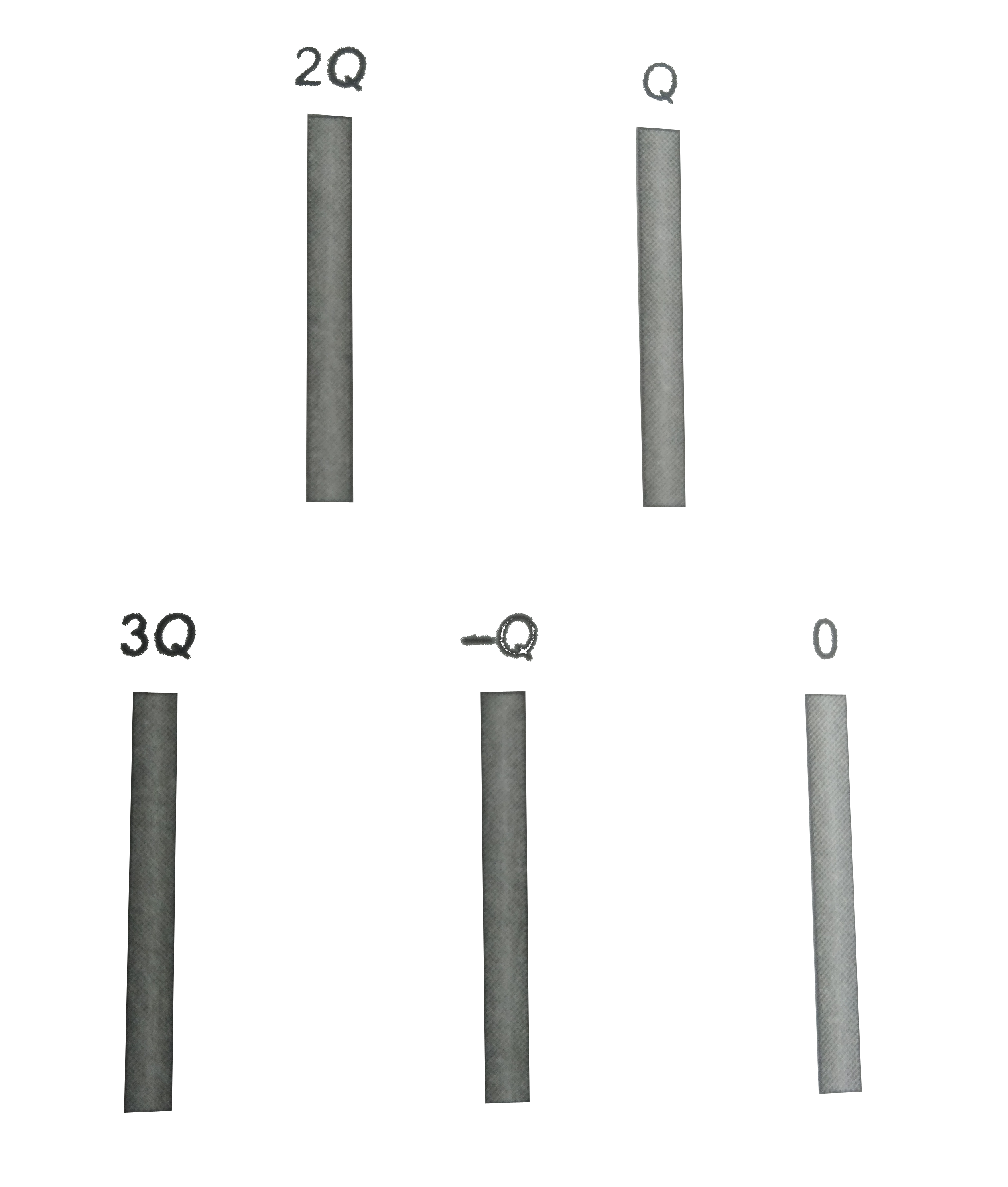
Some isolated metal plates with large surface areas are kept parallel to each other and total charges on each plate are as shown. Find the charge appearing on the surfaces of plates.
(a)

Promotional Banner

Similar Questions

Explore conceptually related problems

Three large plates A, B and C are placed parallel to each other and charges are given as shown. The charge that appears on the left surface of plate B is

Three identical metal plates with large surface areas are kept parallel to each other as shown in figure. The leftmost plate is given a charge Q. the rightmost a charge - 2Q and the middle one remains neutral. Find the charge appearing on the outer surface of the rightmost plate

The nagative plate of a parallel plate capacitor is given a charge of -20 X 10^(-8) C . Find the charges appearing on the four surface of the capacitor plates.

The nagative plate of a parallel plate capacitor is given a charge of -20 X 10^(-8) C . Find the charges appearing on the four surface of the capacitor plates.

The nagative plate of a parallel plate capacitor is given a charge of -20 X 10^(-8) C . Find the charges appearing on the four surface of the capacitor plates.

An arrangement of three large metallic parallel plates with respective charges marked in figure is shown . What is the charge appearing on the left face of plate B ?

Three identical metal plates with large surface areas are kept parallel to each as shown in figure (30-E8). The leftmost plate is given a charge Q, the rightmost a chrgear2Q and the middle one remains neutral. Find the charge appearing on the outer surface of the rightmost plate.

Three identical metal plates with large surface areas are kept parallel to each as shown in figure (30-E8). The leftmost plate is given a charge Q, the rightmost a chrgear2Q and the middle one remains neutral. Find the charge appearing on the outer surface of the rightmost plate.

Three inentical metal plates with large surface areas are kept parallel to each as shown in figure (30-E8). The leftmost plate is given a charge Q, the rightmost a chrge _2Q and the middle one remains neutral. Finde the charge appearing on the outer surface of the rightmost plate.

Two conducting plates X and Y, each having large surface aera A (on one side), are placed parallel to each other as show in figure. Find the surface charge density at the inner surface of the plate X.