Home
Class 11
CHEMISTRY
Energy of electron varies with atomic nu...

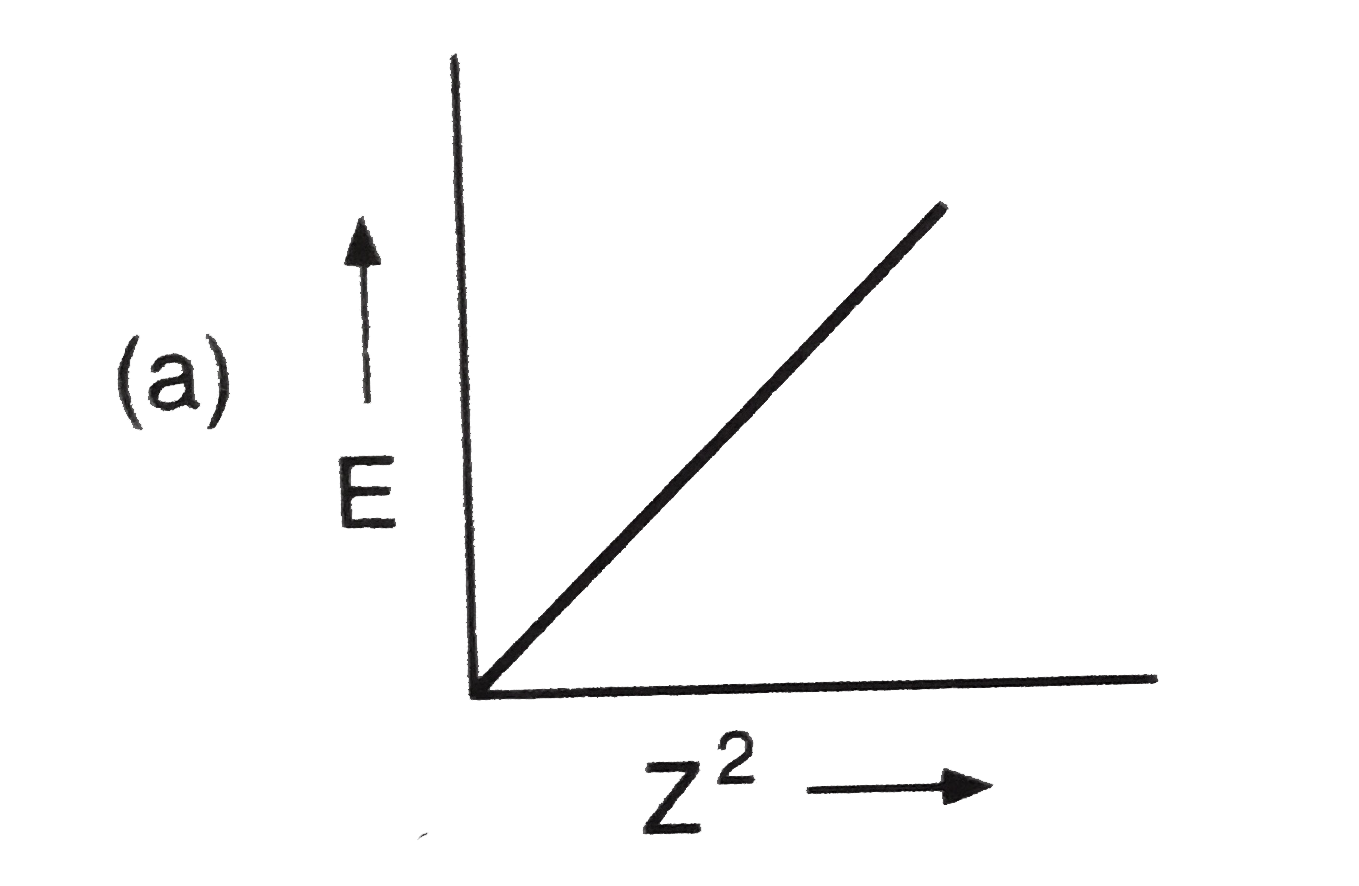
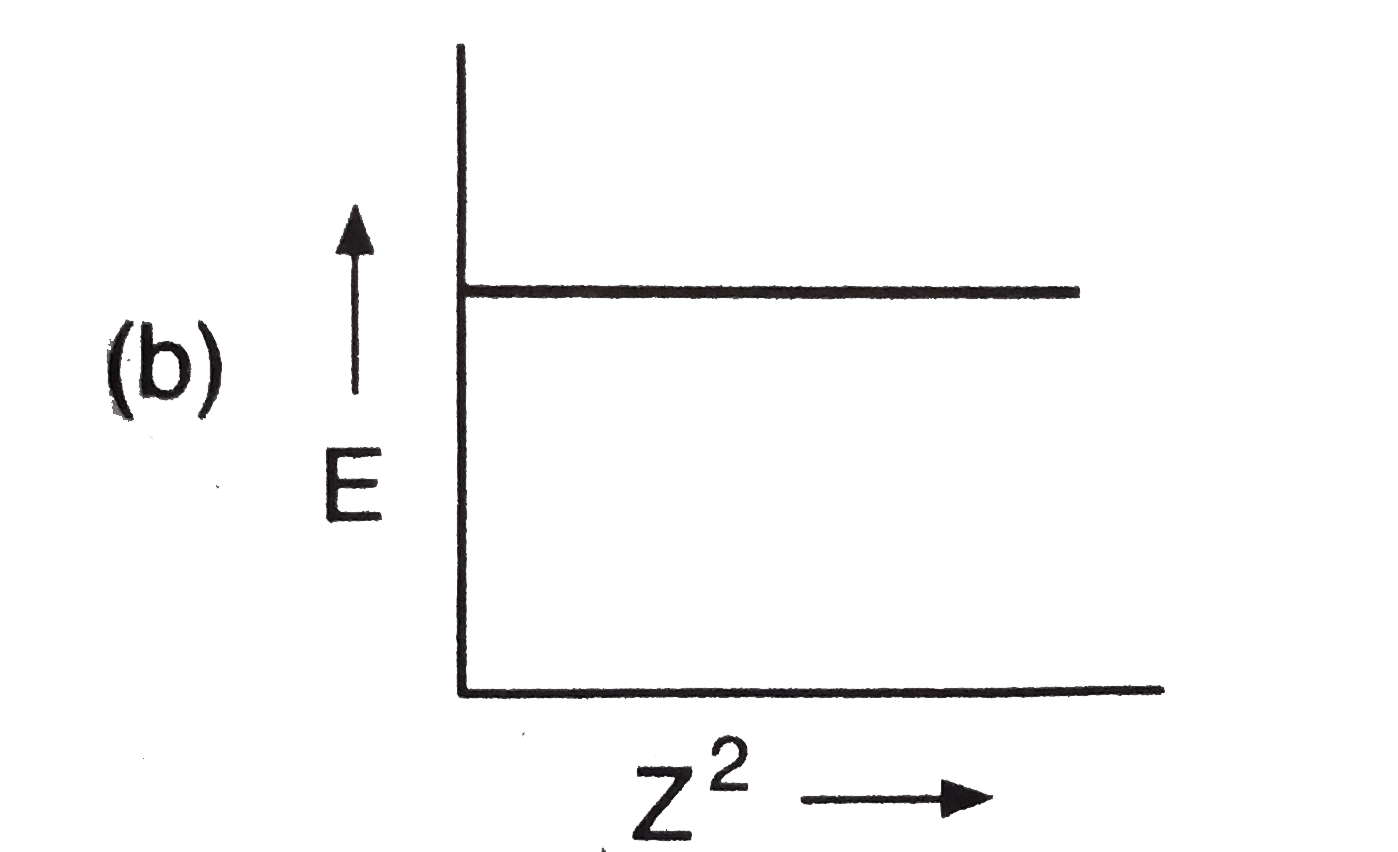
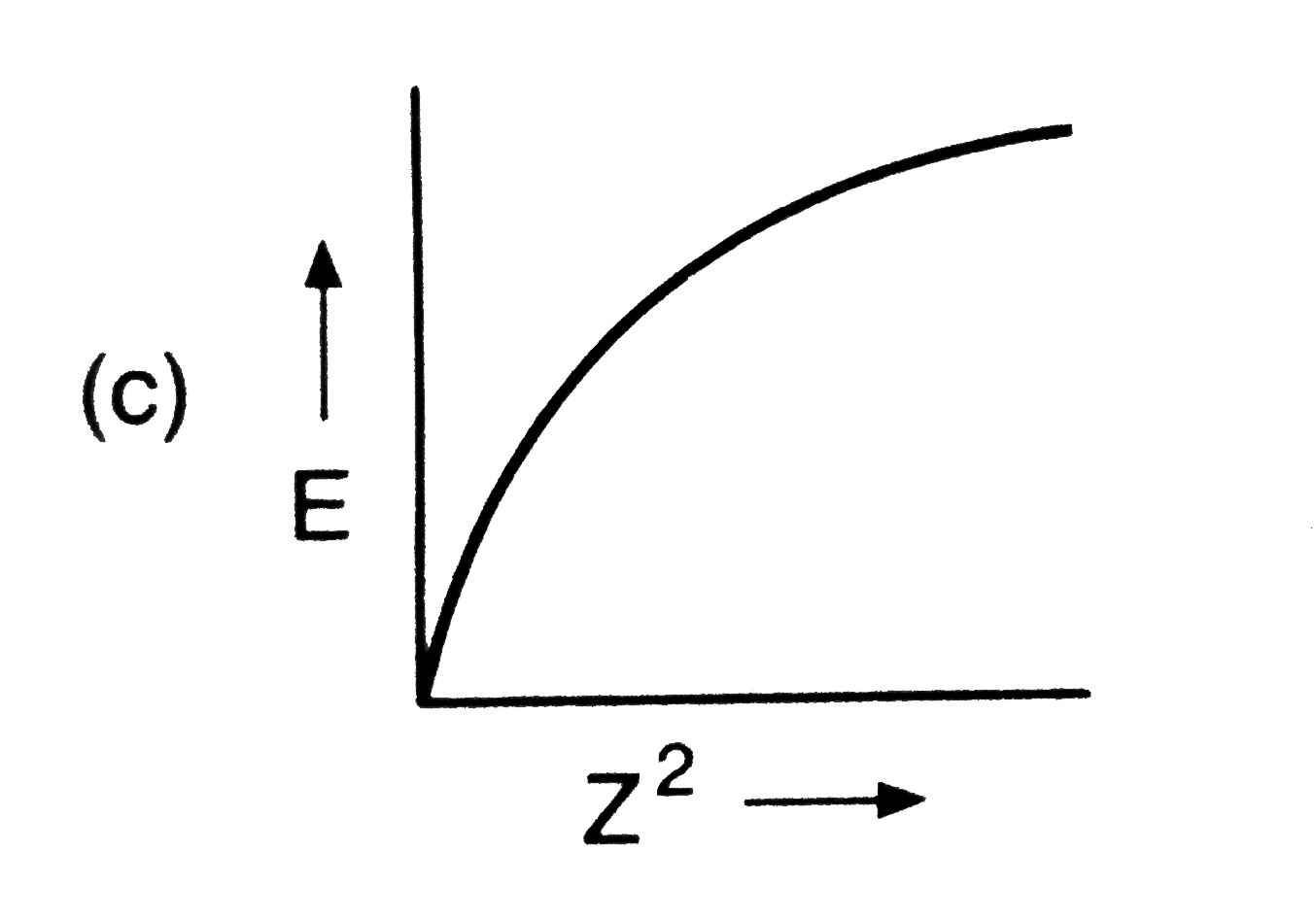
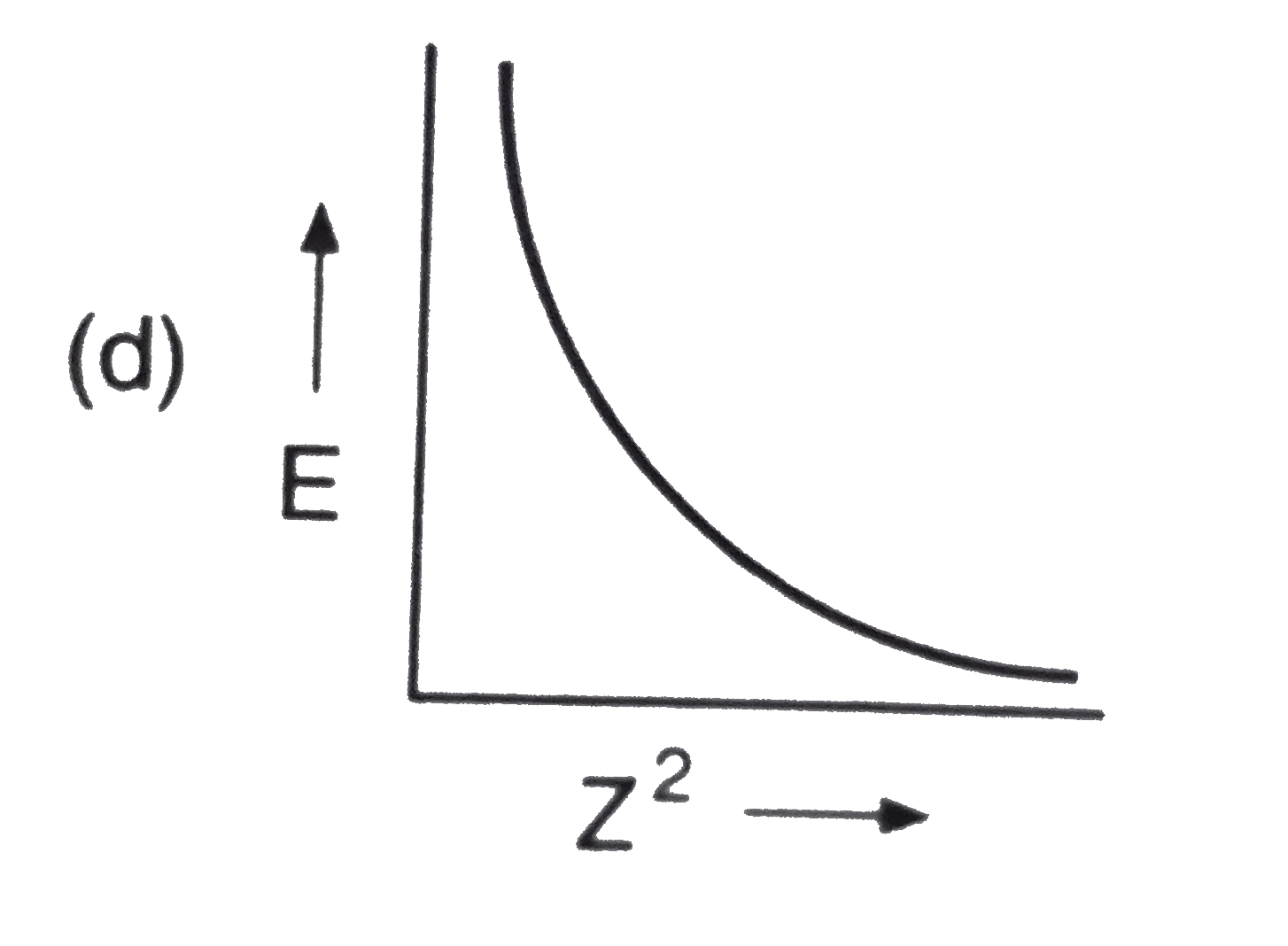
Energy of electron varies with atomic number as the following curve/line:

A

B

C

D

Text Solution

AI Generated Solution

The correct Answer is:

To solve the question regarding the variation of electron energy with atomic number, we can follow these steps: ### Step 1: Understand the Energy Formula The energy of an electron in an atom can be expressed using the formula: \[ E = -\frac{13.6 \, Z^2}{n^2} \] where: - \(E\) is the energy of the electron, - \(Z\) is the atomic number, - \(n\) is the principal quantum number (energy level). ### Step 2: Identify the Relationship From the formula, we can see that the energy \(E\) is directly proportional to the square of the atomic number \(Z\) when \(n\) is constant. Thus, we can express this relationship as: \[ E \propto Z^2 \] ### Step 3: Graphical Representation Since the energy is proportional to \(Z^2\), if we were to plot a graph of energy \(E\) against \(Z^2\), we would expect a linear relationship. The graph would pass through the origin (0,0) because when \(Z = 0\), \(E\) will also be 0. ### Step 4: Conclusion Based on the analysis, we can conclude that as the atomic number \(Z\) increases, the energy of the electron also increases proportionally to the square of the atomic number. Therefore, the correct option based on the relationship is that the energy of the electron varies with the atomic number in a way that can be represented by a straight line graph passing through the origin. ### Final Answer The energy of the electron varies with atomic number \(Z\) as \(E \propto Z^2\), and the graph of energy versus \(Z^2\) will be a straight line passing through the origin. ---

To solve the question regarding the variation of electron energy with atomic number, we can follow these steps: ### Step 1: Understand the Energy Formula The energy of an electron in an atom can be expressed using the formula: \[ E = -\frac{13.6 \, Z^2}{n^2} \] where: ...
Promotional Banner

Topper's Solved these Questions

  • MISCELLANEOUS (TOPICS OF GENERAL INTEREST)

    OP TANDON|Exercise SET-V: Matching type Questions|37 Videos
  • INTRODUCTION TO ORGANIC CHEMISTRY

    OP TANDON|Exercise SINGLE INTEGER ANSWER TYPE|4 Videos
  • OXIDATION AND REDUCTION (REDOX REACTIONS)

    OP TANDON|Exercise SECTION V|3 Videos

Similar Questions

Explore conceptually related problems

Energy of electron in a orbit of H -atom is

The variation of wavelength lambda of the K_(alpha) line with atomic number Z of the target is shown by the following curve of

The wavelength lambda of the K_(a) line of characteristic X - ray spectra varies with atomic number approximately

In H-atom energy of electron is datermined by :

An electron transits from n=3 to ground state in hydrogen atom. If K, P and T are kinetic energy, potential energy and total energy of the electron respectively, which of the following statements regarding the energy of electron is/are correct?

The quantum number of the last electron of an element are below pralict the atomic number and same of the electron from the following quantum number

OP TANDON-MISCELLANEOUS (TOPICS OF GENERAL INTEREST)-SET-VI: Problems on graphical aptitude
  1. In the following graph:

    Text Solution

    |

  2. The variation of ^^(m) of acetic acid with concentration is correctly ...

    Text Solution

    |

  3. Distribution of molecules with velocity is represented by the curve ...

    Text Solution

    |

  4. CH(3)COOH is neutralized by NaOH. Conductometric titration curve will ...

    Text Solution

    |

  5. If for a given substance, melting point is T(B) and freezing point is ...

    Text Solution

    |

  6. Which of the following represents zero order reaction ?

    Text Solution

    |

  7. This graph represents:

    Text Solution

    |

  8. The efficiency of the reversible cycle shown in the given figure is

    Text Solution

    |

  9. Which of the following curves represents the chemical adsorption ?

    Text Solution

    |

  10. Energy of electron varies with atomic number as the following curve/li...

    Text Solution

    |

  11. A radioactive sample consists of two distinct species having equal num...

    Text Solution

    |

  12. In following isothermal graphs A, B and C at temperatures T(1), T(2) a...

    Text Solution

    |

  13. N(2)(g)+3H(2)(g) hArr 2NH(3)(g), DeltaH^(ɵ)=-22.4 kJ The pressure in...

    Text Solution

    |

  14. From the given graph, predict the compound which would be most easily...

    Text Solution

    |

  15. Which of the following curves represents the Henry's law ?

    Text Solution

    |

  16. Number of nodes in above plot is :

    Text Solution

    |

  17. Which of the following is not correct for the velocity of electron?

    Text Solution

    |

  18. A small amount of solution containing a radioactive nucleide A""^(x) w...

    Text Solution

    |

  19. Molar solubility of helium, nitrogen and oxygen are plotted against pa...

    Text Solution

    |

  20. Solubility of oxygen gas in water follows Henry's law. When the solubi...

    Text Solution

    |
