
Home
Class 12
CHEMISTRY
Organic reactions take place through the...

Organic reactions take place through the formations of reactive carbon intermediates formed by cleavage of covalent bonds. Formation of these intermediates depends upon the dissociation energies of covalent bonds.
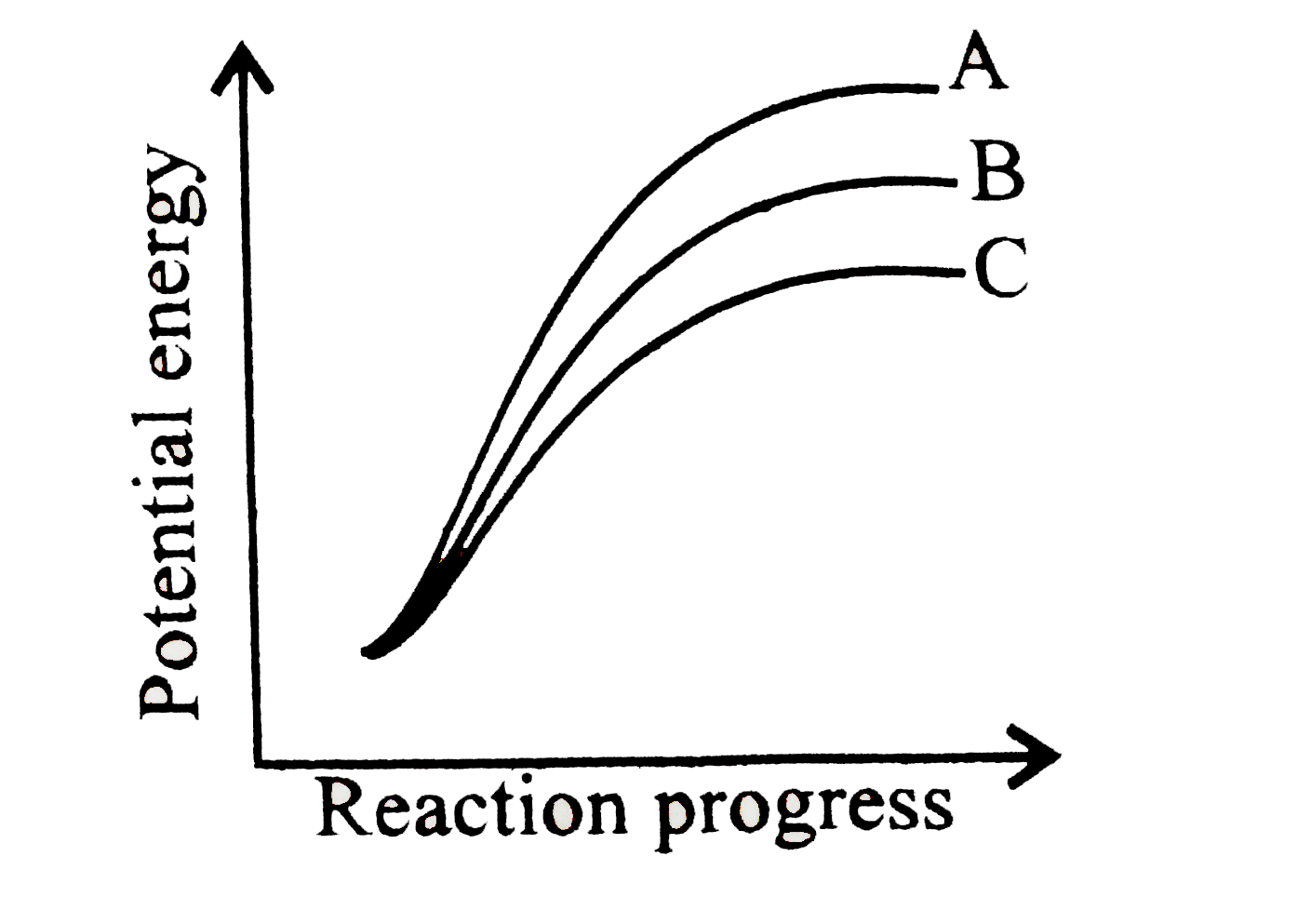
3. In the following diagram, stability of different radicals have been represented. These can be

Match the potential curve with free radical

A

`{:(,X,Y,Z),(,A,B,C):}`

B

`{:(,X,Y,Z),(,B,A,C):}`

C

`{:(,X,Y,Z),(,C,A,B):}`

D

`{:(,X,Y,Z),(,A,C,B):}`

Text Solution

Verified by Experts

The correct Answer is:

D

Larger the stability, smaller the potential energy.
Promotional Banner

Topper's Solved these Questions

  • BASIC PRINCIPLES OF ORGANIC CHEMISTRY

    DINESH PUBLICATION|Exercise REASON ASSERTION TYPE MCQS|12 Videos
  • BASIC PRINCIPLES OF ORGANIC CHEMISTRY

    DINESH PUBLICATION|Exercise ULTIMATE PREPARATORY PACKAGE|51 Videos
  • BASIC PRINCIPLES OF ORGANIC CHEMISTRY

    DINESH PUBLICATION|Exercise SELECTED STRAIGHT OBJECTIVE TYPE MCQS|64 Videos
  • ALKALI EARTH METALS

    DINESH PUBLICATION|Exercise Unit test-12|5 Videos
  • BIOMOLECULES

    DINESH PUBLICATION|Exercise MATRIX - MATCH TYPE|8 Videos

Similar Questions

Explore conceptually related problems

Organic reactions take place through the formations of reactive carbon intermediates formed by cleavage of covalent bonds. Formation of these intermediates depends upon the dissociation energies of covalent bonds. Which is most stable carbocation ?

Organic reactions take place through the formations of reactive carbon intermediates formed by cleavage of covalent bonds. Formation of these intermediates depends upon the dissociation energies of covalent bonds. 1. Which is not the intermediate formed by cleavage of covalent bonds.

Organic reactions take place through the formations of reactive carbon intermediates formed by cleavage of covalent bonds. Formation of these intermediates depends upon the dissociation energies of covalent bonds. In which cases, free radicals can be formed by homolytic fission ?

Organic reactions take place through the formations of reactive carbon intermediates formed by cleavage of covalent bonds. Formation of these intermediates depends upon the dissociation energies of covalent bonds. Consider the following transformations Carbon species formed in A, B and C are respectively

Organic reactions take place through the formations of reactive carbon intermediates formed by cleavage of covalent bonds. Formation of these intermediates depends upon the dissociation energies of covalent bonds. When a methyl radical is formed from CH_(3)Cl , select the incorrect statement.

Organic reactions take place through the formations of reactive carbon intermediates formed by cleavage of covalent bonds. Formation of these intermediates depends upon the dissociation energies of covalent bonds. 2. In which cases free energy may decrease, if there can· be some intramolecular rearrangement ?

An organic reaction occurs by using reagents called electrophiles and nucleophiles via the formation of some reactive intermediates called carbocations, carbanions, free radicals, carbenes, nitrenes, radical cations, and radical anions. The most stable free radical is :

Using curved arrows rotation,show the formation of reactive intermediates when the following covalent bonds undergo heterolytic fission. (a) CH_(3)-CN (b) CH_(3)-Cu

An organic reaction occurs by using reagents called electrophiles and nucleophiles via the formation of some reactive intermediates called carbocations, carbanions, free radicals, carbenes, nitrenes, radical cations, and radical anions. Which of the following contains nucleophiles only ?

An organic reaction occurs by using reagents called electrophiles and nucleophiles via the formation of some reactive intermediates called carbocations, carbanions, free radicals, carbenes, nitrenes, radical cations, and radical anions. Which of the following contains electrophiles only ?
