A
B
C
D
Text Solution
Verified by Experts
The correct Answer is:
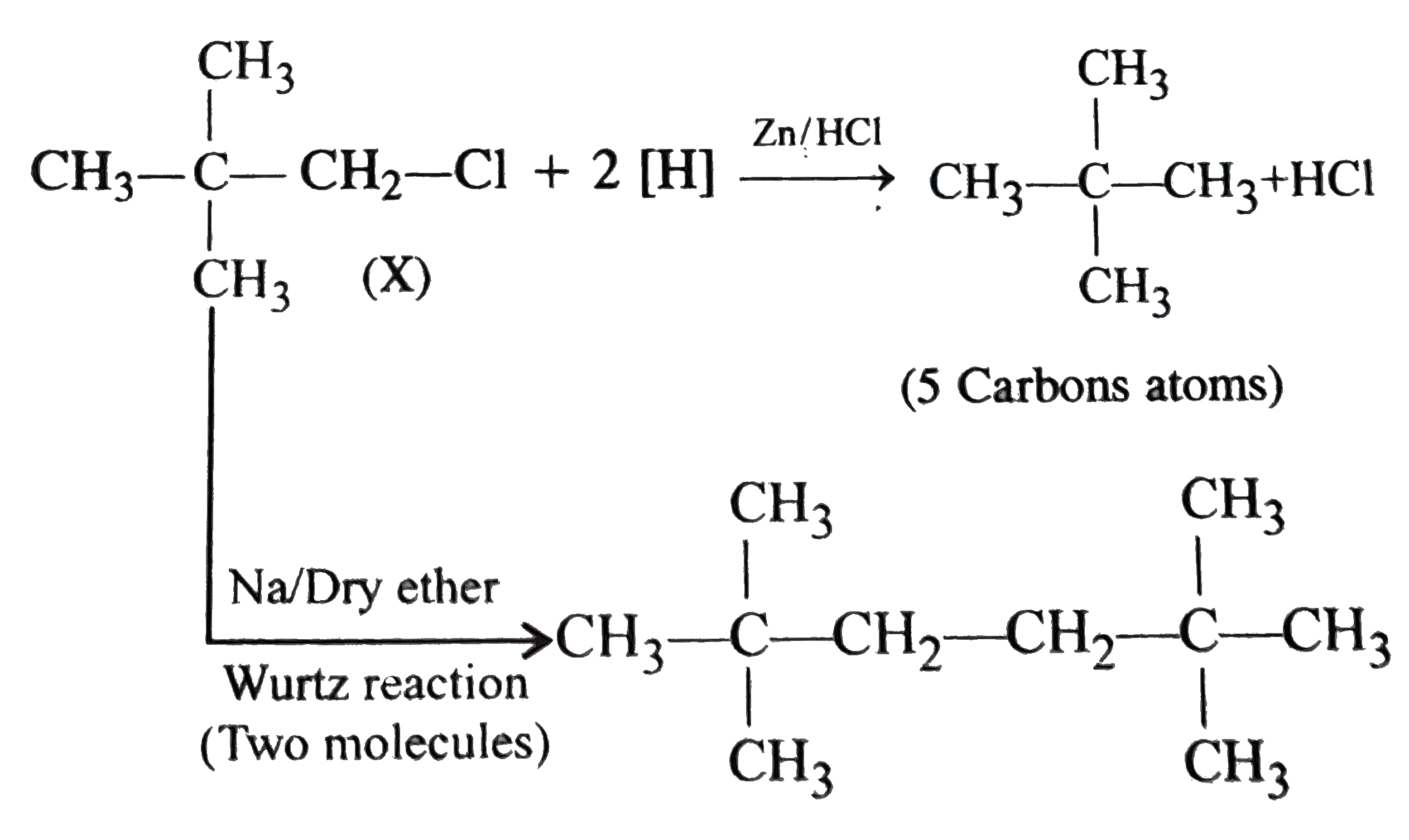



Topper's Solved these Questions
ORGANIC COMPOUNDS WITH FUNCTIONAL GROUP CONTAINING HALOGENS
DINESH PUBLICATION|Exercise Revision Questions From Competitive Exams|154 VideosORGANIC COMPOUNDS WITH FUNCTIONAL GROUP CONTAINING HALOGENS
DINESH PUBLICATION|Exercise Selected Straight Objective Type MCQs|78 VideosNO IDEA
DINESH PUBLICATION|Exercise Unit Test -|1 VideosPOLYMERS
DINESH PUBLICATION|Exercise Matrix|5 Videos
Similar Questions
Explore conceptually related problems
DINESH PUBLICATION-ORGANIC COMPOUNDS WITH FUNCTIONAL GROUP CONTAINING HALOGENS -UNIT TEST - 5
- A chloro derivative (A) on treatment with zinc-copper couple gives a h...
Text Solution
|
- Which one is not true for all the members of a homologous series
Text Solution
|
- The number of secondary atoms in the following compounds are CH(3)un...
Text Solution
|
- The alkane which has only primary hydrogen atoms is
Text Solution
|
- Which of the following compounds have isopropyl group
Text Solution
|
- The IUPAC name of following compound is {:(CH(2)=C-CH(2)-CH(3)),(" ...
Text Solution
|
- The IUPAC name of is
Text Solution
|
- The IUPAC name of the compound is
Text Solution
|
- The IUPAC name of the followin poly functional
Text Solution
|
- Assingn the IUPAC name to the following compound
Text Solution
|
- The IUPAC name of
Text Solution
|
- Mistake in the name but-1-ene ol is
Text Solution
|
- Racemic mixture is formed ny mixing two:
Text Solution
|
- Geometrical isomerism is not shon by
Text Solution
|
- Among the following four structures I to IV I {:(" "CH(3))...
Text Solution
|
- Which of the following compounds will show meso isomer ?
Text Solution
|
- Which of the following compounds will show metamerism ?
Text Solution
|
- Correct order of nucleophilicity is
Text Solution
|
- The basic strength of underset(I)(CH-=C), underset(II)(CH(2)=CH), un...
Text Solution
|
- Consider the following carbanions Correct order of stability is
Text Solution
|
- Different hydrogen in overset(a)(C )H(3)overset(b)(C )H=overset(b)(C...
Text Solution
|