Home
Class 12
CHEMISTRY
An aromatic compound X with molecular fo...

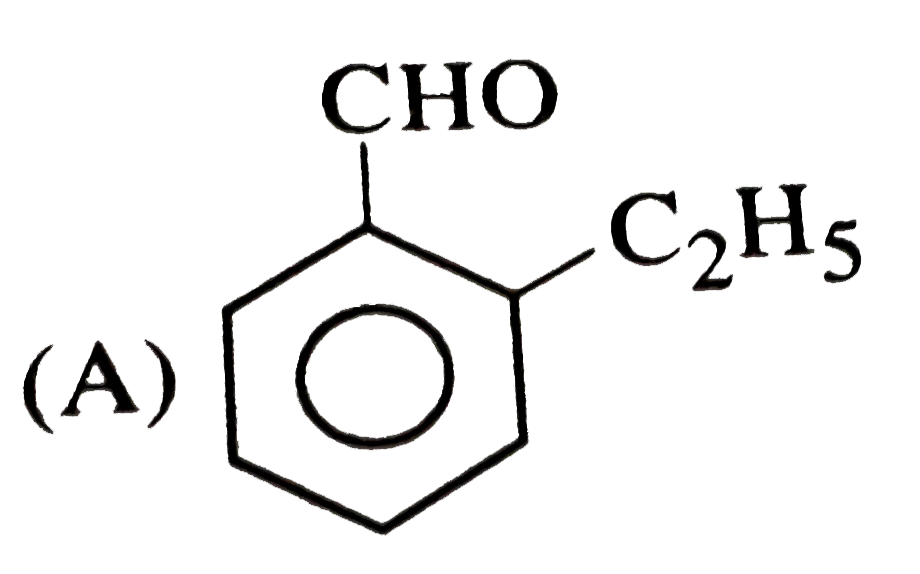
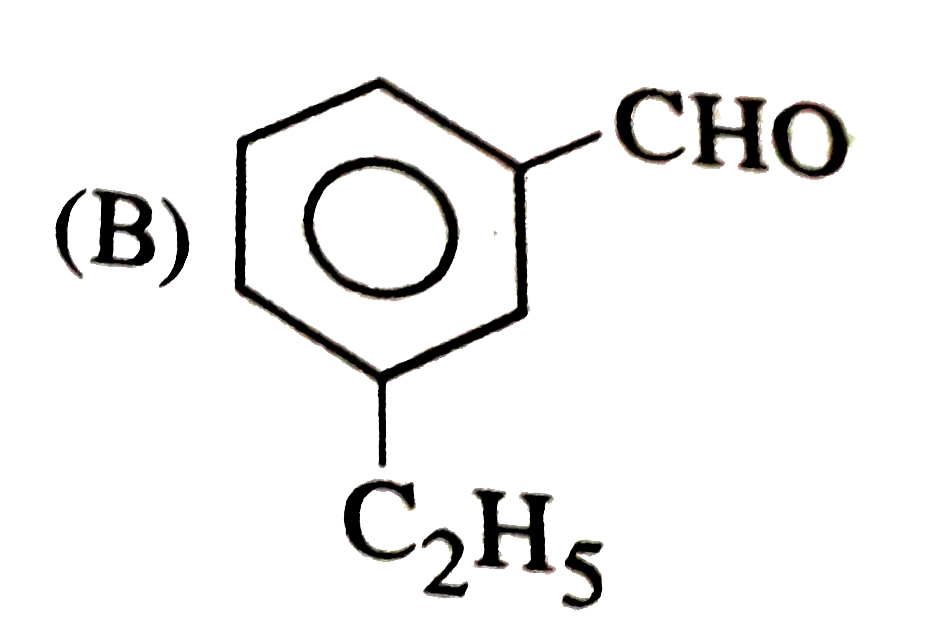
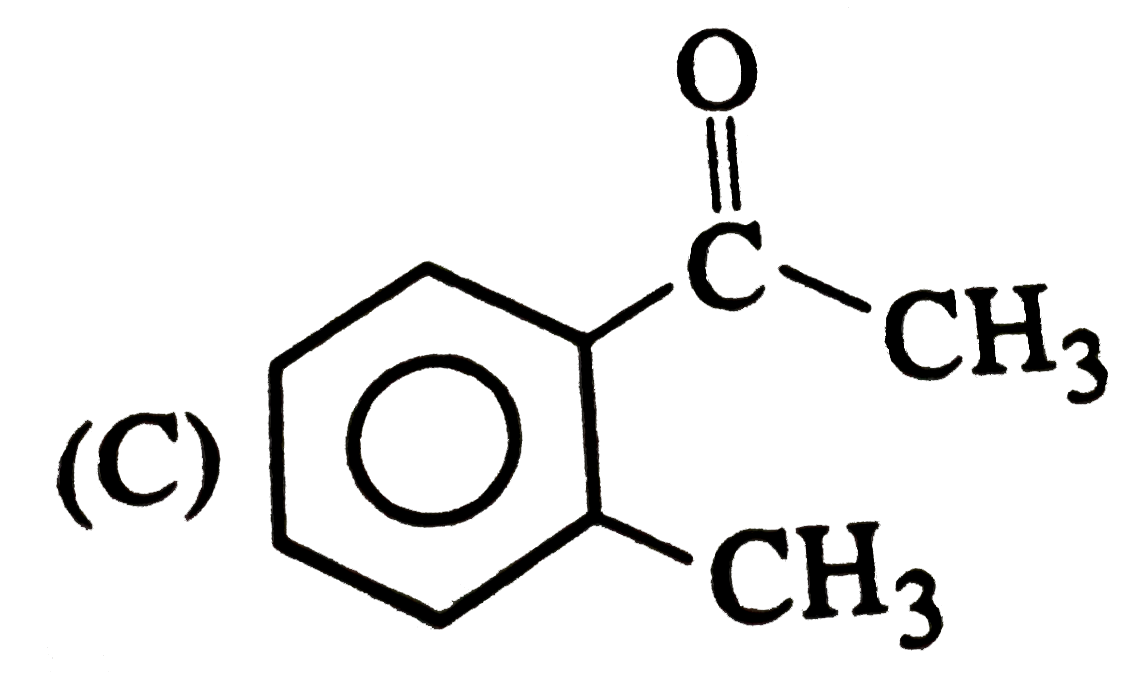
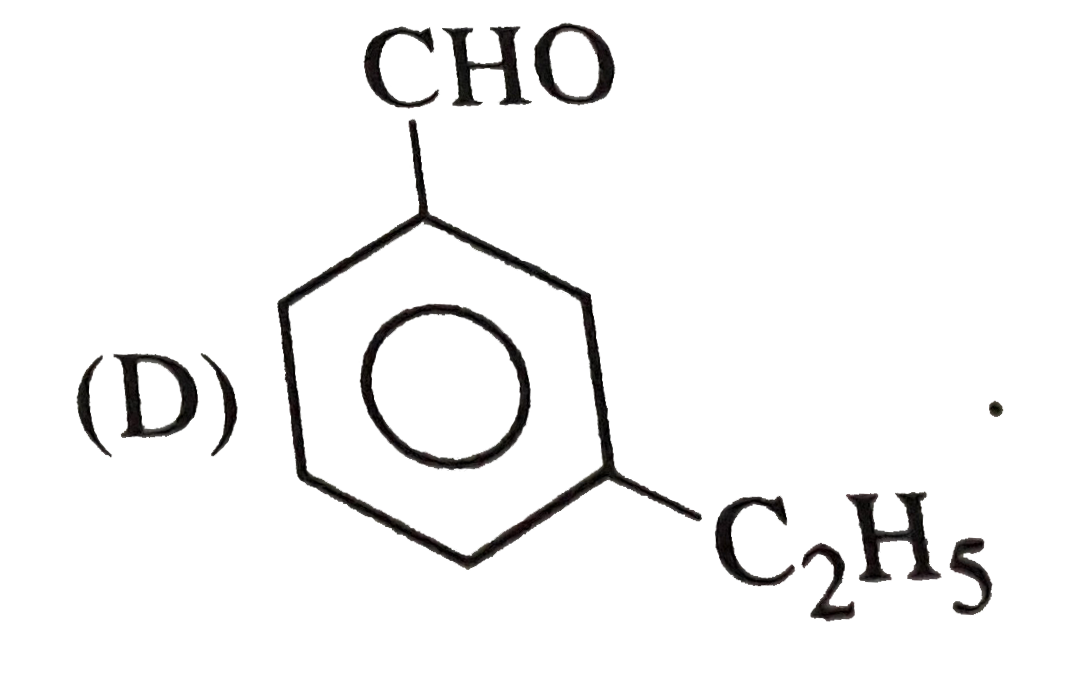
An aromatic compound X with molecular formula `C_(9)H_(10)O` gives following chemical tests:
(i) Form 2,4-DNP derivative
(ii) Reduces Tollen's reagent
(iii) undergoes Cannizzaro's reaction
(iv) On vigorous oxidation 1, 2-Benzene dicarboxylic acid is obtained
The compound X is ,

A

B

C

D

Text Solution

AI Generated Solution

The correct Answer is:

To determine the structure of the aromatic compound X with the molecular formula C₉H₁₀O, we will analyze the given chemical tests step by step. ### Step 1: Analyze the Chemical Tests 1. **Formation of 2,4-DNP derivative**: This indicates that compound X contains a carbonyl group (C=O), which is characteristic of aldehydes and ketones. 2. **Reduces Tollen's reagent**: This test is specific for aldehydes, as only aldehydes can reduce Tollen's reagent to produce a silver mirror. This suggests that compound X is likely an aldehyde. 3. **Undergoes Cannizzaro's reaction**: Cannizzaro's reaction occurs in aldehydes that lack alpha-hydrogens. This means that compound X must be an aldehyde without alpha-hydrogens. 4. **On vigorous oxidation, 1,2-benzene dicarboxylic acid is obtained**: This indicates that the oxidation of compound X leads to the formation of a dicarboxylic acid, suggesting that compound X has substituents that can be oxidized to carboxylic acids. ### Step 2: Determine the Structure of Compound X Given the information from the tests, we can deduce the structure of compound X. - Since it is an aromatic compound with a carbonyl group and no alpha-hydrogens, it is likely to be an aromatic aldehyde. - The oxidation leading to 1,2-benzene dicarboxylic acid suggests that the structure has substituents that can be oxidized. A suitable candidate for compound X is **2-ethylbenzaldehyde** (or **o-ethylbenzaldehyde**), which has the following structure: ``` CHO | C6H4 - CH2 - CH3 ``` ### Step 3: Verify the Molecular Formula - Count the number of carbon atoms: - Benzene ring contributes 6 carbons. - Ethyl group contributes 2 carbons. - Aldehyde contributes 1 carbon. - Total = 6 + 2 + 1 = 9 carbons (C₉). - Count the number of hydrogen atoms: - The benzene ring contributes 4 hydrogens (due to substitution). - The ethyl group contributes 5 hydrogens. - The aldehyde contributes 1 hydrogen. - Total = 4 + 5 + 1 = 10 hydrogens (H₁₀). - There is 1 oxygen from the aldehyde group (O). Thus, the molecular formula is confirmed as C₉H₁₀O. ### Conclusion The compound X is **2-ethylbenzaldehyde**. ---

To determine the structure of the aromatic compound X with the molecular formula C₉H₁₀O, we will analyze the given chemical tests step by step. ### Step 1: Analyze the Chemical Tests 1. **Formation of 2,4-DNP derivative**: This indicates that compound X contains a carbonyl group (C=O), which is characteristic of aldehydes and ketones. 2. **Reduces Tollen's reagent**: This test is specific for aldehydes, as only aldehydes can reduce Tollen's reagent to produce a silver mirror. This suggests that compound X is likely an aldehyde. 3. **Undergoes Cannizzaro's reaction**: Cannizzaro's reaction occurs in aldehydes that lack alpha-hydrogens. This means that compound X must be an aldehyde without alpha-hydrogens. 4. **On vigorous oxidation, 1,2-benzene dicarboxylic acid is obtained**: This indicates that the oxidation of compound X leads to the formation of a dicarboxylic acid, suggesting that compound X has substituents that can be oxidized to carboxylic acids. ...
Promotional Banner

Similar Questions

Explore conceptually related problems

An aromatic compound X with molecular formula, C_(9)H_(10)O gives the following chemical tests : (i) Forms 2,4-DNP derivative (ii) Reduces Tollens' reagent oxidation 1,2-benxenedicarboxylic acid is obtained X is

An organic compound with molecular formula C_9 H_(10) O forms 2,4,-DNP derivative reduces Tollen's reagent and undergoes Cannizzaro reaction .On vigorous oxidation it gives 1,4-benzene dicarboxylic acid Identify the compound .

An organic commpound with the jmolecular formula C_(9)H_(10)O forms a 2,4-DNP derivative, reduces tollen's reagent and undergoes cannizaro reaction, on vigorous oxidation it gives 1,2-benzenedicarboxylic acid. Structure of organic compound is:
