

Home
Class 12
PHYSICS
a semicircle wire of radius R is rotated...

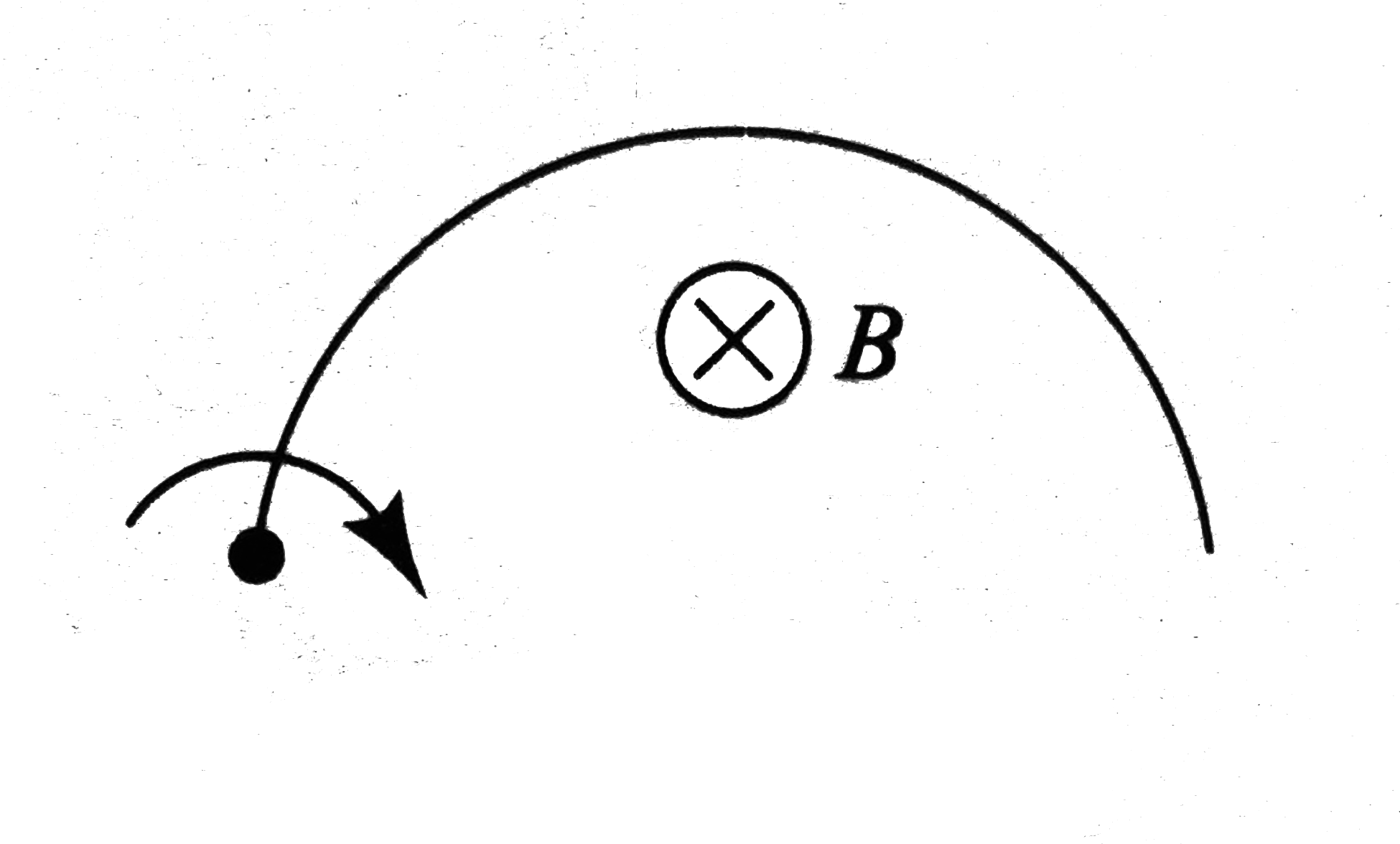
a semicircle wire of radius `R` is rotated with constant angular velocity about an axis passing through one end and perpendicular to the plane of wire. There is a uniform magnetic field of strength `B`. The induced emf between the ends is

Promotional Banner

Similar Questions

Explore conceptually related problems

A wire is bent to form a semicircle of the radius a. The wire rotates about its one end with angular velocity omega . Axis of rotation is perpendicular to the plane of the semicircle . In the space , a uniform magnetic field of induction B exists along the aixs of rotation as shown in the figure . Then -

A metal disc of radius R rotates with an angular velcoity omega about an axis perpendicular to its plane passing through its centre in a magnetic field B acting perpendicular to the plane of the disc. Calculate the induced emf between the rim and the axis of the disc.

A metal disc of radius R rotates with an angular velcoity omega about an axis perpendiclar to its plane passing through its centre in a magnetic field B acting perpendicular to the plane of the disc. Calculate the induced emf between the rim and the axis of the disc.

A wire is bent to form a semi-circle of radius a. the wire rotates about its one end with angular velocity omega .Axis of rotation being perpendicular to plane of the semicircle . In the space , a uniform magnetic field of induction B exists along the axis of rotation as shown . The correct statement is :

A wire is bent to form a semi-circle of radius a. The wire rotates about its one end with angular velocity omega . Axis of rotation being perpendicular to plane of the semicircle. In the space, a uniform magnetic field of induction exists along the axis of rotation as shown. The correct statement is

A wire is bent to form a semi-circle of radius a. The wire rotates about its one end with angular velocity omega . Axis of rotation being perpendicular to plane of the semicircle. In the space, a uniform magnetic field of induction exists along the axis of rotation as shown. The correct statement is

An annular circular brass disk of inner radius 'r' and outer radius 'R' is rotating about an axis passing through its centre and perpendicular to its plane with a uniform angular velocity 'omega' in a uniform magnetic filed of induction 'B' normal to the plane of the disk. The induced emf between the inner and outer edge of the annular disk is

For an L shaped conducting rod placed in an uniform magnetic field vecB rotating with constant angular velocity omega about an axis passing through one of its ends A and normal to the plane of the conductor induced emf