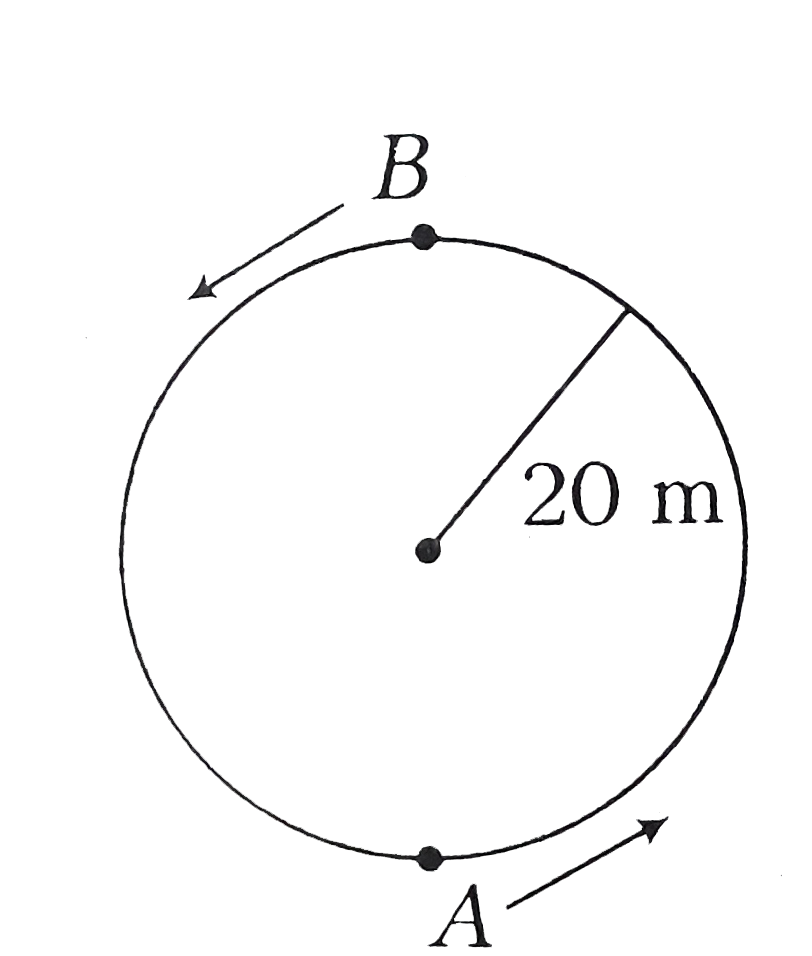
A
B
C
D
Text Solution
Verified by Experts
The correct Answer is:



Topper's Solved these Questions
MOTION IN A PLANE
DC PANDEY|Exercise Check point 3.3|10 VideosMOTION IN A PLANE
DC PANDEY|Exercise Check point 3.4|15 VideosMOTION IN A PLANE
DC PANDEY|Exercise Check point 3.1|10 VideosMOTION
DC PANDEY|Exercise Medical entrances gallery|19 VideosPROJECTILE MOTION
DC PANDEY|Exercise Level - 2 Subjective|10 Videos
Similar Questions
Explore conceptually related problems
DC PANDEY-MOTION IN A PLANE-Check point 3.2
- A car moves for half of its time at 80 km//h and for rest of time at 4...
Text Solution
|
- During the first 18 min of a 60 min trip, a car has an average speed o...
Text Solution
|
- A man walks on a straight road form his home to a market 2.5 km away w...
Text Solution
|
- A particle is constrained to move on a straight line path. It returns ...
Text Solution
|
- A 150 m long train is moving with a uniform velocity of 45 km//h. The ...
Text Solution
|
- The displacement of a particle starting from rest (at t = 0) is given ...
Text Solution
|
- An insect crawls a distance distance of 4 m along North in 10 s and th...
Text Solution
|
- A point traversed 3/4 th of the circle of radius R in time t. The magn...
Text Solution
|
- A boy is running over a circular track with uniform speed of 10 ms^(-1...
Text Solution
|
- The displacement x of an object is given as a funstion of time, x=2t+3...
Text Solution
|