Home
Class 12
PHYSICS
Two bodies A and B of same mass, area an...

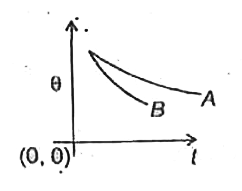
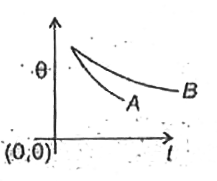
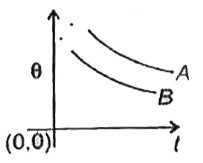
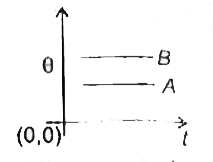
Two bodies A and B of same mass, area and surface finish with specific heats `S_(A)` and `S_(B)` `(S_(A)>S_(B))` are allowed to cool for given temperature range. Temperature varies with time as

A

B

C

D

Text Solution

AI Generated Solution

Promotional Banner

Similar Questions

Explore conceptually related problems

A rise in the Earth’s surface temperature may cause

Radius of a shere is R density is d and specific heat is s, Is is heated and then allowed to cool Its rate of decrease of temperature will be proportional to .

There are two spherical balls A and B of the same material with same surface, but the diameter of A is half that of B . If A and B are heated to the same temperature and then allowed to cool, then

Two metallic spheres S_1 and S_2 are made of the same material and have got identical surface finish. The mass of S_1 is thrice that of S_2 . Both the spheres are heated to the same high temperature and placed in the same room having lower temperature but are thermally insulated from each other. the ratio of the initial rate of cooling of S_1 to that of S_2 is (a)1/3 (b)1/(sqrt3) (c) (sqrt3)/1 (d) (1/3)^(1/3)

Two metallic spheres S_1 and S_2 are mode of the same material and have got identical surface finish. The mass of S_1 is thrice that of S_2. Both the spheres are heated to the same high temperature and placed in the same room having lower temperature but are thermally insulted from each other. The ratio of the initial rate of coiling of S_1 to that of S_2 is

Two metallic sphere A and B are made of same material and have got identical surface finish. The mass of sphere A is four times that of B. Both the spheres are heated to the same temperature and placed in a room having lower temperature but thermally insulated from each other.

Two balls of same material and same surface finish have their diameters in the ratio 1:2. They are heated to the same temperature and are left in a room to cool by radiation, then the initial rate of loss of heat
