Home
Class 10
MATHS
The adjacent figure shows a cylindrical ...

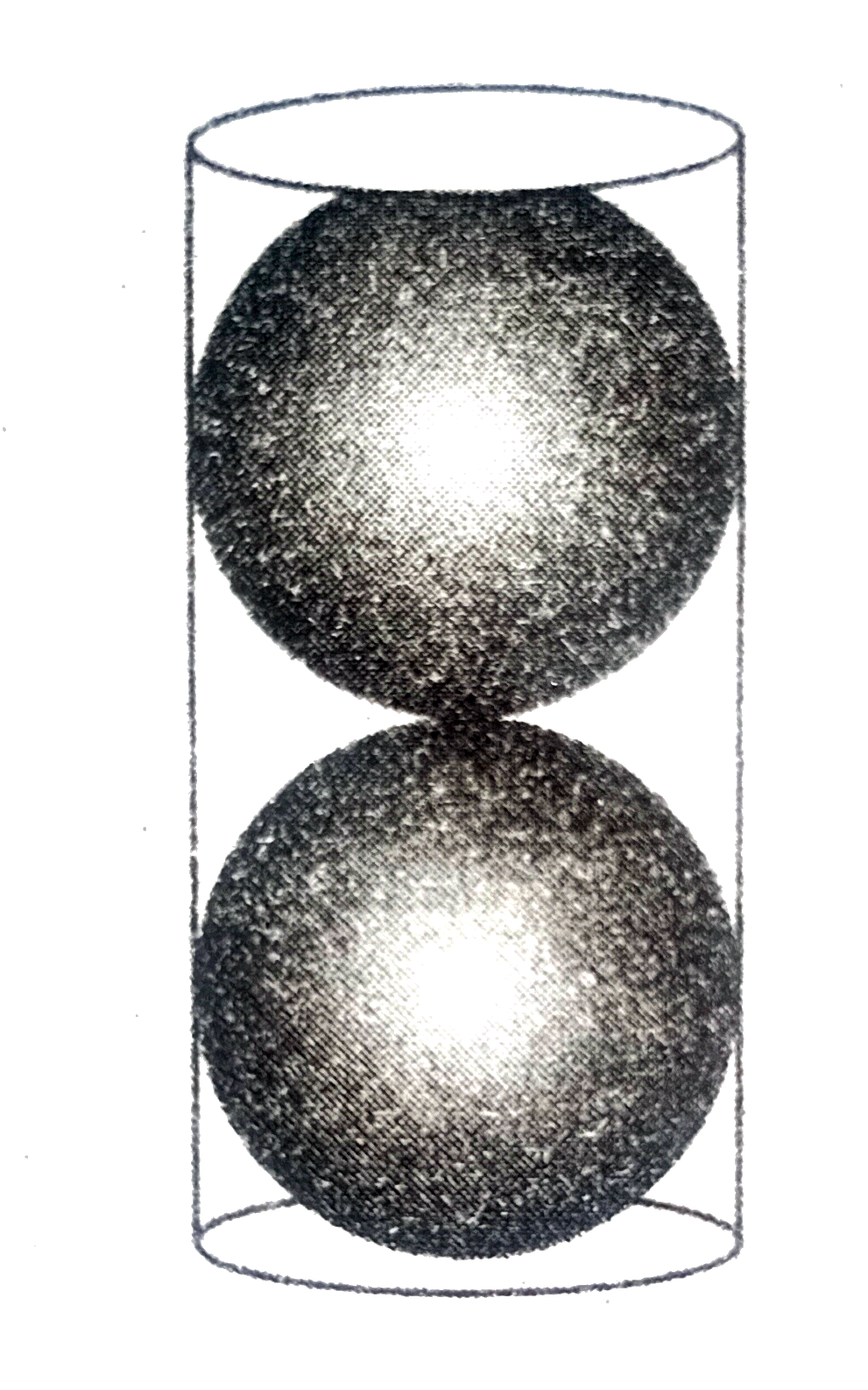
The adjacent figure shows a cylindrical can with two balls. The can is just large enough so that two balls will fit inside with the lid on. The radius of each tennis ball is 3 cm. Calculate the following

percentage of the volume occupied by the balls.

Text Solution

Verified by Experts

The correct Answer is:

`113.15 cm^(3)`
Promotional Banner

Topper's Solved these Questions

  • MENSURATION

    PREMIERS PUBLISHERS|Exercise OTHER IMPORTANT OBJECTIVE TYPE QUESTIONS|16 Videos
  • MENSURATION

    PREMIERS PUBLISHERS|Exercise SOLUTION TO PROGRESS CHECK|23 Videos
  • GEOMETRY

    PREMIERS PUBLISHERS|Exercise OTHER IMPORTANT OBJECTIVE TYPE QUESTIONS|22 Videos
  • NUMBERS AND SEQUENCES

    PREMIERS PUBLISHERS|Exercise OTHER IMPORTANT OBJECTIVE TYPE QUESTIONS|23 Videos

Similar Questions

Explore conceptually related problems

The adjacent figure shows a cylindrical can with two balls. The can is just large enough so that two balls will fit inside with the lid on. The radius of each tennis ball is 3 cm. Calculate the following radius of the cylinder.

The adjacent figure shows a cylindrical can with two balls. The can is just large enough so that two balls will fit inside with the lid on. The radius of each tennis ball is 3 cm. Calculate the following height of the cylinder.

The adjacent figure shows a cylindrical can with two balls. The can is just large enough so that two balls will fit inside with the lid on. The radius of each tennis ball is 3 cm. Calculate the following volume of two balls.

The adjacent figure shows a cylindrical can with two balls. The can is just large enough so that two balls will fit inside with the lid on. The radius of each tennis ball is 3 cm. Calculate the following volume of the cylinder.

The adjacent figure shows a cylindrical can with two balls. The can is just large enough so that two balls will fit inside with the lid on. The radius of each tennis ball is 3 cm. Calculate the following volume of the cylinder not occupied by the balls

In how many ways can 2t+1 identical balls be placed in three distinct boxes so that any two boxes together will contain more balls than the third?

Two small balls A and B each of mass m, are joined rigidly to the ends of a light rod of length L figure. The system translates on a frictionless horizontal surface with a velocity v_0 in a direction perpendicular to the rod. A particle P of mass kept at rest on the surface sticks to the ball A as the ball collides with it . Find a. the linear speeds of the balls A and B after the collision, b. the velocity of the centre of mass C of the system A+B+P and c. the angular speed of the system about C after the collision.

A spherical ball of iron has been melted and made into small balls. If the radius of each smaller ball is one-fourth of the radius of the original one, how many such balls can be made ?

A bag contains an assortment of blue and red balls. If two balls are drawn at random, the probability of drawing two red balls is five times the probability of drawing two blue balls. Furthermore, the probability of drawing one ball of each color is six time the probability of drawing two balls. The number of red and blue balls in the bag is a. 6,3 b. 3,6 c. 2,7 d. none of these

There are 2 identical white balls, 3 identical red balls, and 4 green balls of different shades. Find the number of ways in which they can be arranged in a row so that at least one ball is separated from the balls of the same color.
