Home
Class 11
PHYSICS
The body moves under the action of const...

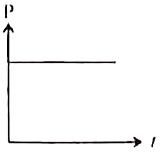
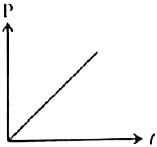
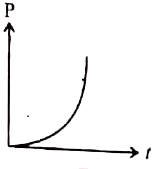
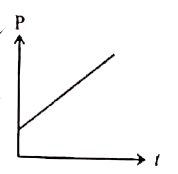
The body moves under the action of constant force along a straight line. The instantaneous power developed by this force with time 't' is correctly represented by:

A

B

C

D

Text Solution

Verified by Experts

The correct Answer is:

B
Promotional Banner

Topper's Solved these Questions

  • WORK, ENERGY AND POWER

    PREMIERS PUBLISHERS|Exercise VERY SHORT ANSWER QUESTIONS|34 Videos
  • WORK, ENERGY AND POWER

    PREMIERS PUBLISHERS|Exercise CONCEPTUAL QUESTIONS|34 Videos
  • WAVES

    PREMIERS PUBLISHERS|Exercise OTHER IMPORTANT & QUESTIONS ANSWERS ( NUMERICAL PROBLEMS. )|48 Videos

Similar Questions

Explore conceptually related problems

A body of imparted motion from rest to move in a straight line if it is then obstructed by an opposite force then

A particle moves along a circular path under the action of a force. The work done by the force is

A particle starts its motion from rest under the action of a constant force. If the distance covered in first 10 seconds is S_1 and that covered in the first 20 seconds is S_2 then:

A body under the action of a force F=6hati- 8hatj+ 10hatk , acquires an acceleration of 1m//s^2 . The mass of this body must be :

Read the following paragraph carefully and answer the following: Tie a stone to one end of a string. Take the other end in your hand and rotate the string so that the stone moves along a circle. As long as we are holding the string, we are pulling the stone towards us i.e. towards the centre of the circle and are appliying a force towards it. The force stops acting on it if we release the string. In this case, the stone will fly off along a straight line which is the tangent to the circle at the position of the stone when the string is released, because that the directionn of its velocity at that instant of time. You may recall a similar activity in which a 5 rupee coin kept on a rotating circular disc flies off the disc along the tangent to the disc. Thus, a force acts on any object moving along a circle and it is directed towards the centre of the circle. This is called the Centripetal force. The impressed force on the same is in which direction?

Read the following paragraph carefully and answer the following: Tie a stone to one end of a string. Take the other end in your hand and rotate the string so that the stone moves along a circle. As long as we are holding the string, we are pulling the stone towards us i.e. towards the centre of the circle and are appliying a force towards it. The force stops acting on it if we release the string. In this case, the stone will fly off along a straight line which is the tangent to the circle at the position of the stone when the string is released, because that the directionn of its velocity at that instant of time. You may recall a similar activity in which a 5 rupee coin kept on a rotating circular disc flies off the disc along the tangent to the disc. Thus, a force acts on any object moving along a circle and it is directed towards the centre of the circle. This is called the Centripetal force. What is centripetal force?

Read the following paragraph carefully and answer the following: Tie a stone to one end of a string. Take the other end in your hand and rotate the string so that the stone moves along a circle. As long as we are holding the string, we are pulling the stone towards us i.e. towards the centre of the circle and are appliying a force towards it. The force stops acting on it if we release the string. In this case, the stone will fly off along a straight line which is the tangent to the circle at the position of the stone when the string is released, because that the directionn of its velocity at that instant of time. You may recall a similar activity in which a 5 rupee coin kept on a rotating circular disc flies off the disc along the tangent to the disc. Thus, a force acts on any object moving along a circle and it is directed towards the centre of the circle. This is called the Centripetal force. What happens if the string is released?

Study of moving bodies under the action of forces _______

PREMIERS PUBLISHERS-WORK, ENERGY AND POWER -MULTIPLE CHOICE QUESTIONS (OTHER IMPORTANT QUESTIONS & ANSWERS)
  1. Match the parameters given in column I with the expressions given in c...

    Text Solution

    |

  2. A body of mass 1kg begins to more under the action of a time dependent...

    Text Solution

    |

  3. The body moves under the action of constant force along a straight lin...

    Text Solution

    |

  4. Which one of the following statement is an incorrect statement?

    Text Solution

    |

  5. The spring of the watch when wound possesses………………..energy.

    Text Solution

    |

  6. A light and heavy body have equal momentum, which has greater K.E?

    Text Solution

    |

  7. A light body and a heavy body have the same kinetic energy. Which one ...

    Text Solution

    |

  8. Same retarding force is applied to stop the train in certain distance....

    Text Solution

    |

  9. Law of conservation of linear momentum is applicable even in those ca...

    Text Solution

    |

  10. In the following question, a statement of Assertion is followed by a s...

    Text Solution

    |

  11. If the force and the displacement are in the same direction, then the ...

    Text Solution

    |

  12. If the force and the displacement are at an angle of 180^(@), then wor...

    Text Solution

    |

  13. Which one of the following statements is incorrect?

    Text Solution

    |

  14. When a body does some work, we can say that work done by the body is

    Text Solution

    |

  15. A body is said to be doing a negative work if :

    Text Solution

    |

  16. Consider the following two statements. (A) Linear momentum of a syst...

    Text Solution

    |

  17. From the following statements select the incorrect statements.

    Text Solution

    |

  18. If a stone is released from a tower, then its total energy during its ...

    Text Solution

    |

  19. Two springs have their force constants k(1) and k(2) (k(2) gt k(1)) . ...

    Text Solution

    |

  20. Which of the following statements is wrong?

    Text Solution

    |
