 .
.


Similar Questions
Explore conceptually related problems
Recommended Questions
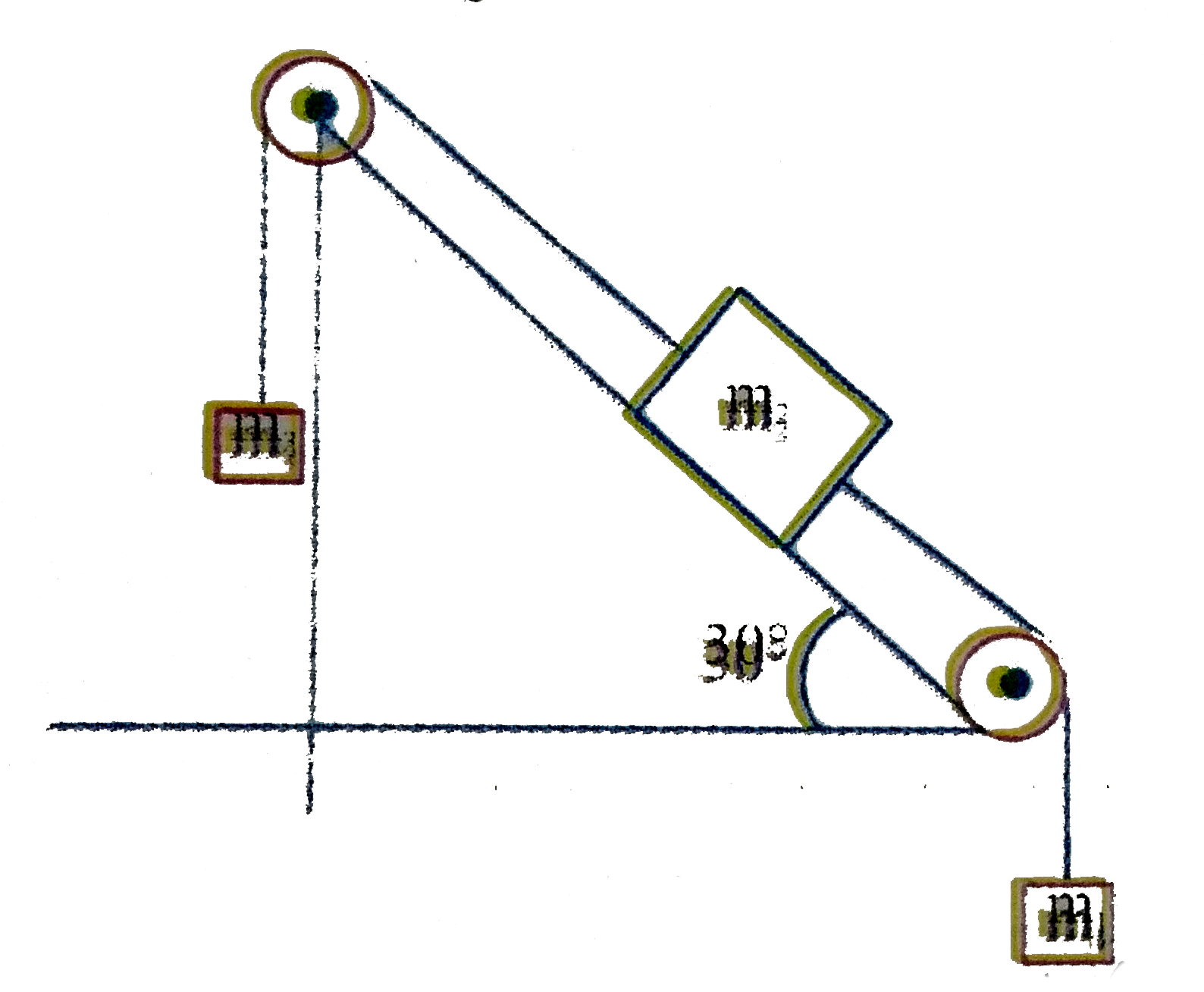
- If m(1) =10kg,m(2)=4kg,m(3) =2kg, the acceleration of system is .
Text Solution
|
- In the system shown in figure m(B)=4kg , and m(A)=2kg . The pulleys ar...
Text Solution
|
- If m(1) =10kg,m(2)=4kg,m(3) =2kg , the acceleration of system is .
Text Solution
|
- In the pulley system shown here, find the relationship between acceler...
Text Solution
|
- Three blocks of masses m(1),m(2) and m(3) are connected by massless st...
Text Solution
|
- Consider the system ofpulleysasshown in figure-2.197. Find the acceler...
Text Solution
|
- Three blocks of masses m(1) = 1kg, m(2)=2kg and m(3) = 3kg are placed ...
Text Solution
|
- Two masses m(1) and m(2) ( m(2) gt m(1)) are hanging vertically over f...
Text Solution
|
- Pulleys shown in the system of the figure are massless and friction le...
Text Solution
|