

Home
Class 11
Physics
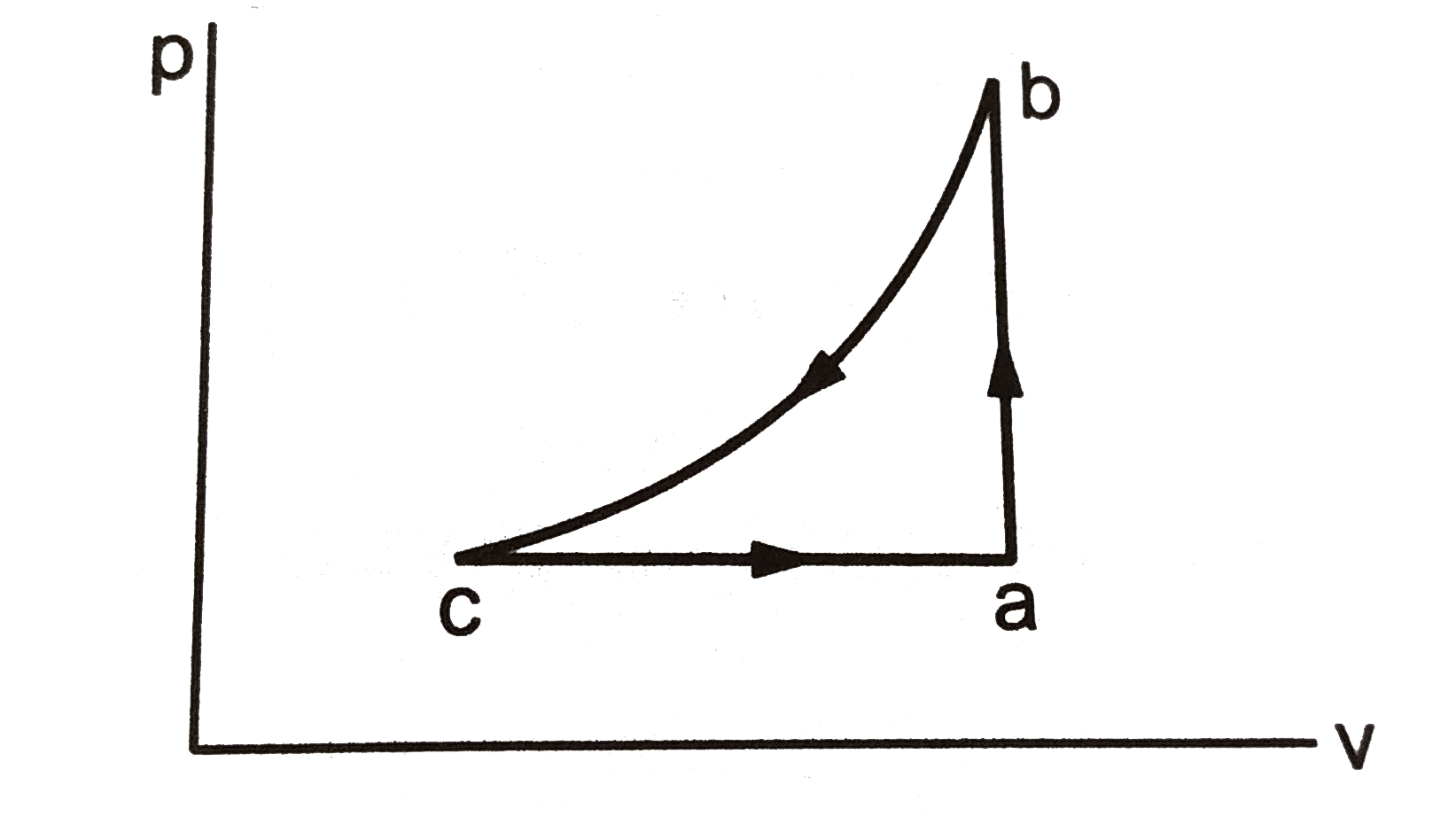
A sample of an ideal gas is taken throug...

A sample of an ideal gas is taken through the cyclic process abca . It absorbs 50 J of heat during the part ab, no heat during bc and rejects 70 J of heat during ca. 40 J of work is done on the gas during the part bc.(a) find the internal energy of the gas at b and c if it is 1500 J at a. (b) calculate the work done by the gas during the part ca.

Promotional Banner

Similar Questions

Explore conceptually related problems

A sample of an ideal gas in taken through the cyclic process abca in the given figure. It absorbs 50 J of heat during the parth ab, no heat during bc and rejects 70J of heat during ca, 40 J of work is done on the gas during the part bc. (a) Find the internal energy of the gas at b adn c if it is 1500 J at a. ltbr. (b) Calculate the work done by the gas during the part ca.

In figure, a sample of an ideal gas is taken through the cyclic process abca. 800J of work is done by the gas during process ab. If gas absorb no heat in process ab, rejects 100J of heat during bc and absord 500J of heat during process ca . Then (a) find the internal energy of the gas at b and c if its is 1000J at a (b). Also calculate the work by the gas during the part bc ,

A sample of an ideal gas is taken through the cyclic-process ABCA shown in Fig. It rejects 50 J of heat during the part AB , doens not absorb or reject the heat during BC , and accepts 70 J of heat during CA . Forty joules of works is done on the gas during the part BC . The internla energies at B and C , respectively, will be

A sample of an ideal gas is taken through the cyclic process abca and shown in the figure. The chagne in the internal energy of the gas along the path ca is -180J . The gas aborbs 250J of heat along the path ab and 60 J along the path bc. the work done by the along the path abc is:

In a process, 701 J of heat is absorbed by a system and 394 J of work is done by the system. What is the change in internal energy for the process?

A system works in a cyclic process. It absorbs 20 calories of heat and rejects 60 J of heat during the process. The magnitude of work done (J) is [ 1 "calorie"=4.2 J] :

A gas is taken through a cyclic process ABCA as shown in, if 2.4 cal of heat is given in the process, what is the value of J ?

A gas receives an amount of heat equal to 110 J and performs 40 J of work. The change in the internal energy of the gas is