Home
Class 12
BIOLOGY
Animal cells are suspended in a culture ...

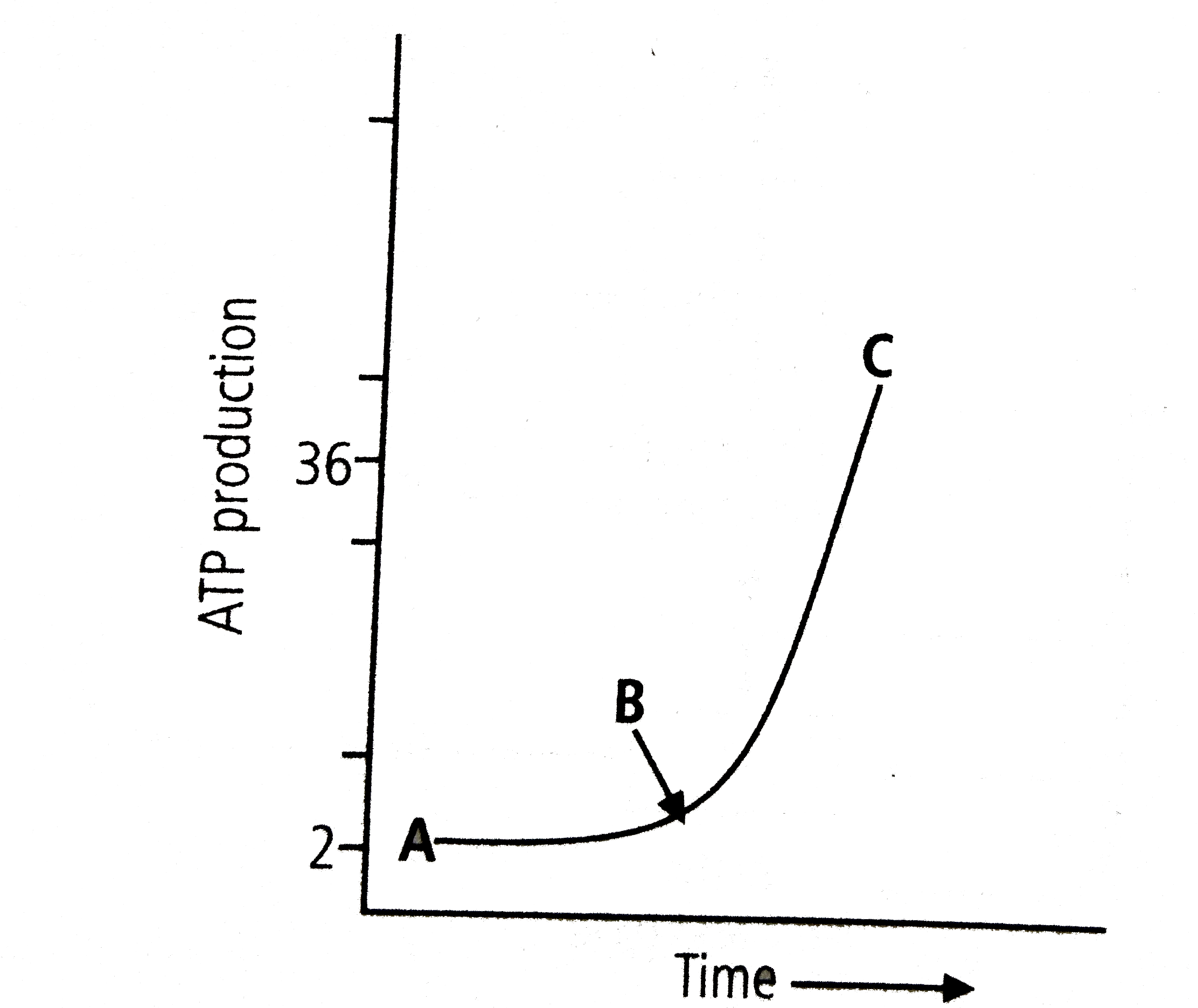
Animal cells are suspended in a culture medium that contains excess glucose. The graph below shows glucose utilisation under different growth conditions (A),(B), and (C) in the graph indicate

A

X – Anaerobic respiration
Y - Introduction of `O_2` to the culture medium
Z - Aerobic respiration

B

X – Anaerobic respiration
Y - Introduction of `CO_2` to the culture medium
Z - Aerobic respiration

C

X – Anaerobic respiration
Y - Supply of organic triphosphate
Z - Aerobic respiration

D

X – Anaerobic respiration
Y - Introduction of CO to the culture medium
Z - Aerobic respiration

Text Solution

Verified by Experts

The correct Answer is:

A
Promotional Banner

Topper's Solved these Questions

  • NTA NEET SET 74

    NTA MOCK TESTS|Exercise BIOLOGY|90 Videos
  • NTA NEET SET 76

    NTA MOCK TESTS|Exercise BIOLOGY|90 Videos

Similar Questions

Explore conceptually related problems

A mass of living cells are kept in a culture medium under anaerobic conditions. The cells were supplied with labelled c^14 glucose. Pick up the true statement

An animal cell was grown in a culture medium containing P^(32) nucleotides, the parts from which DNA is built. Later examination of the cell showed the radioactivity to be concentrated in the

Read the passage given below and answer the question: Polysaccharides may be very large molecules. Starch, glycogen, cellulose, and chitin are examples of polysaccharides. Starch is the stored form of sugars in plants and is made up of amylose and amylopectin (both polymers of glucose). Amylose is soluble in water and can be hydrolyzed into glucose units breaking glycocidic bonds, by the enzymes a- amylase and B-amylase. It is straight chain polymer. Amylopectin is a branched chain polymer of several D-glucose molecules. 80% of amylopectin is present in starch. Plants are able to synthesize glucose, and the excess glucose is stored as starch in different plant parts, including roots and seeds. The starch that is consumed by animals is broken down into smaller molecules, such as glucose. The cells can then absorb the glucose. Glycogen is the storage form of glucose in humans and other vertebrates, and is made up of monomers of glucose. It is structurally quite similar to amylopectin. Glycogen is the animal equivalent of starch. It is stored in liver and skeletal muscles. Cellulose is one of the most abundant natural biopolymers. The cell walls of plants are mostly made of cellulose, which provides structural support to the cell. Wood and paper are mostly cellulosic in nature. Like amylose, cellulose is a linear polymer of glucose. Cellulose is made up of glucose monomers that are linked by bonds between particular carbon atoms in the glucose molecule.Every other glucose monomer in cellulose is flipped over and packed tightly as extended long chains. This gives cellulose its rigidity and high tensile strength-which is so important to plant cells. Cellulose passing through our digestive system is called dietary fiber. (Source: "https://chem.libretexts.org" ) Which biopolymer breaks down to release glucose , whenever glucose levels drop in Our body:

Read the passage given below and answer the question: Polysaccharides may be very large molecules. Starch, glycogen, cellulose, and chitin are examples of polysaccharides. Starch is the stored form of sugars in plants and is made up of amylose and amylopectin (both polymers of glucose). Amylose is soluble in water and can be hydrolyzed into glucose units breaking glycocidic bonds, by the enzymes a- amylase and B-amylase. It is straight chain polymer. Amylopectin is a branched chain polymer of several D-glucose molecules. 80% of amylopectin is present in starch. Plants are able to synthesize glucose, and the excess glucose is stored as starch in different plant parts, including roots and seeds. The starch that is consumed by animals is broken down into smaller molecules, such as glucose. The cells can then absorb the glucose. Glycogen is the storage form of glucose in humans and other vertebrates, and is made up of monomers of glucose. It is structurally quite similar to amylopectin. Glycogen is the animal equivalent of starch. It is stored in liver and skeletal muscles. Cellulose is one of the most abundant natural biopolymers. The cell walls of plants are mostly made of cellulose, which provides structural support to the cell. Wood and paper are mostly cellulosic in nature. Like amylose, cellulose is a linear polymer of glucose. Cellulose is made up of glucose monomers that are linked by bonds between particular carbon atoms in the glucose molecule.Every other glucose monomer in cellulose is flipped over and packed tightly as extended long chains. This gives cellulose its rigidity and high tensile strength-which is so important to plant cells. Cellulose passing through our digestive system is called dietary fiber. (Source: "https://chem.libretexts.org" ) In animals, Glycogen is stored in :

Read the passage given below and answer the question: Polysaccharides may be very large molecules. Starch, glycogen, cellulose, and chitin are examples of polysaccharides. Starch is the stored form of sugars in plants and is made up of amylose and amylopectin (both polymers of glucose). Amylose is soluble in water and can be hydrolyzed into glucose units breaking glycocidic bonds, by the enzymes a- amylase and B-amylase. It is straight chain polymer. Amylopectin is a branched chain polymer of several D-glucose molecules. 80% of amylopectin is present in starch. Plants are able to synthesize glucose, and the excess glucose is stored as starch in different plant parts, including roots and seeds. The starch that is consumed by animals is broken down into smaller molecules, such as glucose. The cells can then absorb the glucose. Glycogen is the storage form of glucose in humans and other vertebrates, and is made up of monomers of glucose. It is structurally quite similar to amylopectin. Glycogen is the animal equivalent of starch. It is stored in liver and skeletal muscles. Cellulose is one of the most abundant natural biopolymers. The cell walls of plants are mostly made of cellulose, which provides structural support to the cell. Wood and paper are mostly cellulosic in nature. Like amylose, cellulose is a linear polymer of glucose. Cellulose is made up of glucose monomers that are linked by bonds between particular carbon atoms in the glucose molecule.Every other glucose monomer in cellulose is flipped over and packed tightly as extended long chains. This gives cellulose its rigidity and high tensile strength-which is so important to plant cells. Cellulose passing through our digestive system is called dietary fiber. (Source: "https://chem.libretexts.org" ) The linkages which join monosaccharides to form long chain polysaccharides :

Read the passage given below and answer the question: Polysaccharides may be very large molecules. Starch, glycogen, cellulose, and chitin are examples of polysaccharides. Starch is the stored form of sugars in plants and is made up of amylose and amylopectin (both polymers of glucose). Amylose is soluble in water and can be hydrolyzed into glucose units breaking glycocidic bonds, by the enzymes a- amylase and B-amylase. It is straight chain polymer. Amylopectin is a branched chain polymer of several D-glucose molecules. 80% of amylopectin is present in starch. Plants are able to synthesize glucose, and the excess glucose is stored as starch in different plant parts, including roots and seeds. The starch that is consumed by animals is broken down into smaller molecules, such as glucose. The cells can then absorb the glucose. Glycogen is the storage form of glucose in humans and other vertebrates, and is made up of monomers of glucose. It is structurally quite similar to amylopectin. Glycogen is the animal equivalent of starch. It is stored in liver and skeletal muscles. Cellulose is one of the most abundant natural biopolymers. The cell walls of plants are mostly made of cellulose, which provides structural support to the cell. Wood and paper are mostly cellulosic in nature. Like amylose, cellulose is a linear polymer of glucose. Cellulose is made up of glucose monomers that are linked by bonds between particular carbon atoms in the glucose molecule.Every other glucose monomer in cellulose is flipped over and packed tightly as extended long chains. This gives cellulose its rigidity and high tensile strength-which is so important to plant cells. Cellulose passing through our digestive system is called dietary fiber. (Source: "https://chem.libretexts.org" ) Amylose is :

Read the passage given below and answer the question: Polysaccharides may be very large molecules. Starch, glycogen, cellulose, and chitin are examples of polysaccharides. Starch is the stored form of sugars in plants and is made up of amylose and amylopectin (both polymers of glucose). Amylose is soluble in water and can be hydrolyzed into glucose units breaking glycocidic bonds, by the enzymes a- amylase and B-amylase. It is straight chain polymer. Amylopectin is a branched chain polymer of several D-glucose molecules. 80% of amylopectin is present in starch. Plants are able to synthesize glucose, and the excess glucose is stored as starch in different plant parts, including roots and seeds. The starch that is consumed by animals is broken down into smaller molecules, such as glucose. The cells can then absorb the glucose. Glycogen is the storage form of glucose in humans and other vertebrates, and is made up of monomers of glucose. It is structurally quite similar to amylopectin. Glycogen is the animal equivalent of starch. It is stored in liver and skeletal muscles. Cellulose is one of the most abundant natural biopolymers. The cell walls of plants are mostly made of cellulose, which provides structural support to the cell. Wood and paper are mostly cellulosic in nature. Like amylose, cellulose is a linear polymer of glucose. Cellulose is made up of glucose monomers that are linked by bonds between particular carbon atoms in the glucose molecule.Every other glucose monomer in cellulose is flipped over and packed tightly as extended long chains. This gives cellulose its rigidity and high tensile strength-which is so important to plant cells. Cellulose passing through our digestive system is called dietary fiber. (Source: "https://chem.libretexts.org" ) Cellulose on complete hydrolysis yields:

NTA MOCK TESTS-NTA NEET SET 75-BIOLOGY
  1. What is the meaning of bolting ?

    Text Solution

    |

  2. Select the CORRECT statements. (I) In Volvox, sexual reproduction in...

    Text Solution

    |

  3. Animal cells are suspended in a culture medium that contains excess gl...

    Text Solution

    |

  4. For frugivorous birds and mammals in the tropical forests of different...

    Text Solution

    |

  5. In Ell Lily"s method of inulin production , which of the following is...

    Text Solution

    |

  6. Which of the following is one - way flow rather than a two way or cyc...

    Text Solution

    |

  7. Greenhouse gases are :

    Text Solution

    |

  8. The deletion in chromosomes number 16 results in

    Text Solution

    |

  9. In a famous experiment, A Weismann cutt off tails of newborn mice gene...

    Text Solution

    |

  10. Which of the following is the correct pairing of characteristics about...

    Text Solution

    |

  11. The technology of biogas production from cow dung was developed in ind...

    Text Solution

    |

  12. Given diagram showing a typical agarose gel electrophoresis showing mi...

    Text Solution

    |

  13. The part of a gene which codes for an enzyme is called

    Text Solution

    |

  14. If a black man marries a white skin female, the mulattoes are born. If...

    Text Solution

    |

  15. Floral formula of cabbage is

    Text Solution

    |

  16. While isolating DNA from bacteria, which of the following enzymes is n...

    Text Solution

    |

  17. Which of the following is correct about the given pedigree chart ?

    Text Solution

    |

  18. A tetraploid female flowering plant and a hexaploid male flowering pla...

    Text Solution

    |

  19. In wheat and rice :

    Text Solution

    |

  20. Which of the following group exhibit more species diversity

    Text Solution

    |
