Home
Class 12
PHYSICS
Constant power P is supplied to a partic...

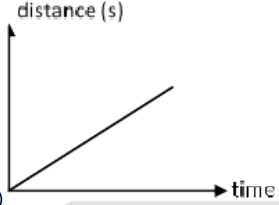
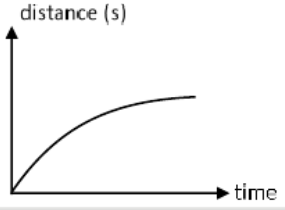
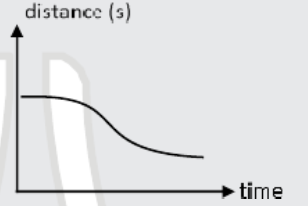
Constant power P is supplied to a particle having mass `m` and initially at rest. choose correct graph.

A

B

C

D

Text Solution

AI Generated Solution

The correct Answer is:

To solve the problem of a particle with mass `m` initially at rest and subjected to a constant power `P`, we need to derive the relationship between distance `x` and time `t`. Here’s a step-by-step breakdown of the solution: ### Step 1: Understand the relationship between power, work, and energy Power is defined as the rate at which work is done or energy is transferred. The relationship can be expressed as: \[ P = \frac{dW}{dt} \] where \( W \) is the work done. ### Step 2: Relate power to kinetic energy The work done on the particle is converted into kinetic energy. The kinetic energy \( K \) of a particle is given by: \[ K = \frac{1}{2} mv^2 \] If we supply power \( P \) for a time \( t \), the total work done (or energy supplied) is: \[ W = P \cdot t \] ### Step 3: Set up the equation for kinetic energy Since the work done is equal to the change in kinetic energy, we can write: \[ P \cdot t = \frac{1}{2} mv^2 \] ### Step 4: Solve for velocity \( v \) Rearranging the equation gives us: \[ v^2 = \frac{2Pt}{m} \] Taking the square root, we find: \[ v = \sqrt{\frac{2Pt}{m}} \] ### Step 5: Relate velocity to distance Velocity is defined as the rate of change of distance with respect to time: \[ v = \frac{dx}{dt} \] Substituting our expression for \( v \): \[ \sqrt{\frac{2Pt}{m}} = \frac{dx}{dt} \] ### Step 6: Separate variables and integrate Rearranging gives: \[ dx = \sqrt{\frac{2P}{m}} \cdot t^{1/2} dt \] Now we integrate both sides. The left side integrates to \( x \), and the right side integrates as follows: \[ \int dx = \int \sqrt{\frac{2P}{m}} \cdot t^{1/2} dt \] The integral of \( t^{1/2} \) is: \[ \int t^{1/2} dt = \frac{2}{3} t^{3/2} \] Thus, we have: \[ x = \sqrt{\frac{2P}{m}} \cdot \frac{2}{3} t^{3/2} + C \] Since the particle starts from rest at \( t = 0 \), \( C = 0 \). Therefore: \[ x = \frac{2\sqrt{2P}}{3\sqrt{m}} t^{3/2} \] ### Step 7: Analyze the relationship between \( x \) and \( t \) From the derived equation, we see that: \[ x \propto t^{3/2} \] This indicates that the distance \( x \) varies with the time \( t \) in a non-linear fashion, specifically as a power function. ### Step 8: Identify the correct graph Since \( x \) varies as \( t^{3/2} \), the graph of \( x \) versus \( t \) will be a curve that starts at the origin and increases steeply as \( t \) increases. The correct graph will show this non-linear relationship. ### Conclusion The correct graph representing the relationship between distance and time for a particle under constant power is one that curves upwards, indicating that distance increases with the time raised to the power of \( 3/2 \). ---
Promotional Banner

Topper's Solved these Questions

  • JEE MAIN 2021

    JEE MAINS PREVIOUS YEAR|Exercise PHYSICS SECTION B|30 Videos

Similar Questions

Explore conceptually related problems

A constant power P is applied on a particle of mass m. find kintic energy, velocity and displacement of particle as function of time t.

Constant power p is supplied by engine to mass m displacement of mass after time t will be

A moving particle of mass 'm' makes head-on elastic collision with a particle of mass '2m' which is initially at rest.The fraction of K.E.lost by colliding particle is

A moving particle of mass m' makes head-on elastic collision with a particle of mass '2m' which is initially at rest.The fraction of K.E.lost by colliding particle is

A particle having charge +q and mass m is approaching (head on) a free particle having mass M and charge 10 q. Initially the mass m is at large distance and has a velocity V_(0) , whereas the other particle is at rest. (a) Find the final velocity of the two particles when M = 20 m. (b) Find the final state of the two particles if M = m .

A force given by the relation F = 8t, (F in Newton and t in sec.) acts on a body of mass 2kg. Initially at rest. Choose the correct option.

The figure shows the force (F) versus displacement (s) graph for a particle of mass m=2kg initially at rest. (i) The maximum speed of the particle occurs at x = …..m (ii) The maximum speed of the particle is …. ms^(-1) (iii) The particle once again has its speed zero at x =....m

A particle of mass m moving with velocity vecV makes a head on elastic collision with another particle of same mass initially at rest. The velocity of the first particle after the collision will be

JEE MAINS PREVIOUS YEAR-JEE MAIN-All Questions
  1. Mass density of sphere having radius R varies as rho = rho0(1-r^2/R^2)...

    Text Solution

    |

  2. Two light waves having the same wavelength lambda in vacuum are in pha...

    Text Solution

    |

  3. Constant power P is supplied to a particle having mass m and initially...

    Text Solution

    |

  4. A P-N junction becomes active as photons of wavelength, lambda=400 nm ...

    Text Solution

    |

  5. In the diagram three point masses 'm' each are fixed at the corners of...

    Text Solution

    |

  6. A rod is rotating with angular velocity omega about axis AB. Find cost...

    Text Solution

    |

  7. In a diagramatic sphere is a cavity is made it at its centre and now p...

    Text Solution

    |

  8. Two charges 4q and -q are kept on x-axis at (-d/2,0) and (d/2,0) resp....

    Text Solution

    |

  9. The dimensions of coefficient of thermal conductivity is

    Text Solution

    |

  10. Correct order of wavelength of radiowaves, microwaves, xrays, visible ...

    Text Solution

    |

  11. A circular disc of mass M and radius R rotating with speed of omega an...

    Text Solution

    |

  12. Short bar magnet is place 30degrees with the external magnetic field 0...

    Text Solution

    |

  13. Match the Column

    Text Solution

    |

  14. A ball has acceleration of 98(cm)/s^2 in a liquid of density 1g/(cm)^3...

    Text Solution

    |

  15. A beam of plane polarized light having flux 10^(-3) Watt falls normall...

    Text Solution

    |

  16. Balmer series lies in which region of electromagnetic spectrum

    Text Solution

    |

  17. If a ball A of mass mA = m/2 moving along x-axis collides elastically ...

    Text Solution

    |

  18. Consider on object of mass m moving with velocity v0 and all other mas...

    Text Solution

    |

  19. Two wires A & B bend like as shown in figure. 'A' has radius 2 cm and ...

    Text Solution

    |

  20. For lyman series lambdamax -lambdamin = 340 Angstrom . Find same for p...

    Text Solution

    |
