

Home
Class 12
PHYSICS
A totally reflecting, small plane mirror...

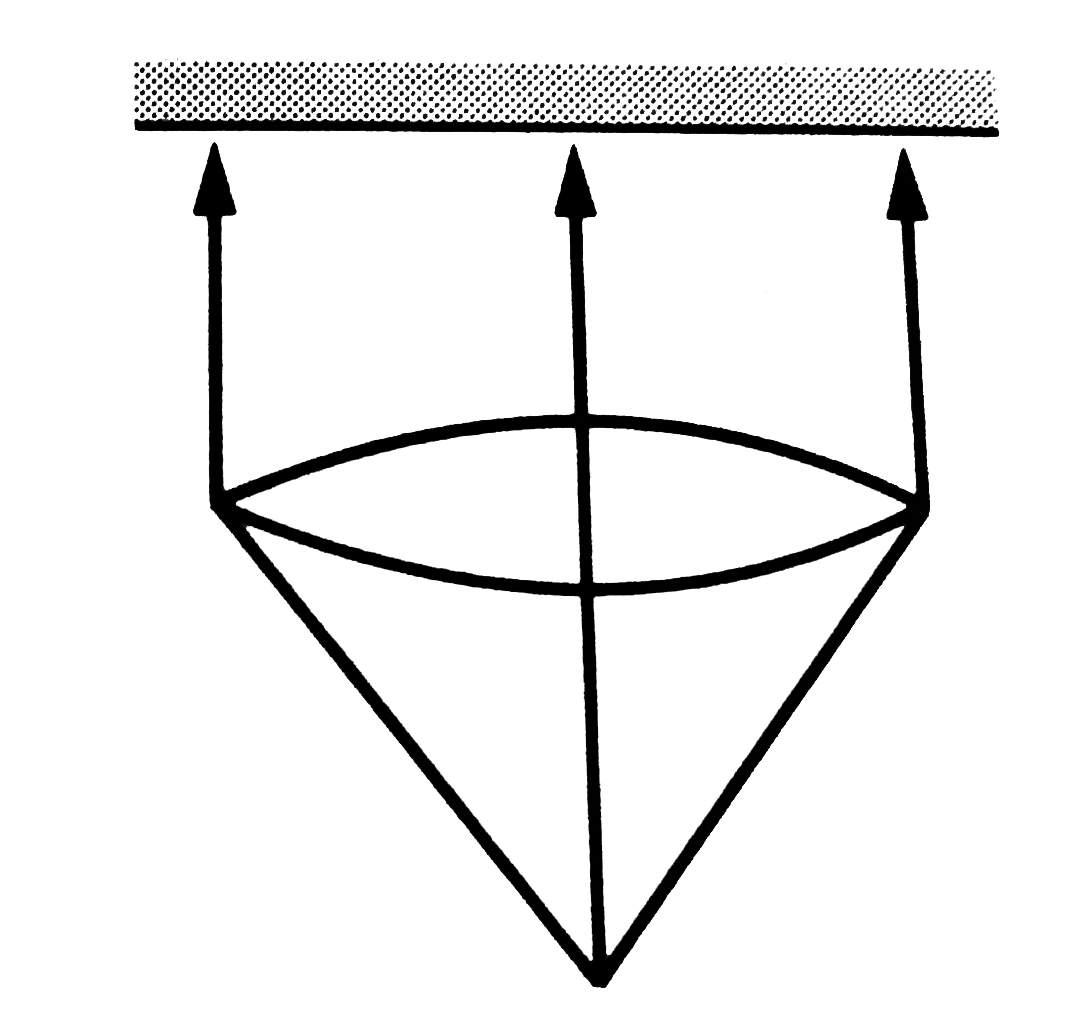
A totally reflecting, small plane mirror placed horizontally faces a parallel beam of lighy as shown in figure. The mass of the mirror is 20g. Assume that there is no absorption in the lens and that 30% of the light emitted by the source goes through the lens. Find the power of the source needed to support the weight of the mirror. Take ` g= 10 m s^-2.

Promotional Banner

Similar Questions

Explore conceptually related problems

A totally reflecting, small plane mirror placed horizontally faces a parallel beam of light as shown in the Fig. The mass of the mirror is 20 g. Assume that there is no absorption in in the lens and that 30% of the light emitted by the source goes through the lens. Find the power (in xx10^(8) W) of the source needed to support the weight of the mirror. Take g=10ms^(-2)

A totally reflecting small plane mirror placed horizontally faces a parallel beam of light as shown in the figure. The mass of the mirror is 200 g. Assume that there is no absorption in the lens and that 20% of the light emitted by the source goes through the lens. The power of the source needs to support the weight of the mirror is P xx 10^(8) watt, where P is [take g = 10 ms^(-2) ]

A totally reflecting small plane mirror placed horizontally faces a parallel beam of light as shown in the figure. The mass of the mirror is 200 g. Assume that there is no absorption in the lens and that 20% of the light emitted by the source goes through the lens. The power of the source needs to support the weight of the mirror is P xx 10^(8) watt, where P is [take g = 10 ms^(-2) ]

A converging mirror is placed on the right hand side of a converging lens as shown in the figure. The focal length of the mirror and the lens are 20 cm and 15 cm, respectively. The separation between the lens and the mirror is 40 cm and their principal axis coincide. A point source is placed on the principal axis at a distance d to the left of the lens. If the final beam comes out parallel to the principal axis, then the value of d is

A converging lens and a diverging mirror are placed at a separation of 20 cm. The focal length of the lens is 30 cm and that of the mirror is 50 cm. Where should a point source be placed between the lens and the miror, so that the light, after getting reflected by the mirror and then getting transmitted by the lens, comes out parallel to the principal axis?

A converging lens and a diverging mirror are placed at a separation of 20 cm. The focal length of the lens is 30 cm and that of the mirror is 50 cm. Where should a point source be placed between the lens and the miror, so that the light, after getting reflected by the mirror and then getting transmitted by the lens, comes out parallel to the principal axis?

A point source of light is placed at 2f from a converging lens of focal length f. A flat mirror is placed on the other side of the lens at a distanc d such that rays reflected from the mirror are parallel after passing through the lens again. If f = 30 cm, then d is equal to

A source of light is located at double focal length from a convergent lens. The focal length of the lens is f=30cm. At what distance from the lens should a flat mirror be placed, so that the rays reflected from the mirror are parallel after passing through the lens for the second time?