

Home
Class 11
PHYSICS
The area of cross sectioin of the two ar...

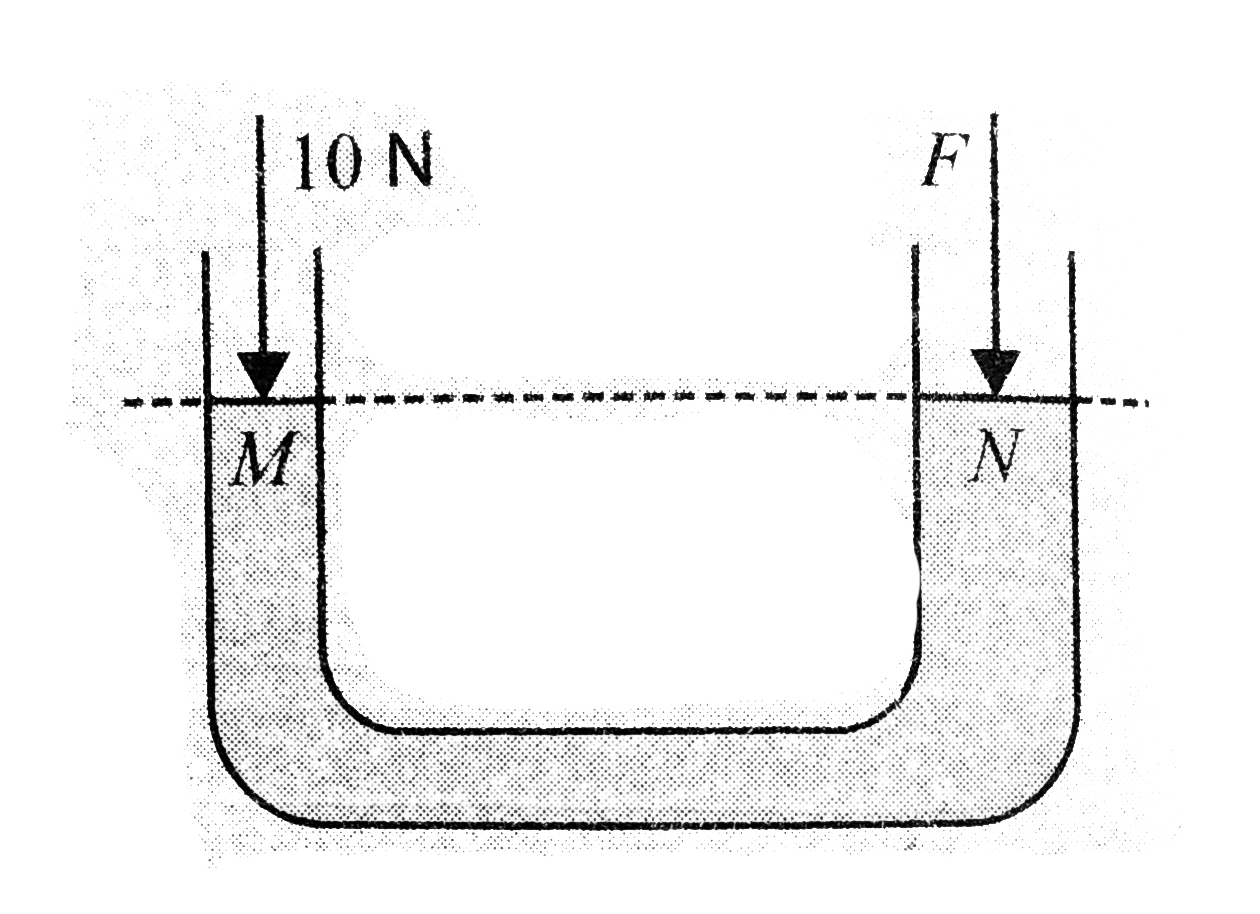
The area of cross sectioin of the two arms of a hydraulic press is `1cm^(2)` and `20 cm^(2)` respectively. A force of `10 N` is applied on the water in the thinner arm. What force should be applid on the water in the thicker arms so that water may remain in equilibrium?

Promotional Banner

Similar Questions

Explore conceptually related problems

The area of cross section of the two arms of a hydraulilc press are 1 cm^2 and 10 cm^2 respectively figure. A force of 5N is applied on the water in the thinner arm. What force should be applied on the water in the thicker arm so that the water may remain in equilibrium? ,

The area of cross section of the two arms of a hydraulilc press are 1 cm^2 and 10 cm^2 respectively figure. A force of 5N is applied on the water in the thinner arm. What force should be applied on the water in the thicker arm so that the water may remain in equilibrium? ,

The area of cross section of the two arms of a hydraulilc press are 1 cm^2 and 10 cm^2 respectively figure. A force of 5N is applied on the water in the thinner arm. What force should be applied on the water in the thicker arm so that the water may remain in equilibrium? ,

The area of cross section of the two arms of a hydraulilc press are 1 cm^2 and 10 cm^2 respectively figure. A force of 5N is applied on the water in the thinner arm. What force should be applied on the water in the thicker arm so that the water may remain in equilibrium? ,

The area of cross section of two cylinders of a Bramah press are 10cm^(2)and50cm^(2) , respectively. In order to move up a weight of 100 placed on the bigger piston. what force should be applied on the smaller piston of smaller area ?

The area of cross-section of the two vertical arms of a hydraulic press are 1 cm ^(2) and 10 cm^(2) respectively. A force of 10N applied. As shown in the figure, to a tight fitting light piston in the thinner arm balances a force F applied to the corresponding piston in the thicker arm. Assuming that the levels of water in both the arms are the same, we can conclude:-

The area of cross-section of the two vertical arms of a hydraulic press are 1 cm ^(2) and 10 cm^(2) respectively. A force of 10N applied. As shown in the figure, to a tight fitting light piston in the thinner arm balances a force F applied to the corresponding piston in the thicker arm. Assuming that the levels of water in both the arms are the same, we can conclude:-

The area of cross-section of the two vertical arms of a hydraulic press are 1 cm ^(2) and 10 cm^(2) respectively. A force of 10N applied. As shown in the figure, to a tight fitting light piston in the thinner arm balances a force F applied to the corresponding piston in the thicker arm. Assuming that the levels of water in both the arms are the same, we can conclude:-

The diameters of the smaller and the larger pistons of a hydraulic press are 5 cm and 45 cm respectively. What force should be applied on the smaller piston of the press, so that the thrust developed on the larger piston is 39690 N?

The cross-sectional areas of the two arms of a U-tube are 1cm^(2)and0.1 cm^(2) respectively. Some water is poured inside the tube. How much liquid of density 0.85g*cm^(-3) should be poured into the wider limb so that water rises by 15 cm in the narrow limb?