

Home
Class 12
PHYSICS
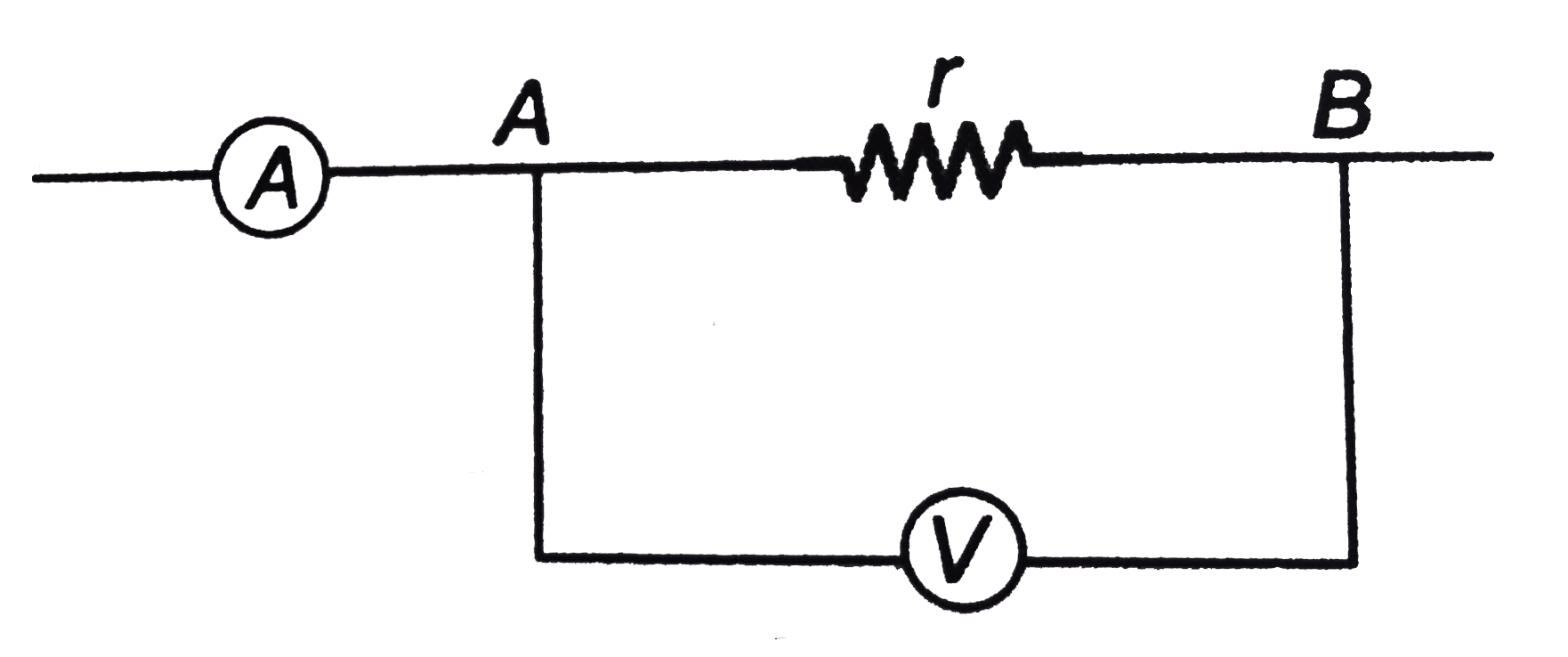
Determine the resistance r if an ammeter...

Determine the resistance `r` if an ammeter shows a current of `I = 5 A` and a voltmeter `100 V`. The internal resistance of the voltmeter is `R=2,500Omega`

Promotional Banner

Similar Questions

Explore conceptually related problems

The circuit shown here is used to measure resitance R. An ammeter shows a current of 2A and a voltmeter of a potential difference of 120 V. what is the resitance R if the internal resistance of the voltmeter is R_(v) = 3000 Omega ? How large will the error in measuring R be, if the resistance of the voltmeter is assumed to be infinitely large?

The actual value of resistance R, shown in the figure is 30 Omega . This is measured in an experiment as shown using the standard formula R = (V)/(I) , where V and I are the readings of the voltmeter and ammeter, respectively. If the measured value of R is 5% less, then the internal resistance of the voltmeter is

The actual value of resistance R, shown in the figure is 30 Omega . This is measured in an experiment as shown using the standard formula R = (V)/(I) , where V and I are the readings of the voltmeter and ammeter, respectively. If the measured value of R is 5% less, then the internal resistance of the voltmeter is

The emf E and internal resistance r of the cell shown in fig. are 4.3 V and 1 ohm respectively. The resistances of ammeter A and voltmeter V are 2Omega and 200Omega respectively. Then, the readings in the ammeter and voltmeter

The voltmeter V in the figure. Reads 117V and the ammeter A reads 0*13A . The resistance of the voltmeter is 9000Omega and the resistance of ammeter is 0*015Omega . Compute (i) the resistance R, (ii) the power input to R.

Resistance value of an unknown resistor is calculated using the formula R=V/I where V and I be the readings of the voltmeter and the ammeter respectively. Consider the circuits below. The internal resistances of the voltmeter and the ammeter ( R_v and R_G respectively ) are finite and non zero. Let R_v and R_G be the calculated values in the two cases A and B respectively. If the resistance of voltmeter is R_v=1kOmega and that of ammeter is R_G=1Omega the magnitude of the percentage error in the measurement of R (the value of R is nearly 10Omega ) is:

The value of resistance of an unknown resistor is calculated using the formula R = V//I where V and I are the readings of the voltmeter and the ammeter, respectivley. Consider the circuits below. The internal resistances of the voltmeter and the ammeter (R_V and R_G, respectively) are finite and nonzero. , Let R_(A) and R_(B) be the calculated values in the two cases A and B , respectively. If the resistance of voltmeter is R_(V) = 1k Omega and the percentage error in the measurement of R (the value of R is nearly 10 Omega )is

The value of resistance of an unknown resistor is calculated using the formula R = V//I where V and I are the readings of the voltmeter and the ammeter, respectivley. Consider the circuits below. The internal resistances of the voltmeter and the ammeter (R_V and R_G, respectively) are finite and nonzero. , Let R_(A) and R_(B) be the calculated values in the two cases A and B , respectively. If the resistance of voltmeter is R_(V) = 1k Omega and the percentage error in the measurement of R (the value of R is nearly 10 Omega )is