

Home
Class 12
PHYSICS
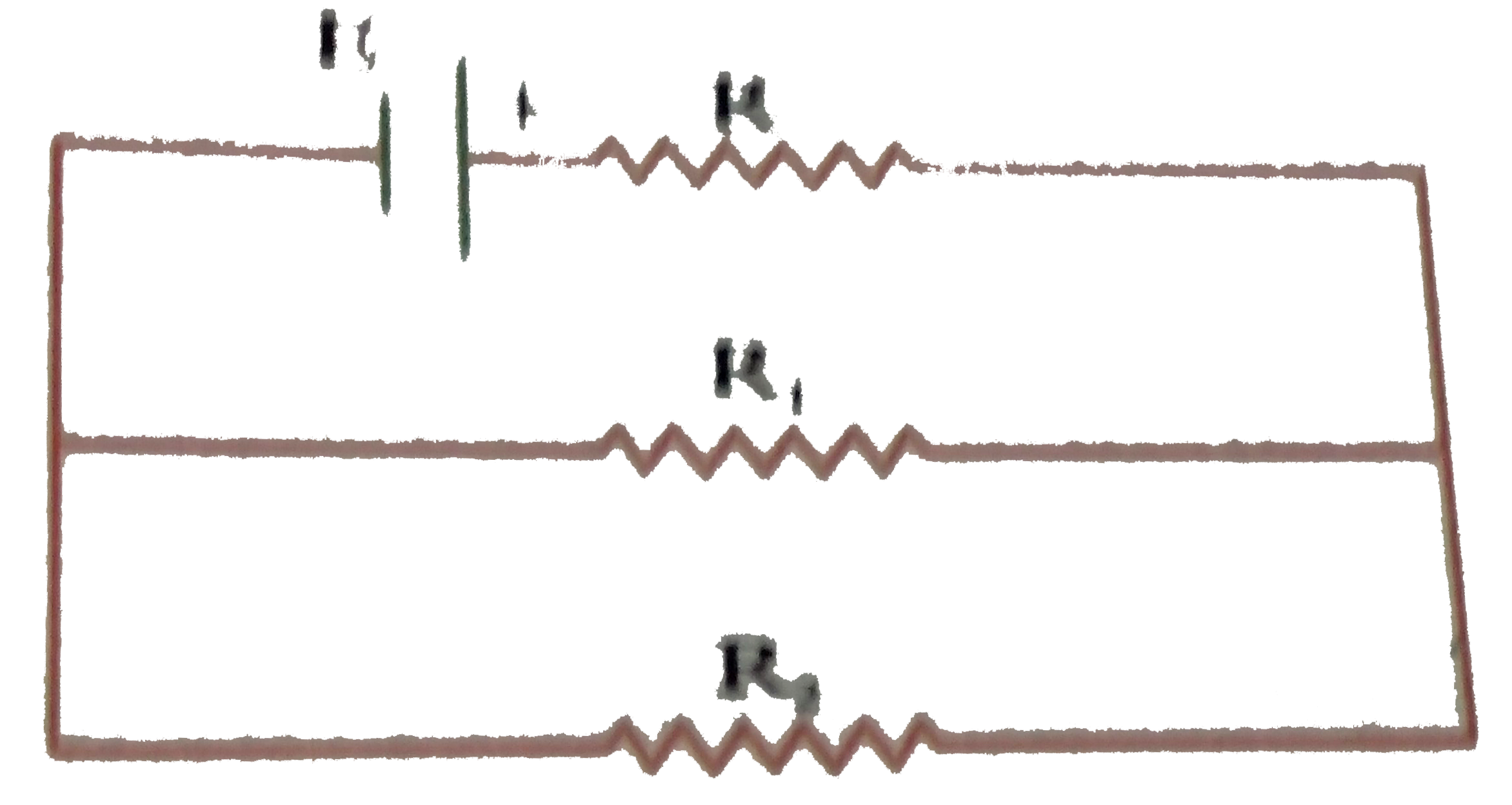
In the given network, the powers generat...


In the given network, the powers generated in the resistor `R_(1)` and `R_(2)` are `P_(1)` and `P_(2)` and the power generated in `R` is P. For this network.

Promotional Banner

Similar Questions

Explore conceptually related problems

In the given circuit the power dissipated through resistance R_(1) = 9 Omega is P_(1) , when switch S_(1) is closed and S_(2) is opened and the power dissipated through resistance R_(2) = 4 Omega is P_(2) , when switch S_(2) is closed and S_(1) is opened. If P_(1) = P_(2) , then r is equl to :

In the given circuit the power dissipated through resistance R_(1) = 9 Omega is P_(1) , when switch S_(1) is closed and S_(2) is opened and the power dissipated through resistance R_(2) = 4 Omega is P_(2) , when switch S_(2) is closed and S_(1) is opened. If P_(1) = P_(2) , then r is equl to :

Find the R_(AB) in the given network.

Find the R_(AB) in the given network.

Figure (A) and (B) show two resistors with resistances R_(1) and R_(2) connected in parallel and in series. The battery has a terminal voltage of e. Suppose R_(1) and R_(2) are connected in parallel . (a) Find the power delivered to each resistor. (b) Show that the power used by each resistor is equal to the power supplied by the battery . Suppose R_(1) and R_(2) are now connected in series (c ) Find teh power delivered to each resistor. (d) Show that the sum of the power by each resistor is equal to the power supplied by the battery. (e ) Which configuration , parallelor series, uses more power ?

In Figure below, power developed in resistor R_(1) is 120W. Find the power developed in resistor R_(3) .

Fig shows three resistor configuration R_(1), R_(2) and R_(3) connected to 3V battery. If the power dissipated by the configuration R_(1), R_(2) and R_(3) is P_(1), P_(2) and P_(3) respectively, then

A resistor R_(1) dissipates the power P when connected to a certain generator. If the resistor R_(2) is put in series with R_(1) , the power dissipated by R_(1)